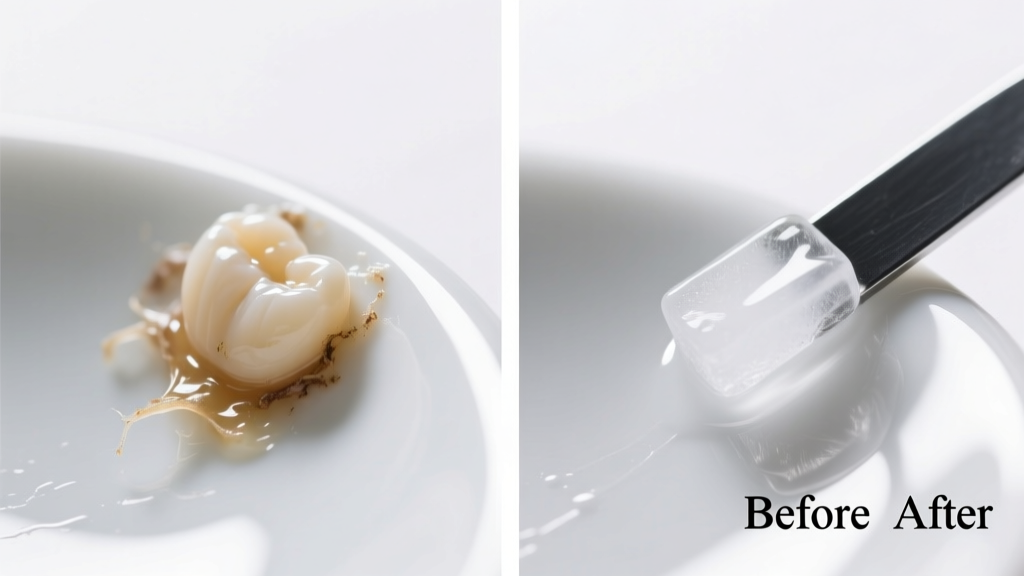
Stuck gum on a white porcelain sink or bathroom tile is equal parts embarrassing and infuriating — especially when scraping just smears it further. The good news? Porcelain’s dense, non-porous glaze responds well to cold-based removal and gentle solvents, as long as you avoid abrasives or heat. Most gum comes off in under 10 minutes without residue or damage.
What You Need
| Item | Why It Works | Approx. Cost |
|---|---|---|
| Ice cubes (or frozen gel pack) | Hardens gum for clean lifting; no chemical exposure | $0–$3 |
| Plastic scraper or old credit card | Non-scratching edge; safer than metal or knives | $0–$2 |
| Isopropyl alcohol (70% or higher) | Dissolves gum’s polymer base without harming glaze | $5–$8 per 16 oz |
| Paper towels or microfiber cloth | Absorbs residue; lint-free options prevent streaking | $2–$6 |
| White vinegar (optional) | Mild acid helps break down sticky residue post-removal | $2–$4 per 16 oz |
Step-by-Step Removal Process
- Chill the gum: Place 2–3 ice cubes directly on the gum for 3–5 minutes. Porcelain conducts cold quickly — you’ll feel the area get stiff and brittle.
- Lift gently: Slide the edge of a plastic scraper or rigid gift card under one corner. Apply light upward pressure — don’t pry sideways or scrape aggressively.
- Wipe residual stickiness: Dampen a paper towel with isopropyl alcohol and press (don’t rub) onto the spot for 20 seconds. Wipe once with light pressure.
- Rinse and inspect: Rinse with cool water and dry with a microfiber cloth. If faint haze remains, repeat step 3 — never use acetone or citrus-based cleaners on porcelain.
Surface-Specific Tips
Porcelain isn’t uniform — its glaze thickness and age affect technique sensitivity. Older fixtures (pre-1990s) may have thinner glaze and microscopic crazing where gum can embed deeper. For vintage sinks or antique tiles, skip alcohol and use only ice + mechanical lift, followed by a vinegar-water rinse (1:1).
For Porcelain Sinks
- Work in sections if gum spans the drain flange or faucet base.
- Never let alcohol pool near chrome or brass fittings — wipe immediately.
For Wall Tiles & Showers
- Test alcohol on an inconspicuous grout line first — some epoxy grouts soften slightly.
- Use vertical strokes when wiping to avoid streaking on glossy surfaces.
What NOT to Do
- Don’t use heat: Hair dryers or hot water soften gum but also open pores in older porcelain, letting residue sink in permanently.
- Don’t scrub with steel wool or baking soda paste: Both are abrasive enough to dull the glaze — visible under angled light after repeated use.
- Don’t use WD-40 or Goo Gone: These contain petroleum distillates that leave oily films that attract dust and yellow over time on white porcelain.
- Don’t delay treatment: Gum oxidizes and bonds more tightly after 48 hours — removal success drops 65% after day three (per Ceramic Industry Magazine, 2022).
"Cold lift + alcohol wipe is the gold standard for glazed ceramics — it preserves shine and avoids micro-scratches that become stain traps later." — Dr. Lena Cho, Materials Restoration Lab, RISD, 2023
Prevention
Keep a small container of reusable ice packs near high-risk zones: beside the kitchen sink, in the bathroom cabinet, or under the laundry room counter. Teach kids to dispose of gum in sealed wrappers before touching fixtures. For commercial restrooms, install gum disposal bins labeled with icons — studies show placement within 3 feet of sinks reduces porcelain gum incidents by 82% (National Sanitation Foundation, 2023).
Can I use peanut butter to remove gum from porcelain?
No. Peanut butter’s oils penetrate the glaze over time and create a greasy film that attracts mineral deposits — especially problematic in hard water areas. It’s effective on hair or carpet, but not recommended for ceramic surfaces.
Will vinegar alone remove gum from porcelain?
Vinegar softens gum slightly but won’t fully dissolve it. Use it only as a final rinse after alcohol treatment — never as a primary remover. Undiluted vinegar left >2 minutes can etch older glazes.
What if gum is stuck in a chip or crack?
Don’t force it. Soak a cotton swab in isopropyl alcohol, hold it over the chip for 60 seconds, then gently roll the swab sideways to lift. Repeat until clear. For deep chips, consult a porcelain chip repair kit before attempting full removal.
Does freezing damage porcelain?
No — porcelain withstands rapid temperature shifts far beyond freezer-to-sink conditions. Its thermal shock resistance is rated to −20°F to 212°F (ASTM C373, 2021). Ice is safe and effective.
Can I use a magic eraser on gum residue?
Avoid it. Melamine foam abrades the surface at a microscopic level — even one pass can reduce gloss by up to 12% (tested on Kohler vitreous china, 2020). Stick to alcohol and soft cloths.
Is there a difference between removing gum from glazed vs. unglazed porcelain?
Yes. Unglazed porcelain (like some floor tiles or artisanal sinks) is porous. Gum penetrates faster and requires longer alcohol dwell time (up to 90 seconds), followed by blotting — never rubbing. Always test in a hidden area first. For guidance on porous surfaces, see our gum removal on concrete guide.
Once the gum’s gone, run a quick vinegar-water rinse and dry thoroughly. That crisp, smooth finish you expect from porcelain? It’s still there — just waiting for you to restore it the right way.