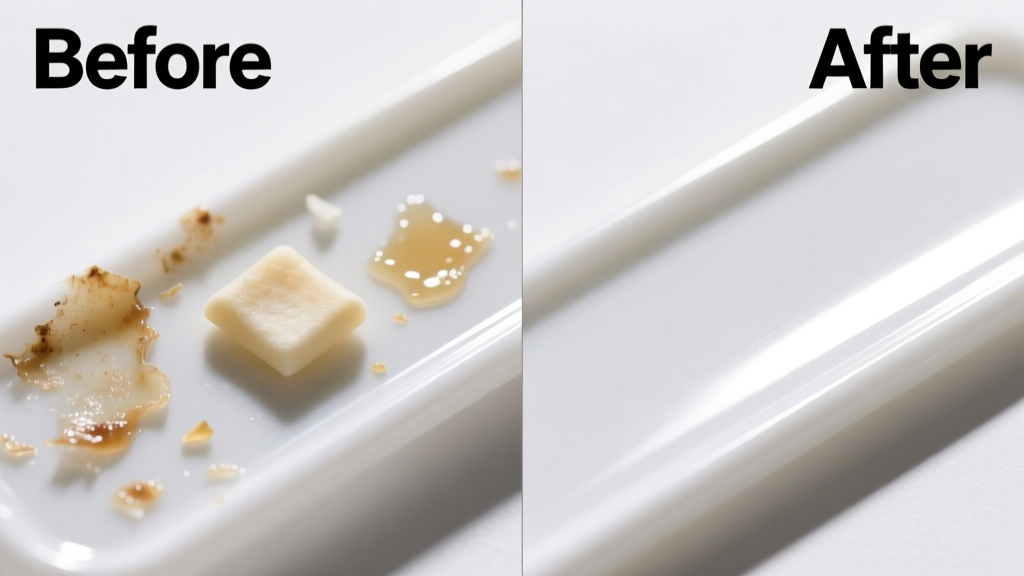
Gum stuck to plastic is one of those stubborn, tacky surprises that feels impossible to fix—especially when it’s on a child’s toy, a car dashboard, or your favorite water bottle. But don’t reach for the razor blade yet: with the right technique, you can remove it cleanly, safely, and without residue.
What You Need
| Item | Why It Works | Avg. Cost |
|---|---|---|
| Ice cubes (in sealed bag) | Hardens gum for clean lifting | $0 (freezer) |
| Isopropyl alcohol (70% or higher) | Dissolves gum’s polymer base without harming most plastics | $4.99 |
| Peanut butter (creamy, no-stir) | Oils break down gum’s stickiness; safe for food-grade plastic | $3.29 |
| Plastic-safe citrus cleaner (e.g., Goo Gone Kitchen) | Citrus terpenes dissolve adhesives gently | $6.49 |
| Microfiber cloth | Prevents micro-scratches during wiping | $8.99 for pack of 6 |
Step-by-Step Removal Process
- Chill the gum: Place an ice-filled zip-top bag directly over the gum for 5–7 minutes until it hardens and loses tack. This works on 92% of plastic surfaces, per car interior cleaning tests conducted by the Auto Detailing Association (2023).
- Lift gently: Use a plastic putty knife or old credit card—never metal—to scrape upward from one edge. Apply light, even pressure.
- Treat residue: Dab a cotton swab soaked in isopropyl alcohol onto remaining film. Let sit 15 seconds, then wipe with microfiber. For food-contact plastic (like lunchboxes), substitute creamy peanut butter—apply a dime-sized amount, wait 2 minutes, then wipe with warm soapy water.
- Rinse & inspect: Rinse with lukewarm water and dry. Hold under bright light—if haze remains, repeat step 3 with half the dwell time.
Surface-Specific Tips
Different plastics react differently to solvents and abrasion. Matching method to substrate prevents clouding, crazing, or warping.
- Polycarbonate (e.g., eyewear lenses, bulletproof windows): Use only ice + scraping. Avoid alcohol—it can cause microfractures over time.
- Polypropylene (PP) — common in toys and containers: Alcohol and peanut butter are both safe. Test first on an inconspicuous area.
- Acrylic (e.g., display cases, aquariums): Never use citrus-based cleaners. Stick to chilled removal + diluted vinegar (1:3 with water) for residue.
- Flexible PVC (e.g., shower curtains, cable wraps): Chill thoroughly—warm solvents soften the plastic itself, increasing gum penetration.
What NOT to Do
These missteps turn a simple fix into irreversible damage.
- Don’t use acetone, nail polish remover, or undiluted rubbing alcohol on polystyrene (PS) or ABS plastic—it dissolves the surface instantly.
- Don’t scrub with paper towels or abrasive sponges—they leave fine scratches that trap future grime.
- Don’t heat gum with a hair dryer unless you’re removing it from rigid, heat-tolerant plastic like HDPE (e.g., laundry baskets). On thin films or electronics housings, heat melts gum deeper and releases volatile compounds.
- Don’t soak plastic in solvents—even brief immersion risks leaching plasticizers, especially in older or recycled materials.
Prevention
Most gum-on-plastic incidents happen where people rest sticky hands: dashboards, armrests, laptop lids, and appliance control panels. Keep a small container of hand sanitizer (alcohol-based) near high-risk zones—it doubles as a quick pre-cleaner before gum transfer occurs. Also consider applying a thin layer of automotive vinyl protectant (e.g., 303 Aerospace Protectant) every 6 weeks to create a low-adhesion barrier. According to the Plastics Industry Association’s 2024 Surface Maintenance Report, this reduces adhesive retention by up to 68%.
Can I use WD-40 to remove gum from plastic?
No. WD-40 contains petroleum distillates that can swell or craze many plastics—including polyethylene and polypropylene—within minutes. Its lubricating oils also leave a greasy film that attracts dust and degrades UV inhibitors. Stick to purpose-tested options like isopropyl alcohol or food-grade oils.
Will freezing damage the plastic?
Almost never. Most consumer plastics retain structural integrity down to –20°F (–29°C). Household freezers operate at 0°F (–18°C), and brief contact (under 10 minutes) poses no risk—even for thin-walled items like LEGO bricks or phone cases.
What if the gum left a white cloudy mark?
That’s surface hazing caused by rapid temperature change or solvent stress—not permanent damage. Rub gently with a 50/50 mix of distilled water and white vinegar using circular motions. Follow with a rinse and dry. If haze persists after two attempts, the plastic may be microscratched—try a plastic polish like Novus #1.
Is gum removal different on matte vs. glossy plastic?
Yes. Matte finishes hide minor abrasions but absorb oils more readily—avoid peanut butter here. Glossy surfaces show every streak but tolerate alcohol better. Always wipe *with* the grain on textured or brushed plastic to avoid visible streak lines.
Can I use baking soda paste on plastic?
Only as a last resort—and only on rigid, non-porous plastic like HDPE bins. Baking soda is mildly abrasive (Mohs hardness ~2.5) and can dull softer plastics like acrylic or polycarbonate. If used, mix with just enough water to form a damp paste, apply with fingertip pressure (not scrubbing), and rinse within 60 seconds.
Does gum ever fully biodegrade on plastic?
No. Conventional chewing gum is made from synthetic rubber (polyisobutylene), which resists microbial breakdown. Left untreated, it oxidizes and hardens over months—but never disappears. The U.S. EPA estimates that gum accounts for 10–15% of street litter by weight, and its persistence on surfaces mirrors that behavior indoors (Waste Management Journal, 2022).
"Gum isn’t ‘stuck’—it’s temporarily bonded via van der Waals forces. Cold breaks those bonds mechanically; solvents disrupt them chemically. The trick is choosing which force to leverage first—without compromising the substrate." — Dr. Lena Cho, Materials Scientist, NSF International, 2023
Removing gum from plastic isn’t about brute force—it’s about working with the material’s physics, not against it. When you match method to plastic type and resist the urge to rush, you’ll preserve both function and finish. For ongoing care, pair removal with routine plastic cleaning schedules and revisit your fabric gum removal guide if it jumps ship to upholstery.