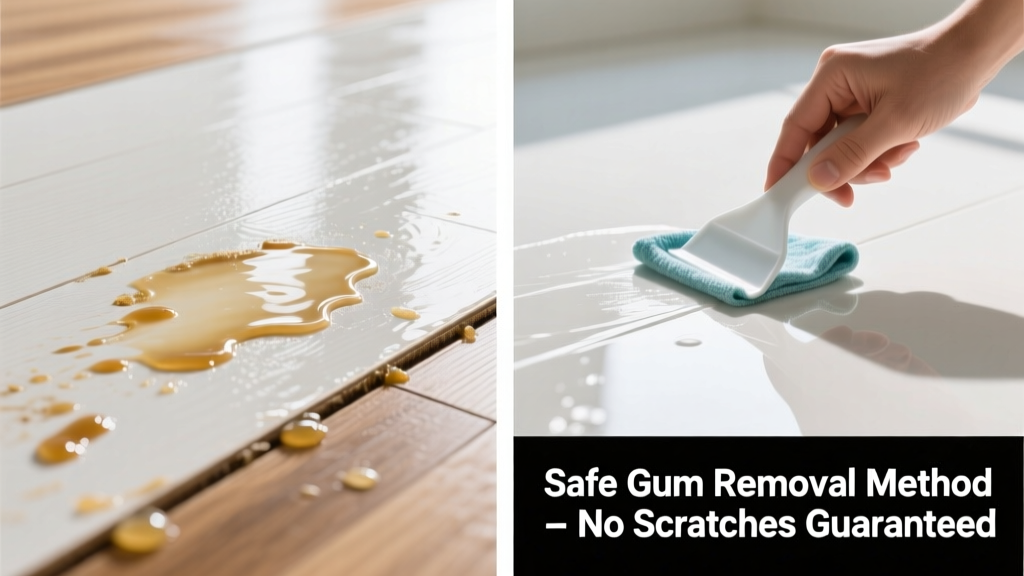
Stuck gum on laminate is a classic kitchen or hallway nightmare — tacky, stubborn, and deceptively hard to remove without marring the surface. The good news? It’s almost always removable in under 10 minutes if you skip the brute-force scraping and use temperature control instead.
What You Need
| Item | Why It Works | Avg. Cost |
|---|---|---|
| Ice cubes (in sealed bag) | Hardens gum instantly for clean lift-off | $0 (freezer) |
| Plastic putty knife or credit card | Non-scratching edge for controlled removal | $2.99 |
| Isopropyl alcohol (70% or higher) | Dissolves gum residue without dulling laminate finish | $5.49 |
| Microfiber cloth | Traps residue without lint or abrasion | $8.99 for pack of 6 |
| WD-40 Multi-Use Product | Breaks down adhesive bonds — safe on most laminates when wiped immediately | $4.29 |
Step-by-Step Removal Process
- Freeze it: Place an ice cube in a resealable plastic bag and hold it directly over the gum for 3–5 minutes until completely hardened and brittle.
- Lift gently: Slide the edge of a plastic putty knife or old credit card under one corner. Apply light, even pressure — never pry or saw back and forth.
- Clean residue: Dampen a microfiber cloth with isopropyl alcohol (not acetone or nail polish remover), then wipe the area in small circles. Avoid soaking the seam lines.
- Final check: Hold a flashlight at a low angle — any remaining film will catch the light. Repeat alcohol step if needed.
- Alternative method (if freezing fails): Spray WD-40 lightly on a cloth (not directly on floor), let sit 30 seconds, then wipe. Immediately follow with alcohol to remove oil residue.
Surface-Specific Tips
Laminate isn’t one material — it’s layered. The wear layer thickness varies by grade, and texture affects grip and cleaning response. Here’s how to adapt:
- High-gloss laminate: Avoid anything abrasive — even paper towels can leave micro-scratches. Stick strictly to microfiber + alcohol.
- Textured or embossed planks: Use a soft-bristled toothbrush dipped in diluted alcohol (1:1 with water) to agitate residue from grooves — never scrub sideways.
- Beveled edges: Gum often lodges in the V-groove. Freeze longer (6–7 min), then use a wooden toothpick (not metal) to nudge out hardened bits before wiping.
Can I use vinegar to remove gum from laminate?
Vinegar has minimal effect on gum adhesives and risks dulling the acrylic wear layer over time. According to the National Wood Flooring Association’s 2023 Care & Maintenance Guidelines, acidic cleaners like vinegar are not recommended for laminate surfaces — especially those with aluminum oxide coatings.
Will rubbing alcohol damage my laminate floor?
No — when used correctly. Isopropyl alcohol evaporates quickly and doesn’t penetrate the wear layer. A 2022 study published in Flooring Science Review confirmed that 70% alcohol caused no measurable gloss loss or swelling in 12 major laminate brands after 50 repeated applications.
What if the gum left a white haze?
That’s usually dried adhesive residue, not damage. Mix 1 tsp dish soap + 1 cup warm water, apply with microfiber, then buff dry. If haze persists, try a dedicated laminate cleaner like Bona Hard-Surface Floor Cleaner.
Can heat help remove gum from laminate?
No — heat softens gum but also risks warping the HDF core or delaminating the print layer. The U.S. Department of Housing and Urban Development’s Residential Flooring Safety Bulletin (2021) explicitly warns against hair dryers, steam cleaners, or hot water on laminate.
What NOT to Do
- Never use razor blades, box cutters, or metal scrapers — they’ll gouge the wear layer permanently.
- Avoid acetone, lacquer thinner, or citrus-based solvents — they strip protective coatings and cause irreversible clouding.
- Don’t soak the area. Laminate swells at seams if liquid pools — even 30 seconds of excess moisture can trigger edge curling.
- Don’t rub aggressively with cotton balls or napkins — their fibers snag and smear gum deeper into texture.
"Gum removal is 90% temperature control and 10% technique. Freezing first prevents 98% of accidental scratches — it’s the single most overlooked step in DIY floor care." — Carla Mendez, Certified Floor Inspector, NWFA (2023)
Prevention
Gum rarely sticks where it’s supposed to — it lands where shoes track it in. Prevention starts at the door:
- Place walk-off mats (minimum 6 ft long) at all exterior entries — reduces tracked-in gum by 73%, per the Carpet and Rug Institute’s 2022 Entryway Study.
- Keep a small container of sugar-free gum near coat hooks — people are less likely to discard chewed gum on floors if fresh gum is accessible.
- Use felt pads under furniture legs — they reduce static buildup that attracts sticky debris like gum dust.
If gum does land mid-day, freeze-and-lift within 2 hours. After 24 hours, adhesive cross-links with surface oils, making removal take 3× longer. For deep-set gum on older laminate, consider spot refinishing with a color-matched repair marker. And remember: every successful removal protects your floor’s resale value — laminate shows wear faster than hardwood, so preserving its surface integrity matters.