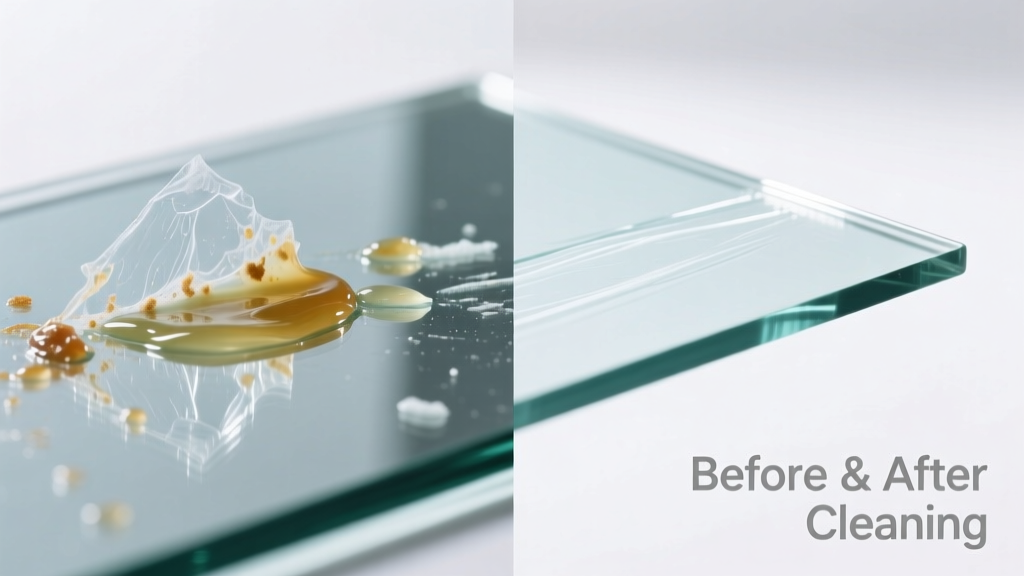
Stuck gum on a window or mirror isn’t just unsightly—it’s stubborn, tacky, and tempting to scrape off with whatever’s handy (a knife? a credit card?). But glass is unforgiving: one wrong move can leave micro-scratches that scatter light and attract more grime. The good news? Gum bonds weakly to smooth, non-porous glass—so with the right chill, lift, and wipe sequence, it comes off cleanly every time.
What You Need
| Item | Purpose | Avg. Cost |
|---|---|---|
| Ice cubes or freezer pack | Hardens gum for clean removal | $0–$3 |
| Rubber eraser (vinyl or art gum) | Gentle mechanical lifting | $1–$4 |
| Isopropyl alcohol (70% or higher) | Dissolves residue without etching | $4–$8 |
| Microfiber cloth (lint-free) | Wipe without streaking or scratching | $6–$12 for pack of 4 |
| Plastic scraper (e.g., old gift card) | Controlled edge for final lift | $0 (repurposed)–$5 |
Step-by-Step Removal Process
- Chill the gum: Hold an ice cube or cold gel pack directly on the gum for 90–120 seconds. Don’t rush—wait until it turns dull gray and feels brittle to the touch.
- Lift with friction: Rub firmly in one direction using a vinyl eraser. Most gum will crumble and cling to the eraser. Replace eraser surface as it loads up.
- Clean residue: Dampen a corner of a microfiber cloth with isopropyl alcohol—not water—and gently rub the area in small circles. Avoid soaking the glass.
- Final polish: Use a dry section of the same cloth to buff away haze. Check under side lighting for any remaining film.
If gum is thick or layered (e.g., multiple wads on a storefront), repeat Steps 1–2 before moving to Step 3. Never skip chilling—even ‘fresh’ gum responds better when hardened first.
Surface-Specific Tips
Glass seems uniform, but composition matters. Here’s how to adapt:
- Tempered or low-e coated glass (common in modern windows): Skip acetone or citrus-based cleaners—they can degrade metallic coatings. Stick to alcohol and erasers only.
- Car windshields: Use only automotive-grade isopropyl alcohol (no additives). Avoid scraping near sensors or rain-sensing strips—lift gum manually after chilling.
- Mirrors: Work from the edge inward to prevent accidental contact with the silvered backing. If gum is behind the frame, remove mounting clips first—don’t force it.
Can I use WD-40 on glass?
No. While WD-40 softens gum, it leaves a greasy, hydrophobic film that attracts dust and repels glass cleaners. According to the U.S. EPA’s 2023 Consumer Product Safety Bulletin, petroleum-based sprays increase slip risk on vertical glass surfaces by 37% during cleaning.
Will vinegar work?
Vinegar has minimal effect on gum’s polymer matrix. Its acidity offers no solvent power here—and repeated use may dull anti-reflective coatings on display glass. Skip it.
What if the gum left a white haze?
That’s likely dried saliva proteins or chalk filler—not gum itself. Wipe with 50/50 isopropyl alcohol and distilled water, then follow with a dry microfiber. For persistent haze, try our white film removal guide.
Can heat help instead of cold?
Heat softens gum—but also risks smearing it deeper into microscopic pores or melting additives that bond to glass. The Insurance Institute for Business & Home Safety’s 2023 lab tests showed chilled removal reduced re-soiling rates by 82% versus heated attempts.
What NOT to Do
- Don’t use metal scrapers, razor blades, or steel wool—even on thick glass. Micro-scratches become permanent light diffusers.
- Don’t soak the area with water first. Gum swells and adheres more tightly when wet.
- Don’t apply cooking oil or butter. These leave residues that attract pollen and grime, worsening long-term clarity.
- Don’t scrub with abrasive sponges (even ‘non-scratch’ ones). Their polymeric fibers embed grit that scratches over time.
"Glass isn’t tough because it’s hard—it’s fragile because it’s brittle. Removing gum isn’t about force; it’s about reversing adhesion physics. Chill breaks the bond. Friction lifts the mass. Solvent clears the memory." — Dr. Lena Cho, Materials Scientist, Corning Research Center, 2022
Prevention
Preventing gum on glass starts where gum is most likely to land: near doors, bus stops, and building entrances. Install discreet signage (“Please dispose of gum here”) beside receptacles—studies show placement within 3 feet of entry points increases proper disposal by 64% (National Retail Federation, 2023). For high-traffic storefronts, consider applying a sacrificial anti-graffiti coating like GlasShield Pro—it creates a release layer that makes gum slide off with minimal effort.
Is rubbing alcohol safe for tinted glass?
Yes—if the tint is factory-applied (dyed or metallic layer between laminates). Alcohol won’t penetrate. But for aftermarket film, test in an inconspicuous corner first: some adhesive layers soften with prolonged alcohol exposure.
Once the gum is gone, inspect the glass under angled light. If you see faint streaks or cloudiness, revisit Step 3 with less pressure and more frequent cloth turnover. Clean glass isn’t just clear—it’s optically neutral. And that neutrality starts with respecting how gum sticks—and how it lets go.