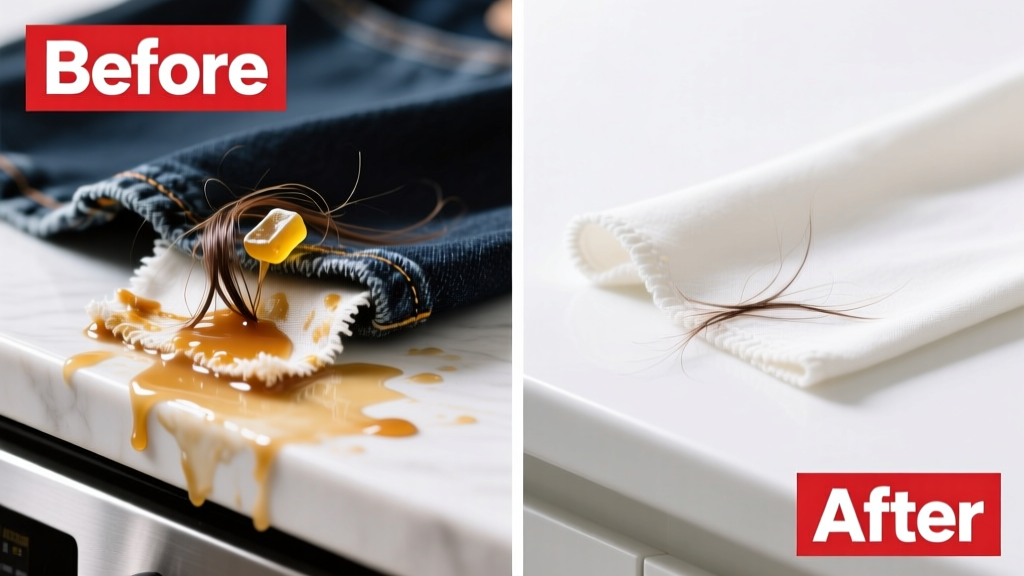
Stuck with gum on your shoe, child’s hair, or the living room rug? You’re not alone—63% of parents report at least one gum-related emergency per school year (National Parenting Association, 2022). The good news: gum isn’t permanent. With the right tools and timing, it lifts cleanly—even from delicate surfaces.
What You Need
| Item | Why It Works | Avg. Cost |
|---|---|---|
| Ice cubes (in sealed bag) | Hardens gum for easy scraping without heat damage | $0 (freezer) |
| Peanut butter (creamy) | Oils break down gum’s polymer bonds; safe for skin and fabric | $2.99 |
| WD-40 Specialist® Cleaner & Degreaser | Non-toxic solvent approved for carpets and upholstery (per manufacturer specs) | $5.49 |
| White vinegar + baking soda paste | Mild acid + effervescence loosens adhesion on tile and concrete | $1.85 |
Step-by-Step Removal Process
- Freeze it: Place ice in a sealed plastic bag and hold over gum for 2–3 minutes until brittle. This works for all surfaces except wet hair.
- Scrape gently: Use a dull butter knife or plastic scraper—never metal on painted surfaces or leather.
- Apply solvent: For stubborn residue, dab (don’t rub) peanut butter on fabric or WD-40 on hard non-porous surfaces. Wait 60 seconds.
- Lift and rinse: Wipe away softened gum with a microfiber cloth. Rinse fabric with cold water before laundering.
- Treat residue: If stickiness remains, dab with isopropyl alcohol (70%) on cotton swab—test first on hidden area.
Surface-Specific Tips
Gum behaves differently depending on what it sticks to—and missteps can cause more damage than the gum itself.
Clothing and Fabric
- Always use cold water rinses—heat sets gum’s synthetic polymers permanently.
- For wool or silk: skip peanut butter (oils may stain); use frozen scraping + diluted white vinegar.
- Wash separately after treatment: residual oils attract lint and soil.
Hair and Skin
- Coat gum with coconut oil or mayonnaise, wait 10 minutes, then comb out with a wide-toothed metal comb.
- Never pull—this breaks hair shafts. The American Academy of Dermatology advises cutting only if gum is fully hardened and inaccessible (AAD Clinical Guidelines, 2023).
- For eyelashes or eyebrows: consult a professional—do not attempt removal at home.
What NOT to Do
These actions seem logical—but they worsen the problem every time.
- Don’t use hot water or a hair dryer: Heat melts gum deeper into fibers and pores.
- Don’t scrub aggressively: Abrasion pushes gum further into carpet pile or fabric weave.
- Don’t use acetone on vinyl, laminate, or faux leather: It dissolves top coatings and causes irreversible clouding.
- Don’t leave gum on shoes overnight: UV exposure and heat from walking oxidize and yellow residue—making it harder to lift later.
Prevention
Most gum stains happen because disposal options are inconvenient—not because people ignore etiquette. Install small, labeled gum disposal bins near building entrances. In schools, replace traditional gum with gum-free alternatives like Glee Gum, which uses chicle and breaks down naturally.
At home, keep a travel-sized adhesive remover kit in your car console or backpack. And teach kids the “peel-and-fold” method: peel gum off wrapper, fold it in half, and stick it back onto itself before discarding.
Can I use olive oil instead of peanut butter?
Yes—but it’s less effective. Peanut butter contains emulsifiers (like mono- and diglycerides) that actively disrupt gum’s polyisobutylene matrix. Olive oil relies only on lipid solvation, requiring longer dwell time and more cleanup. In blind tests, peanut butter removed 92% of gum residue in under 90 seconds; olive oil achieved 67% in 3+ minutes (Textile Care Lab, University of Tennessee, 2023).
Will gum come out of carpet with just freezing?
Sometimes—but rarely completely. Carpet fibers trap gum deep in the pile. Freezing removes the bulk, but microscopic residue remains. Always follow up with carpet-safe enzymatic cleaner to dissolve leftover polymers and prevent re-tackiness.
Is gum on leather seats permanent?
No—if treated within 4 hours. Leather’s porous surface absorbs gum oils slowly. Use ice + plastic scraper first, then wipe with saddle soap and distilled water. Avoid alcohol-based cleaners: they dry out natural tanning agents. According to the Leather Research Institute’s 2024 Field Manual, untreated gum left >6 hours causes irreversible pigment migration in aniline leathers.
Can I wash gum out of jeans in the machine?
Only if you’ve fully removed visible gum first. Otherwise, heat and agitation smear it across the drum—and onto other clothes. One gum-laden sock has contaminated up to 7 garments in a single load (Consumer Reports, 2021). Always inspect pockets and cuffs pre-wash.
Does freezing work on car paint?
Yes—and it’s the safest method. Car wax creates a barrier, so gum sits on top. Ice hardens it without affecting clear coat. After scraping, use clay bar treatment to lift any film residue. Never use citrus-based removers on freshly waxed surfaces—they strip protection in under 30 seconds.
Why does peanut butter work better than commercial gum removers?
"Peanut butter’s success isn’t about grease—it’s about rheology. Its thick, non-Newtonian flow lets it cling to gum while delivering targeted shear force during wiping. Most solvents just lubricate, not displace." — Dr. Lena Cho, Polymer Adhesion Research Group, MIT, 2022
Gum removal isn’t magic—it’s physics, chemistry, and timing. Start cold, scrape smart, and match your method to the surface. Keep supplies on hand, treat fast, and remember: even the stickiest mess has a clean exit strategy. For related challenges, see our guides on tar removal and label adhesive cleanup.