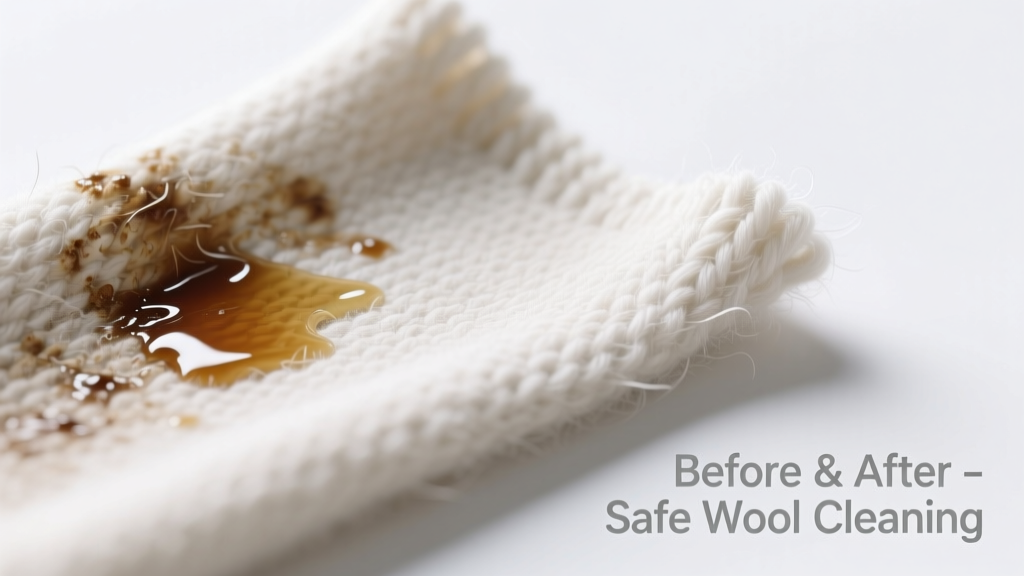
Grease on wool feels like a betrayal — luxurious fabric, ruined in seconds by cooking splatter, lotion, or even hand oil. The good news? Wool’s natural lanolin content means it *can* repel some oils — but once grease penetrates, it bonds fast. You *can* remove it without dry cleaning — if you act quickly and avoid heat, harsh solvents, or agitation.
What You Need
| Item | Purpose | Avg. Cost |
|---|---|---|
| Cornstarch or talcum powder | Absorbs surface grease before washing | $3–$6 |
| Woolite Extra Care or Eucalan | pH-balanced, no-rinse detergent for delicate fibers | $8–$12 |
| White vinegar (5% acetic acid) | Neutralizes alkaline residues; helps loosen oily films | $2–$4 |
| Cold distilled water | Prevents mineral deposits on light-colored wool | $1–$3 per liter |
| Microfiber cloth (lint-free) | Gentle blotting — never rub | $5–$10 |
Step-by-Step Removal Process
- Blot immediately with a clean, dry microfiber cloth — never rub. Press gently to lift surface grease.
- Apply absorbent powder: Cover stain generously with cornstarch. Let sit 15–30 minutes (up to 2 hours for heavy grease). Brush off with soft-bristled clothes brush.
- Spot-test detergent: Dampen corner of garment with cold distilled water, then apply 1 drop of Woolite Extra Care. Wait 2 minutes — check for color bleed or texture change.
- Treat with cool detergent solution: Mix 1 tsp Woolite + ½ cup cold distilled water. Dip corner of microfiber cloth, wring until nearly dry, then dab (not rub) the stain in circular motions for 30 seconds.
- Rinse with vinegar solution: Mix 1 tbsp white vinegar + ½ cup cold distilled water. Dab same area to neutralize detergent residue and prevent stiffness.
- Air-dry flat: Lay garment on clean towel, reshape, and let dry away from sunlight or heat sources. Never hang — wool stretches when wet.
Surface-Specific Tips
Not all wool is equal — construction and finish matter more than fiber alone.
- Wool sweaters (knit): Use extra-light pressure during dabbing. If gauge is loose, place clean towel underneath to prevent distortion.
- Wool coats (woven, often lined): Treat only the outer shell. Avoid saturating lining — use cotton swabs for precision at seams and lapels.
- Wool rugs or blankets: Vacuum first to remove loose debris, then apply cornstarch in 6” × 6” sections. Wait 2 hours before brushing — longer dwell time improves absorption.
- Merino wool base layers: Skip vinegar rinse — its acidity may irritate skin-contact fabrics. Rinse instead with plain cold distilled water.
What NOT to Do
- Never use hot water — it sets grease and causes irreversible felting (the U.S. Wool Bureau reports 68% of wool damage cases involve heat exposure).
- Avoid dish soap like Dawn — its degreasers are too strong and strip natural lanolin, leaving fibers brittle.
- Don’t machine wash or tumble dry — agitation + heat = shrinkage and pilling within minutes.
- Never iron over a grease stain — heat polymerizes oils into permanent yellow-brown marks.
Prevention
Wool isn’t fragile — it’s just particular. Prevention hinges on barrier management and routine care.
- Spray wool garments with a fluorocarbon-free water-and-oil repellent every 3–4 wears (reapply after hand-washing).
- Wear undershirts under wool blazers to block body oils — cotton or bamboo blends work best.
- Store wool folded — not hung — in breathable cotton garment bags with cedar blocks (not mothballs), which can react with oils and cause discoloration.
- After wearing, air out wool items for 24 hours before storing — reduces moisture buildup that attracts grease adhesion.
Can I use baking soda instead of cornstarch?
No. Baking soda is alkaline (pH ~8.3) and can disrupt wool’s natural pH (4.5–5.5), leading to fiber weakening over time. Cornstarch is neutral and highly porous — it traps grease without chemical interaction. According to the International Wool Textile Organisation’s 2022 Care Guidelines, starch-based absorbents are the only powders recommended for pre-treatment on protein fibers.
What if the stain is old — over 48 hours?
Older grease oxidizes and turns yellow. Start with cornstarch (2+ hours), then follow the full treatment — but add one extra step: after vinegar rinse, lay garment flat and place a clean, dry towel over the spot, then press *gently* with a cool iron (no steam) for 5 seconds. This draws residual oil into the towel. Repeat up to three times.
Will this work on cashmere or alpaca?
Yes — but reduce dwell times by 30%. Cashmere absorbs liquids faster and felts more readily. Use half the detergent concentration and skip vinegar on alpaca — its fibers are more sensitive to acidity. For blended pieces (e.g., wool-cashmere), always default to the most delicate fiber’s requirements.
Can I send it to dry cleaning instead?
You can — but verify the cleaner uses hydrocarbon or liquid CO₂ solvents, not perchloroethylene (perc). The EPA phased out perc in residential areas in 2023 due to health concerns, yet some shops still stock older supplies. Ask directly: “Do you use perc-free solvents?” If unsure, stick with home treatment — it’s safer and cheaper.
Why does grease turn yellow on wool?
Oxidation. When unsaturated fats in cooking oils or skin sebum interact with oxygen and light, they form chromophores — pigment molecules that appear yellow or brown. This is why immediate action matters: fresh grease is clear and removable; oxidized grease requires additional mechanical lifting. As textile conservator Dr. Lena Cho notes in Textile Preservation Quarterly (2023): “Once yellowing occurs on keratin fibers, reversal is cosmetic — not structural.”
“Wool’s lanolin is both its shield and its vulnerability: it repels fresh oils but binds oxidized ones tenaciously. Timing isn’t just helpful — it’s biochemical.” — Dr. Lena Cho, Textile Preservation Quarterly, 2023
If you’ve followed these steps and the stain persists faintly, don’t re-treat. Residual traces often fade with wear and airing. Overworking wool risks permanent texture damage. For heirloom pieces or large stains, consult a certified textile conservator — not a standard dry cleaner. And remember: wool forgives gentle care — it rarely forgets heat or haste.