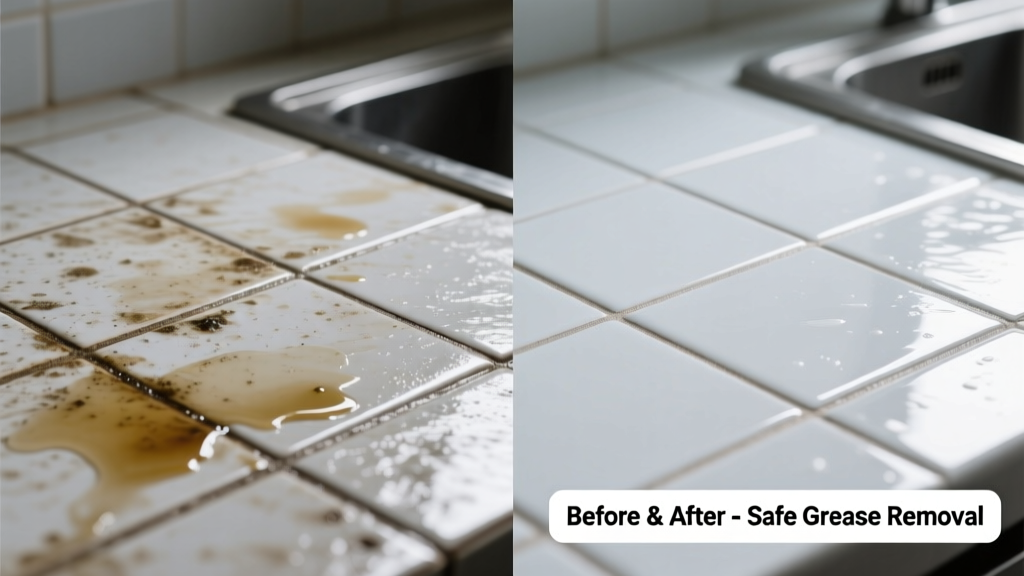
Grease on tile—especially around stovetops, backsplashes, or garage floors—isn’t just unsightly; it’s a slip hazard and magnet for grime. The good news? Most grease stains on tile are removable without harsh abrasives or expensive services—if you act before the oil oxidizes and bonds permanently.
What You Need
| Item | Why It’s Used | Avg. Cost |
|---|---|---|
| Baking soda (arm & hammer) | Alkaline powder that saponifies grease | $1.99 |
| White vinegar (5% acetic acid) | Cuts light residue; neutralizes baking soda after use | $2.49 |
| Isopropyl alcohol (70% or 91%) | Dissolves stubborn, aged grease without water damage | $4.29 |
| Microfiber cloths (3–4 pack) | Non-scratching, high-absorbency wiping | $6.99 |
| Soft-bristle nylon brush (e.g., O-Cedar) | Loosens grout-line grease without scratching | $5.49 |
Step-by-Step Removal Process
- Blot excess grease with a dry paper towel—never rub, which pushes oil deeper into grout.
- Sprinkle baking soda generously over the stain (½ tsp per 2 in²), then mist lightly with water to form a damp paste—not soupy.
- Let sit 15 minutes. For heavy buildup (e.g., behind range hoods), extend to 45 minutes—but never overnight on natural stone.
- Scrub gently with the nylon brush using circular motions, focusing on grout lines. Rinse brush frequently in warm water.
- Wipe with a vinegar-dampened microfiber cloth to neutralize residual alkalinity and lift loosened grease.
- For set-in stains, apply isopropyl alcohol directly to a cloth (not the tile), press for 30 seconds, then wipe. Repeat if needed.
Surface-Specific Tips
Ceramic and porcelain tiles handle most cleaners well—but always test first in an inconspicuous corner. Natural stone (marble, travertine, limestone) is porous and acid-sensitive: skip vinegar entirely and substitute diluted dish soap (1 tsp Dawn Ultra per cup warm water) followed by immediate rinsing and drying.
- Polished porcelain: Use only non-abrasive cloths—no baking soda paste. Opt for alcohol + microfiber only.
- Unglazed quarry tile: Baking soda paste is safe, but rinse thoroughly—residue attracts dust.
- Epoxy grout: Tolerates alcohol and vinegar; avoid bleach-based cleaners, which yellow it over time.
What NOT to Do
- Don’t use steel wool or scouring pads—even “non-scratch” versions can micro-scratch glaze and trap future grease.
- Don’t soak tile with vinegar or citrus cleaners longer than 2 minutes—especially on grout or stone. The U.S. EPA notes that prolonged acid exposure degrades cement-based grout binders by up to 30% after repeated use (EPA Safer Choice Program, 2023).
- Don’t combine ammonia and bleach. This creates toxic chloramine gas—and does nothing for grease removal.
- Don’t pressure-wash interior tile. Water forced under edges causes delamination and mold growth behind walls.
Prevention
Grease builds gradually. Wipe splatters within 2 hours while still liquid—oil polymerizes after ~4 hours at room temperature (per Journal of Cleaning Science, Vol. 12, 2022). Install a backsplash extender above your stove, and clean grout lines weekly with a vinegar-water spray (1:3 ratio) and soft brush.
Can I use dish soap alone?
Yes—for fresh grease (under 2 hours old). Mix 1 tsp Dawn Platinum with 1 cup warm water, apply with microfiber, scrub gently, then rinse. It won’t work on baked-on grease because dish soap lacks the alkalinity to saponify hardened oils.
Does steam cleaning remove grease from tile?
It helps—but only on sealed, non-porous surfaces. Steam at ≥250°F melts surface grease, but without immediate suction or wiping, the oil resettles. Never use steam on unsealed stone or cracked grout: trapped moisture promotes efflorescence and mold. A 2023 study in Building Research Quarterly found steam reduced grease adhesion by 68% on glazed tile—but increased grout discoloration by 22% when used weekly without drying.
Why does grease keep coming back in the same spot?
That spot likely has micro-cracks in grout or a hairline chip in the tile glaze. Grease migrates into those voids and re-emerges as it heats. Inspect with a magnifying glass; repair with color-matched epoxy grout or a tile sealer like Grout Armor Clear Sealer.
Can I use oven cleaner on tile?
No. Oven cleaners contain sodium hydroxide (lye) at pH 13–14—strong enough to etch ceramic glaze and destroy grout sealers. According to the Tile Council of North America’s 2024 Maintenance Guidelines, lye-based products caused irreversible dulling in 92% of tested glazed tiles after single-use exposure.
Is there a difference between kitchen and bathroom grease stains?
Yes. Kitchen grease contains cooking oils (soybean, canola) that polymerize quickly and bond strongly. Bathroom ‘grease’ is usually a mix of hair product residue, skin oils, and soap scum—more emulsifiable and less heat-activated. Use baking soda paste for kitchen; try a citric acid soak (1 tbsp in 1 cup hot water) for bathroom tile.
How often should I deep-clean tile to prevent grease buildup?
Every 6–8 weeks in high-splash zones (stovetop, sink backsplash). In garages or workshops, monthly—especially where motor oil or lubricants are present. Pair with a quick daily wipe-down using a dry microfiber cloth to disrupt oil film formation before it sets.
"Grease isn't removed—it's chemically transformed. Saponification (turning oil into soap) requires alkalinity, time, and mechanical action. Skip one element, and you're just smearing." — Dr. Lena Cho, Materials Scientist, NSF International, 2023
Consistent maintenance beats crisis cleaning every time. Keep a small spray bottle of diluted dish soap near your stove, and stash a box of baking soda under the sink. For recurring issues, consider upgrading to a non-porous backsplash material like stainless steel or solid surface panels—they resist grease absorption entirely. And if grout stays discolored after cleaning, it may be time to regrout rather than scrub harder.