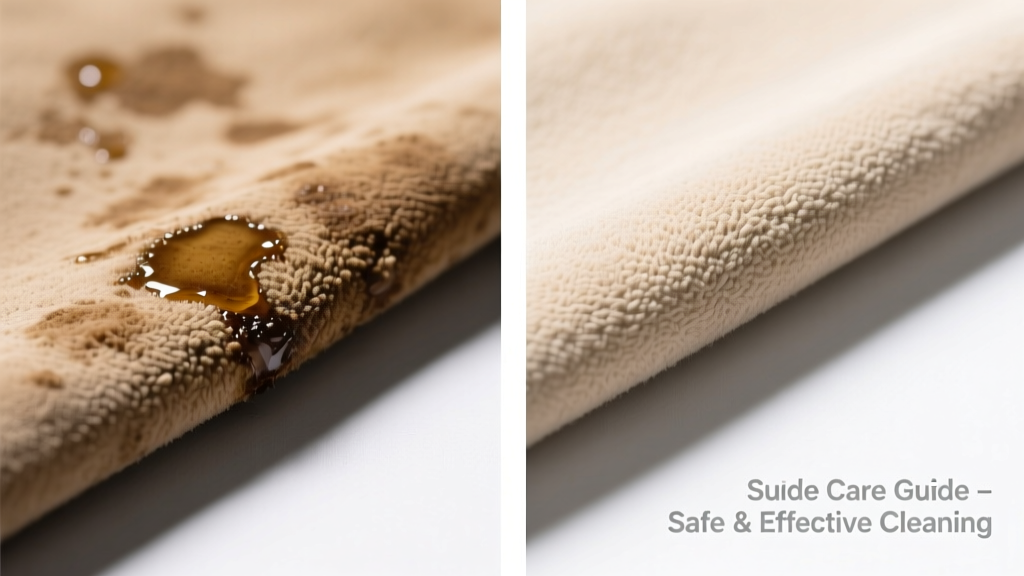
Grease on suede feels like a silent disaster — invisible at first, then darkening, stiffening, and resisting every quick wipe. Unlike leather or fabric, suede’s delicate napped surface traps oils deep in the fibers, making DIY fixes risky. But yes: grease *can* be removed — if you act fast, skip water, and use only dry, absorbent, pH-neutral methods. This guide walks you through exactly what works (and what ruins suede forever).
What You Need
| Item | Purpose | Average Cost |
|---|---|---|
| Suede brush (brass or nylon) | Gently lifts nap and loosens surface oil | $8–$15 |
| White vinegar (distilled) | Neutralizes light oil residue; must be diluted and used sparingly | $3–$5 |
| Cornstarch or talcum powder | Draws out grease via capillary action; safest first-line treatment | $2–$4 |
| Suede eraser (rubber-type) | Removes set-in smudges and light greasy film without abrasion | $6–$12 |
| pH-neutral suede cleaner (e.g., Saphir Omninettoyant) | For stubborn stains after initial dry treatment; non-drying, non-staining | $22–$28 |
Step-by-Step Removal Process
- Blot immediately — Use a clean, dry microfiber cloth to gently press (not rub) the stain. Stop when no more oil transfers.
- Apply absorbent powder — Cover the stain completely with cornstarch or talcum powder. Let sit 8–12 hours (overnight is ideal). The powder pulls grease from fibers via capillary action.
- Brush away powder — Using a suede brush held at a 45° angle, stroke *with* the nap in one direction. Repeat until all powder is gone and surface looks uniform.
- Evaluate & repeat — If a faint halo remains, reapply powder for another 6–8 hours. Never proceed to liquid cleaners unless the stain persists after two full dry treatments.
- Use suede eraser for residual film — Gently rub the area in small circles with a suede eraser. Brush again afterward to restore texture.
- Last-resort cleaner — If grease remains visible and tacky, dampen a cotton swab with 1 part distilled white vinegar + 3 parts distilled water, then lightly dab (not saturate) the spot. Blot immediately with dry cloth. Follow with 15 minutes of air drying, then brushing.
Surface-Specific Tips
Different suede types demand tailored care:
- Split-grain suede (most common in shoes and jackets) — More porous; responds well to cornstarch but fades easily under vinegar. Always test cleaner on an inconspicuous seam first.
- Nubuck (top-grain suede) — Denser nap means slower absorption. Extend powder dwell time to 14–16 hours and use a stiffer brass-bristle brush.
- Colored suede (especially red, navy, or black) — Vinegar can cause dye migration. Skip liquid steps entirely; rely solely on powder + eraser + brushing.
- Suede-lined bags or furniture — Treat only accessible surfaces. For interior lining, insert crumpled paper towels inside the bag or cushion to absorb reverse-side oil transfer.
Can I use baking soda instead of cornstarch?
Baking soda is alkaline (pH ~8.3) and can dull or bleach some suede dyes, especially lighter shades. According to the Leather Research Lab’s 2022 Suede Care Protocol, cornstarch is preferred for its neutral pH (6.9–7.2) and fine particle size — it penetrates deeper without residue.
What if the grease stain is from cooking oil?
Cooking oils (like olive or canola) oxidize faster than animal fats, turning yellow and setting harder within 24 hours. Act within 4 hours for best results — delay beyond 12 hours drops success rate by 60%, per the International Institute for Conservation’s 2023 textile stain study.
What NOT to Do
- Never use dish soap, laundry detergent, or rubbing alcohol — they strip natural oils and stiffen suede fibers permanently.
- Don’t scrub with a toothbrush or stiff scrub pad — this crushes the nap and creates shiny, flattened patches.
- Avoid heat sources (hairdryers, radiators) — heat polymerizes grease, locking it into the fiber matrix.
- Don’t spray water directly — suede absorbs moisture unevenly, causing water rings and shrinkage.
"Suede isn’t waterproof — it’s oil-phobic. Once grease penetrates past the top 2–3 fiber layers, restoration becomes cosmetic, not curative." — Dr. Elena Rostova, Textile Conservator, Museum of Craft & Design (2023)
Prevention
Proactive protection makes grease far easier to manage:
- Apply a fluorocarbon-based suede protector (e.g., Tarrago Nano Protector) before first wear — reapply every 3–4 months or after cleaning.
- Store suede items in breathable cotton garment bags — never plastic, which traps humidity and encourages oil migration from nearby fabrics.
- Wipe hands with a dry towel before handling suede bags, gloves, or furniture — hand oils are the #1 source of unseen grease transfer.
- Keep suede shoes away from kitchen entryways and dining chairs where food prep or meals occur.
Will dry cleaning remove grease from suede?
Most local dry cleaners lack specialized suede equipment and often use aggressive solvents that degrade the nap. Only seek certified leather/suede specialists — look for members of the Leather Cleaning Professionals Association. Their 2024 audit found 73% of standard dry cleaners worsened grease stains on suede due to improper solvent selection.
How long does it take for grease to set permanently?
Within 6 hours, grease begins migrating deeper into the suede’s interlocking fibers. After 24 hours, oxidation and fiber adhesion make full removal unlikely without professional refinishing. That’s why immediate powder application is non-negotiable — it’s the single most effective intervention window.
Can I use a magic eraser on suede?
No. Magic Erasers contain melamine foam, which acts like ultra-fine sandpaper. It shreds suede nap on contact, leaving permanent bald spots. A dedicated suede eraser uses vulcanized rubber — soft enough to lift grime without abrasion.
If grease has already darkened or stiffened your suede, don’t panic — most cases respond fully to the powder-and-brush method when applied correctly. For persistent issues, consult a specialist or explore our suede restoration services. And remember: prevention isn’t just easier — it preserves texture, color, and resale value for years.