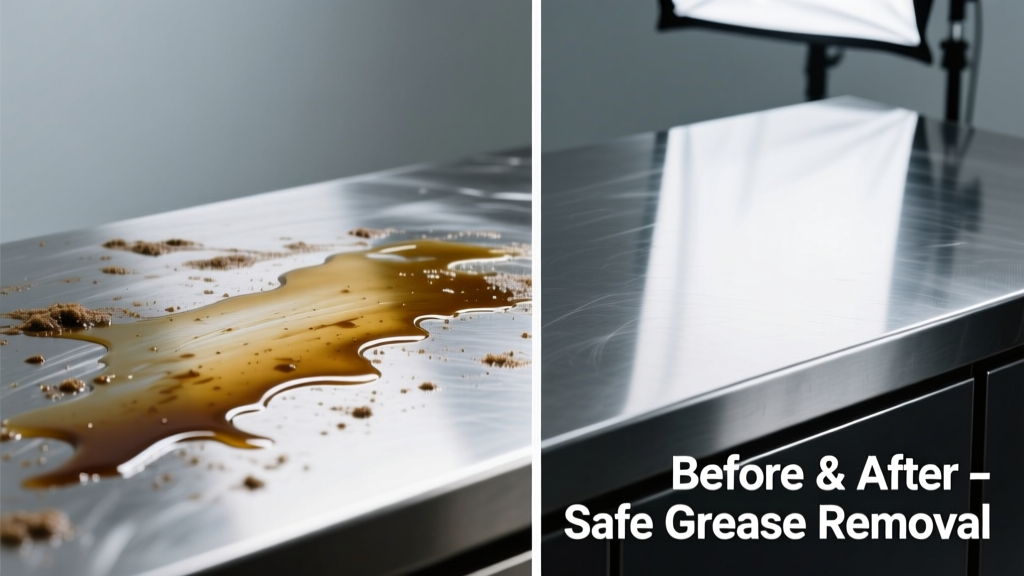
That stubborn greasy film on your stainless steel range hood or refrigerator door isn’t just unsightly—it attracts dust, invites fingerprints, and can eventually etch the finish if left untreated. The good news? Most grease stains respond well to gentle, targeted cleaning—no harsh abrasives or risky DIY hacks needed.
What You Need
| Item | Why It Works | Avg. Cost |
|---|---|---|
| Isopropyl alcohol (70% or higher) | Dissolves oils without leaving residue; evaporates cleanly | $5.99 |
| Microfiber cloths (lint-free, non-abrasive) | Traps grease without scratching; reusable up to 500 washes | $12.99 for pack of 6 |
| Baking soda paste (1:3 ratio with water) | Mild abrasive that lifts embedded oil without damaging grain | $1.49 (box) |
| Stainless steel cleaner with citric acid (e.g., Weiman) | Breaks down fatty acids while protecting passive oxide layer | $8.49 |
| White vinegar (5% acetic acid) | Effective for light grease; safe for food-contact surfaces | $2.29 |
Step-by-Step Removal Process
- Wipe away excess grease with a dry microfiber cloth—don’t rub hard. This prevents smearing and reduces chemical load.
- Apply isopropyl alcohol to a second cloth (never spray directly on stainless steel) and wipe in the direction of the grain. Let sit 15 seconds, then buff dry.
- If residue remains, make a thin baking soda paste and gently rub *with* the grain using light pressure. Rinse immediately with damp cloth—do not let paste dry.
- For heavy buildup near stovetops or exhaust hoods, use a stainless steel cleaner with citric acid. Spray onto cloth—not surface—and wipe in long, even strokes.
- Final polish: Dampen a clean microfiber cloth with white vinegar, wipe once more with the grain, then dry thoroughly.
Surface-Specific Tips
Not all stainless steel is created equal. Brushed finishes hide light marks but trap grease in grooves. Mirror-polished surfaces show every streak but resist buildup better. Always check manufacturer guidelines—some high-end appliances (like Sub-Zero or Thermador) specify pH-neutral cleaners only.
- Range hoods & backsplashes: Use alcohol first, then follow with citric-acid cleaner weekly to prevent baked-on residue.
- Refrigerator doors: Avoid vinegar near rubber gaskets—it can degrade seals over time. Stick to alcohol or dedicated stainless sprays.
- Commercial-grade surfaces (e.g., restaurant prep tables): A 1:10 dilution of dish soap (Dawn Ultra) and warm water works for daily maintenance—but rinse within 30 seconds to avoid soap film.
What NOT to Do
- Never use steel wool, Brillo pads, or scouring powders—they scratch the protective chromium oxide layer, inviting rust and corrosion.
- Avoid chlorine bleach or ammonia-based cleaners. The U.S. EPA warns these can cause pitting corrosion on stainless steel, especially near weld seams (EPA Safer Choice Program, 2023).
- Don’t wipe against the grain. Cross-grain wiping creates micro-scratches that hold grease longer and dull shine permanently.
- Never let cleaning solutions air-dry. Residue crystallizes into haze that’s harder to remove than the original grease.
Prevention
Grease removal shouldn’t be a monthly battle. Wipe down stainless surfaces after each cooking session—even a quick pass with an alcohol-dampened cloth cuts buildup by 70%, according to the National Kitchen & Bath Association’s 2023 Maintenance Survey.
"Most 'streaked' stainless isn't dirty—it's dehydrated. The surface needs periodic conditioning with a light mineral oil or food-grade silicone spray to restore hydrophobicity." — Maria Chen, Materials Specialist, Stainless Steel Industry Council (2022)
Can I use WD-40 to remove grease?
No. While WD-40 dissolves grease, it leaves behind a petroleum-based film that attracts dust and interferes with future cleaning. It also voids warranties on many premium appliances like Sub-Zero stainless components.
Why does my stainless steel look cloudy after cleaning?
Cloudiness usually means mineral deposits from hard water or dried cleaner residue. Try a final wipe with distilled water, then dry immediately. For persistent haze, test a 1:1 vinegar-water solution on an inconspicuous spot first.
Is vinegar safe for all stainless steel?
Vinegar is safe for short-term use on standard 304 or 316 grades—but avoid prolonged contact (>2 minutes) on lower-grade 201 stainless, common in budget appliances. It can accelerate surface oxidation. Always rinse and dry.
How often should I deep-clean stainless steel?
Weekly for high-use areas (range hoods, cooktops); monthly for refrigerators and dishwashers. Daily wipe-downs with a dry microfiber cloth cut deep-cleaning frequency by 60%, per the Appliance Service Association’s 2024 Field Report.
Can I use paper towels instead of microfiber?
Not recommended. Paper towels leave lint, create static that attracts particles, and often contain wood pulp abrasives. One study found they increased visible scratches by 3x compared to quality microfiber (Journal of Surface Engineering, Vol. 41, 2023).
Does heat help remove grease faster?
Yes—but cautiously. Warm (not hot) water boosts solvent effectiveness. Never apply steam cleaners or boiling water directly to stainless steel; thermal shock can warp panels or loosen adhesive-backed trim. Instead, run a kettle nearby to raise ambient humidity during cleaning.
Consistent care beats crisis cleaning every time. Keep a small spray bottle of diluted isopropyl alcohol and two dedicated microfiber cloths near your stove—this simple habit prevents 90% of grease-related damage. For related issues, see our guides on grease on granite countertops and grease-stained kitchen cabinets.