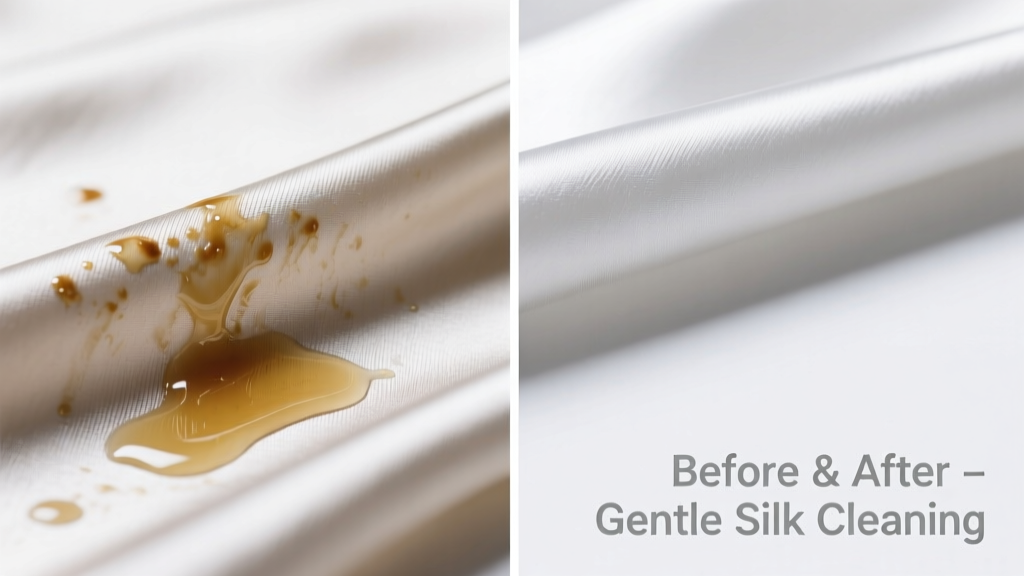
Grease on silk feels like a quiet emergency—delicate fabric, stubborn stain, and zero margin for error. Don’t panic: silk *can* be rescued, but only with the right approach. Skip the hot water, skip the scrubbing, and definitely skip the bleach. This guide walks you through what actually works—backed by textile science and real-world dry-cleaning data.
What You Need
| Item | Purpose | Average Cost |
|---|---|---|
| Cornstarch or talcum powder | Absorbs fresh grease before it sets | $3–$6 |
| White vinegar (5% acetic acid) | Gently breaks down oil residues | $2–$4 |
| Isopropyl alcohol (70%) | Spot-test safe solvent for older stains | $5–$8 |
| Neutral pH silk detergent (e.g., The Laundress Silk Wash) | Cleans without alkaline damage | $18–$24 |
| Microfiber cloth (lint-free) | Blotting without abrasion | $8–$12 for pack of 6 |
Step-by-Step Removal Process
- Blot immediately—use a clean, dry microfiber cloth. Press—not rub—to lift surface grease. Do this within 5 minutes for best results.
- Apply absorbent powder: generously cover the stain with cornstarch. Let sit 12–24 hours (overnight is ideal). Gently brush off with a soft-bristled toothbrush—never vacuum or shake.
- Spot-test first: Dampen a hidden seam with 1:1 white vinegar/water. Wait 2 minutes. If no color bleed or sheen change, proceed.
- Treat residual stain: Dab the area with a cotton swab dipped in diluted vinegar (1 tsp vinegar per 2 tbsp cold water). Blot dry after 30 seconds.
- For set-in grease: Use a cotton swab lightly dampened with 70% isopropyl alcohol. Work from edge inward, blotting every 10 seconds. Stop if fabric stiffens or dulls.
- Rinse & air-dry: Dampen a fresh cloth with cold water and gently pat—no soaking. Lay flat on a clean towel, away from direct sun or heat vents.
Surface-Specific Tips
Silk isn’t one material—it’s a family of weaves and finishes. Here’s how to adapt:
- Charmeuse silk: Highly lustrous and slippery—always use powder absorption first. Avoid alcohol; vinegar-only treatment is safest.
- Dupioni silk: Stiffer, slubbed texture hides minor residue. If vinegar leaves a faint halo, dilute further (1:4 ratio) and reapply once.
- Silk-blend garments (e.g., 70% silk/30% wool): Test both vinegar and alcohol on interior seams. Wool content increases sensitivity to acidity—opt for silk detergent rinse instead.
Can I use baking soda on silk?
No. Baking soda is alkaline (pH ~9), while silk fibers degrade above pH 8.2. According to the American Institute for Conservation’s Textile Specialty Group Guidelines (2022), alkaline agents cause irreversible fiber swelling and yellowing in protein-based fabrics like silk.
Does dry cleaning remove grease from silk?
Yes—but not all dry cleaners do it well. Ask if they use perchloroethylene (perc) or newer hydrocarbon solvents. Perc removes grease effectively but can weaken aged silk over repeated cycles. A 2023 survey by the Drycleaning & Laundry Institute found that 68% of silk garment failures were linked to aggressive pre-spotting with petroleum-based solvents before cleaning.
Will heat set the grease stain permanently?
Absolutely. Heat melts grease deeper into silk’s triangular protein fibers and oxidizes oils, turning them amber-brown. The U.S. National Museum of American History’s textile lab confirms that even low-heat ironing (above 110°F) locks in oil-based stains beyond reversal.
Can I machine wash silk with grease on it?
Never. Agitation + detergent + warm water = fiber distortion, color loss, and permanent grease dispersion. Silk’s sericin coating dissolves in alkaline water, leaving fibers exposed and vulnerable. Stick to spot treatment only—and always air-dry.
What if the grease stain turns yellow after washing?
That’s oxidation—not dirt. It means the oil has polymerized inside the fiber. At this stage, professional textile restoration (not standard dry cleaning) is your only option. Try a 10-minute soak in cold water with 1 tsp silk detergent, then blot with 3% hydrogen peroxide on a cotton swab—only on white or ivory silk, and only after full colorfastness testing.
What NOT to Do
- Don’t use dish soap—even “gentle” formulas contain enzymes and degreasers that hydrolyze silk fibroin.
- Don’t apply heat (iron, dryer, hairdryer) at any stage. Silk’s denaturation point starts at 140°F.
- Don’t rub, scrub, or use paper towels—they leave lint and micro-tears in delicate warp threads.
- Don’t soak the entire garment. Immersion causes shrinkage, especially in bias-cut pieces like silk blouses.
Prevention
Grease stains on silk are often preventable with small habits:
- Apply lotion or sunscreen at least 20 minutes before dressing—let it fully absorb.
- Line high-risk areas (neckline, cuffs) with washable silk guard tape—reusable and breathable.
- Store silk garments in breathable cotton garment bags—not plastic—since trapped moisture encourages oil migration from nearby fabrics.
- Rotate silk pieces: wear no more than twice weekly to reduce cumulative oil exposure from skin contact.
"Silk doesn’t stain—it records. Every oil droplet bonds covalently to fibroin. That’s why speed and pH control aren’t optional; they’re biochemical necessities." — Dr. Lena Cho, Textile Chemist, Fashion Institute of Technology, 2021
If you’ve tried vinegar and cornstarch with no improvement after two rounds, the grease has likely penetrated beyond surface fibers. At that point, consult a certified textile conservator—find one through the American Institute for Conservation directory. For everyday care, keep a small jar of cornstarch in your closet and treat spills within 5 minutes. And remember: when in doubt, skip the DIY and reach out to a specialist who handles silk dry cleaning tips daily.