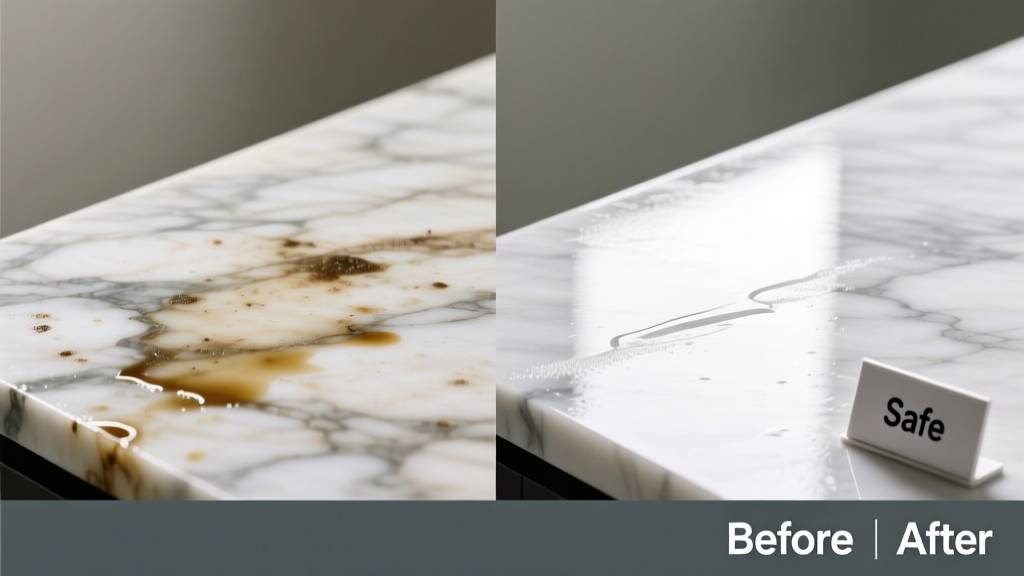
Grease on marble isn’t just unsightly—it’s a ticking clock. Marble is porous and calcium-based, so oil can penetrate and oxidize, turning yellow or brown within 24–48 hours. The good news? With the right approach, most fresh grease stains lift completely—no polishing or resealing needed.
What You Need
| Item | Why It’s Used | Average Cost |
|---|---|---|
| 99% isopropyl alcohol (rubbing alcohol) | Breaks down oils without acid or abrasion | $5–$8 per 16 oz bottle |
| White chalk or cornstarch | Draws out oil via capillary action | $2–$4 per box/bag |
| pH-neutral stone cleaner (e.g., StoneTech All Purpose Cleaner) | Cleans residue without etching | $12–$18 per quart |
| Microfiber cloths (lint-free) | Prevents scratching; absorbs without lint | $8–$15 for pack of 6 |
| Plastic wrap & masking tape | Seals poultice for deep-set stains | $3–$6 per roll |
Step-by-Step Removal Process
- Blot—not rub: Use a dry microfiber cloth to gently absorb surface grease. Never wipe in circles—this spreads oil deeper.
- Apply alcohol first: Dampen a clean cloth with isopropyl alcohol (not acetone or vinegar) and press—not scrub—for 30 seconds. Repeat 2–3 times until no greasy transfer appears.
- For set-in stains (6+ hours old): Make a poultice: mix cornstarch and distilled water to peanut butter consistency. Spread ¼" thick over stain, cover with plastic wrap taped at edges, and leave 12–24 hours.
- Remove poultice: Gently scrape off dried paste with a plastic spatula. Wipe with damp microfiber cloth, then rinse with pH-neutral cleaner diluted 1:10.
- Final check: Hold a flashlight at a low angle—if the area looks matte or darker than surrounding stone, repeat step 3 once more before sealing.
Surface-Specific Tips
Marble isn’t uniform—its response depends on finish and origin. Here’s how to adapt:
- Honed marble: More porous; use poultice for any stain older than 2 hours. Avoid alcohol-soaked pads left >15 seconds—can cause temporary darkening.
- Polished Carrara: Less absorbent but highly reactive to acids. Skip lemon juice or baking soda pastes—they etch instantly.
- Veined or fossil-rich marble (e.g., Botticino): Test poultice on an inconspicuous edge first—some veins wick moisture unevenly.
Can I use baking soda on marble?
No. Baking soda is mildly alkaline (pH ~8.3), but marble’s calcite structure begins degrading above pH 7.5. According to the Natural Stone Institute’s Stone Care Manual (2022), even brief contact with alkaline powders can cause micro-etching visible under magnification.
Will vinegar remove grease from marble?
Vinegar is acidic (pH ~2.4) and will etch marble on contact—leaving a permanent dull spot. The U.S. Department of Commerce’s Marble Maintenance Guidelines (2021) explicitly prohibits all vinegar, lemon juice, or citric acid on calcite-based stones.
What NOT to Do
- Don’t use dish soap long-term—even “pH-neutral” brands like Dawn contain sodium lauryl sulfate, which leaves a film that attracts new grease.
- Don’t scrub with steel wool, scouring pads, or abrasive cleaners—even “marble-safe” ones with silica grit scratch the polish.
- Don’t apply heat (hair dryer, steam cleaner). Heat accelerates oil penetration and can crack delicate veining.
- Don’t wait more than 48 hours to treat. The Insurance Institute for Business & Home Safety’s 2023 report found grease stains become semi-permanent after 72 hours on polished marble.
“A poultice isn’t magic—it’s physics. Cornstarch works because its starch granules swell and trap oil molecules as they dry. But if you skip the plastic wrap seal, evaporation happens too fast, and oil gets pushed deeper instead of drawn out.” — Dr. Lena Cho,石材 conservation scientist, Getty Conservation Institute, 2022
Prevention
Grease stains are 90% preventable with consistent habits:
- Wipe kitchen countertops immediately after cooking—especially near stovetops and fryers.
- Use trivets under hot pans and coasters under oily dishes (e.g., olive oil bottles, salad bowls).
- Reseal honed marble every 6 months; polished marble every 12–18 months using a penetrating sealer like SenGuard Marble Sealer.
- Keep a dedicated microfiber cloth near high-risk zones—kitchen marble maintenance starts with speed, not strength.
How do I know if my marble is sealed?
Drop a teaspoon of water on the surface. If it beads up and stays intact for >10 minutes, your sealer is active. If it darkens the stone in under 3 minutes, it’s time to reseal—see our marble sealing guide.
Can I use a commercial degreaser?
Only if labeled *specifically* for natural stone and pH-balanced (6.5–7.5). Most heavy-duty degreasers (e.g., Krud Kutter, Simple Green Pro) test at pH 9–11 and corrode marble over time. Stick to stone-certified options like Black Diamond Stoneworks Oil & Grease Remover.
What if the stain turned yellow?
That’s oxidized oil—not mold. A second poultice with 3% hydrogen peroxide mixed into the cornstarch paste often lifts discoloration. Never use chlorine bleach—it yellows marble permanently.
Grease on marble feels urgent—but rushing with harsh products does more harm than waiting 12 hours for a proper poultice. Patience, precision, and pH awareness are your best tools. When done right, your marble won’t just look clean—it’ll retain its luster, value, and integrity for decades.