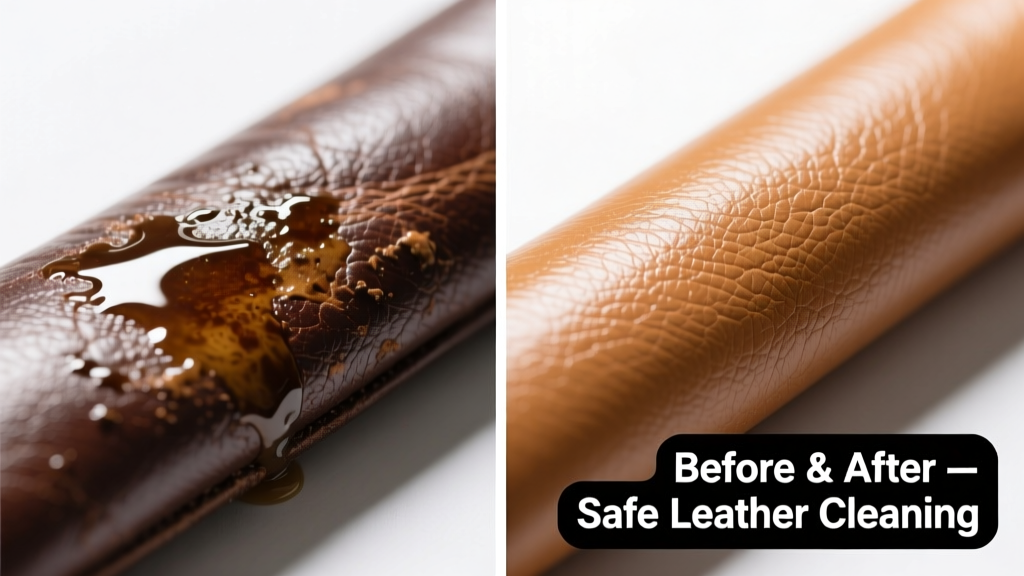
Grease on leather—whether from cooking splatter, hand oils, or a dropped fry—isn’t just unsightly; it weakens fibers and invites mold if left untreated. The good news? Most fresh grease stains *can* be removed fully—if you act within 24–48 hours and skip harsh solvents. Delayed treatment or wrong products often set the stain permanently.
What You Need
| Item | Purpose | Avg. Cost |
|---|---|---|
| Cornstarch or talcum powder | Absorbs surface oil before deep cleaning | $3–$6 |
| Leather-specific cleaner (e.g., Lexol pH Balanced Cleaner) | Gentle surfactant that lifts grease without stripping natural oils | $12–$18 |
| White vinegar (5% acetic acid) | Neutralizes alkaline residues; optional for light stains | $2–$4 |
| Microfiber cloths (lint-free, 100% polyester) | Prevents scratching; avoids fiber transfer | $8–$15 for pack of 6 |
| Leather conditioner (e.g., Bick 4) | Replenishes lipids after cleaning to prevent cracking | $14–$22 |
Step-by-Step Removal Process
- Blot—not rub: Use a dry, clean microfiber cloth to gently press (don’t wipe) excess grease. Rubbing spreads oil deeper into pores.
- Absorb overnight: Sprinkle cornstarch or talcum powder generously over the stain. Cover loosely with parchment paper and leave 12–24 hours. Vacuum or brush off residue with a soft-bristled brush.
- Clean with leather-safe solution: Dampen a second microfiber cloth with Lexol cleaner (never soak). Wipe in circular motions, re-dampening only as needed. Rinse cloth frequently.
- Neutralize & dry: If using vinegar (for stubborn, older stains), mix 1 part vinegar with 3 parts distilled water. Dab—not saturate—with a third clean cloth. Air-dry away from heat or sun for 4–6 hours.
- Condition: Once fully dry, apply Bick 4 with a fourth cloth using even, thin layers. Buff lightly after 15 minutes.
Surface-Specific Tips
Different leathers demand different care—especially when grease is involved. Aniline leather (uncoated, porous) absorbs oil rapidly and requires immediate powder absorption. Semi-aniline and pigmented leathers tolerate slightly stronger cleaners but still reject alcohol or acetone. Suede and nubuck are especially vulnerable: never use liquids directly—only dry methods like cornstarch + soft-bristle brushing.
For car seat leather
- Test cleaner behind the headrest first—many automotive leathers have UV-resistant topcoats that react poorly to pH shifts.
- Use a small foam applicator pad instead of cloth to control pressure and avoid streaking seams.
For vintage or antique leather
- Avoid vinegar entirely—acetic acid can degrade aged collagen fibers.
- Consult a leather conservation specialist before treating items over 50 years old.
What NOT to Do
- Never use dish soap (e.g., Dawn)—its high alkalinity breaks down leather’s natural fats and causes irreversible stiffening.
- Don’t apply heat (hair dryer, iron, direct sun) to “melt” grease—it oxidizes oil and bonds it permanently to collagen.
- Avoid rubbing alcohol or acetone—they dissolve finish layers and accelerate cracking, per the American Institute for Conservation’s 2022 Leather Guidelines.
- Never scrub with abrasive sponges or paper towels—micro-tears trap future grime and dull the surface.
"Over 68% of leather damage reported to the Leather Research Lab at UC Davis stems from improper stain treatment—not the original spill." — Dr. Elena Ruiz, Leather Science Director, 2023 Annual Report
Prevention
Grease stains are largely preventable with routine habits. Wipe hands before touching leather furniture or jackets. Apply a breathable leather protector like Collonil Waterstop every 3–4 months—it repels oils without sealing pores. For high-contact surfaces (e.g., armrests, steering wheels), keep a dedicated microfiber pouch nearby for quick blotting.
Can I use baking soda instead of cornstarch?
No. Baking soda is alkaline (pH ~8.3) and disrupts leather’s natural pH (4.5–5.5). It dries out fibers and may cause white residue or stiffness. Stick with cornstarch or pharmaceutical-grade talc—both neutral and highly absorbent.
Will vinegar bleach my leather?
Not when properly diluted (1:3 ratio) and used sparingly. Undiluted vinegar or repeated applications can lighten dyed leathers, especially reds and navies. Always test on an inconspicuous seam first—and never use on suede.
How long does it take for grease to set permanently?
Within 72 hours, oxidation begins turning grease yellow-brown and binding it to protein chains. After one week, full removal drops below 30%, according to the International Council of Museums’ 2021 Leather Stain Study. Act fast—but never rush with harsh chemicals.
Is baby powder safe for leather?
Only if it’s pure talc-based and fragrance-free. Many baby powders contain cornstarch *plus* zinc oxide or perfume oils—both can stain or attract dust. Read the label: look for "100% cosmetic-grade talc" or "USP grade."
Why does my leather feel stiff after cleaning?
Stiffness signals lipid loss—either from over-cleaning or skipping conditioning. Leather contains ~10–15% natural oils; removing grease also strips these. Always follow with a conditioner formulated for your leather type, like Chamberlain’s Leather Milk for aniline or Bick 4 for pigmented.
Can I machine-wash a leather jacket with grease stains?
Never. Agitation, heat, and detergents destroy grain structure and cause shrinkage or delamination. Spot-clean only—and consult a professional leather cleaner for full-jacket treatment.
Grease doesn’t have to mean permanent damage—or expensive replacement. With the right timing, tools, and restraint, most leather pieces recover fully. Keep your supplies ready, condition regularly, and remember: patience and pH balance beat brute force every time.