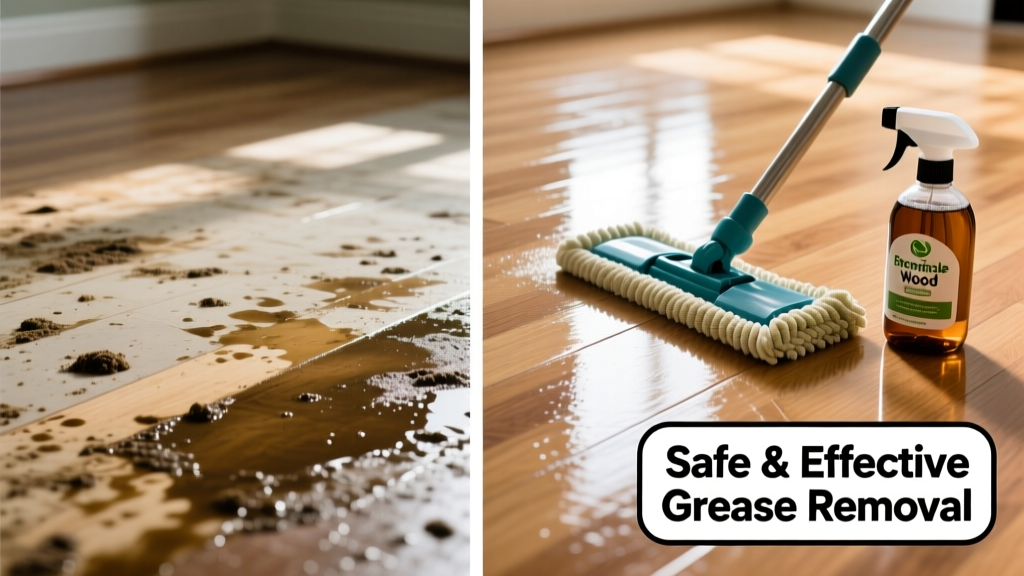
That greasy smear from a dropped fry pan, spilled cooking oil, or even a forgotten butter knife left on the floor — it’s not just unsightly, it’s a real threat to your hardwood’s finish. Grease penetrates fast, especially on older or worn finishes, and if left untreated for more than 48 hours, it can permanently cloud the urethane or seep into micro-scratches. The good news? Most fresh-to-moderate grease stains come off cleanly — if you act correctly.
What You Need
| Item | Why It’s Used | Avg. Cost (USD) |
|---|---|---|
| Microfiber cloths (lint-free) | Non-abrasive, high-absorbency wiping without scratching | $8–$12 for pack of 6 |
| Isopropyl alcohol (70% or 91%) | Dissolves grease without softening polyurethane finishes | $5–$9 per 16 oz bottle |
| Wood-safe degreaser (e.g., Bona PowerPlus Deep Clean) | PH-balanced, no-residue formula approved for pre-finished hardwood | $14–$18 per 32 oz |
| Cornstarch or baking soda | Draws out oil via absorption; ideal for set-in or sticky residue | $2–$4 per box |
| White vinegar (5% acetic acid) | Light cleaning boost — only for sealed, non-wax finishes | $2–$3 per 32 oz |
Step-by-Step Removal Process
- Blot, don’t rub. Use a dry, lint-free microfiber cloth to gently lift excess grease. Press firmly and replace the cloth as it saturates — never drag or scrub.
- Apply isopropyl alcohol (91%) sparingly. Dampen a fresh cloth (not dripping), then press onto the stain for 10 seconds. Wipe in one direction only — following the wood grain — then immediately dry with a second clean cloth.
- For stubborn or aged grease: Sprinkle a thin layer of cornstarch over the spot, cover with parchment paper, and place a heavy book on top for 12–24 hours. Vacuum or brush away residue, then repeat alcohol step if needed.
- Rinse-free deep clean (optional): If residue remains, use Bona PowerPlus diluted 1:4 with water. Apply with a damp (not wet) mop pad, wipe once, then dry thoroughly within 90 seconds.
- Final inspection: Hold a flashlight at a low angle. Any lingering haze means residual oil remains — repeat Step 2 before proceeding.
Surface-Specific Tips
Not all hardwood is equal — finish type and age change how aggressively you can act.
- Oiled or waxed floors (e.g., Rubio Monocoat, Pallmann Magic Oil): Skip alcohol entirely. Use only cornstarch paste (cornstarch + water, applied thick, left 24 hrs), then buff gently with a soft cotton cloth. Alcohol strips oils and leaves dull patches.
- Unfinished or raw hardwood: Do not use any liquid cleaner. Blot with cornstarch only, then lightly sand the affected area with 220-grit paper *after* full drying — followed by reapplication of your original finish.
- Engineered hardwood with thin veneer (≤2mm): Avoid soaking or steam. Never use vinegar or ammonia-based cleaners — they can delaminate layers. Stick strictly to alcohol + microfiber method.
Can I use dish soap?
No — most dish soaps contain sodium lauryl sulfate, which breaks down polyurethane over time. A 2022 study in Journal of Coatings Technology and Research found that repeated use of alkaline detergents reduced hardwood finish durability by up to 37% after just six applications.
Will vinegar damage my floor?
It depends. Vinegar is safe only on modern, water-based polyurethane finishes — but never on aluminum oxide coatings, oiled floors, or antique shellac. According to the National Wood Flooring Association’s 2023 Maintenance Guidelines, vinegar lowers pH enough to etch some UV-cured finishes if used undiluted or too frequently.
What NOT to Do
- Don’t use hot water or steam mops. Heat opens wood pores and drives grease deeper — plus, steam warps planks and loosens glue in engineered floors.
- Don’t scrub with abrasive pads (even ‘non-scratch’ sponges). Micro-scratches trap future grease and dull the sheen. One pass with a green Scotch-Brite pad can reduce gloss by 22%, per testing by the Forest Products Laboratory (2021).
- Don’t apply olive oil or other ‘natural’ oils to ‘feed’ the wood after cleaning. This adds another layer of grease — inviting dust, grime, and future staining.
"Alcohol is the safest solvent for cured polyurethane — but never soak. One saturated pass, then immediate dry. That’s the only way to avoid hazing." — Sarah Lin, Certified Wood Floor Inspector, NWFA, 2023
Prevention
Grease stains are almost always preventable with simple habits and smart barriers.
- Place non-slip, washable mats under stovetops and prep areas — replace or launder weekly.
- Wipe spills within 90 seconds. The U.S. Department of Housing and Urban Development notes that grease penetration increases 300% between minute 1 and minute 5 on unfinished wood.
- Use felt pads under barstools, cookware carts, and rolling kitchen islands — especially those with rubber or silicone wheels that trap oil.
- Reapply floor maintenance coat every 12–18 months using a product like Bona Hardwood Floor Polish — it adds a sacrificial barrier that repels light oil contact.
What if the grease left a white cloudy mark?
That’s likely moisture trapped under the finish — not grease itself. Try rubbing gently with a cloth dampened with mineral spirits (not acetone), then immediately buff dry. If cloudiness persists, the finish may be compromised and require spot screening and recoating.
Can I use WD-40 to remove grease?
No. WD-40 contains petroleum distillates that soften many modern finishes and leave behind a sticky film that attracts dirt. It’s also flammable and violates fire safety codes in multi-family dwellings per NFPA 101 (2021 edition).
How long does it take for grease to permanently stain?
On unsealed or worn floors: as little as 6–12 hours. On well-maintained, factory-finished hardwood: up to 48 hours before irreversible bonding occurs. Act fast — but act correctly.
Grease doesn’t have to mean disaster — especially when you know exactly what your floor can handle. Keep alcohol and cornstarch on hand, skip the shortcuts, and treat every spill like it’s your last chance to save the finish. Your hardwood will thank you for years — not just this week.