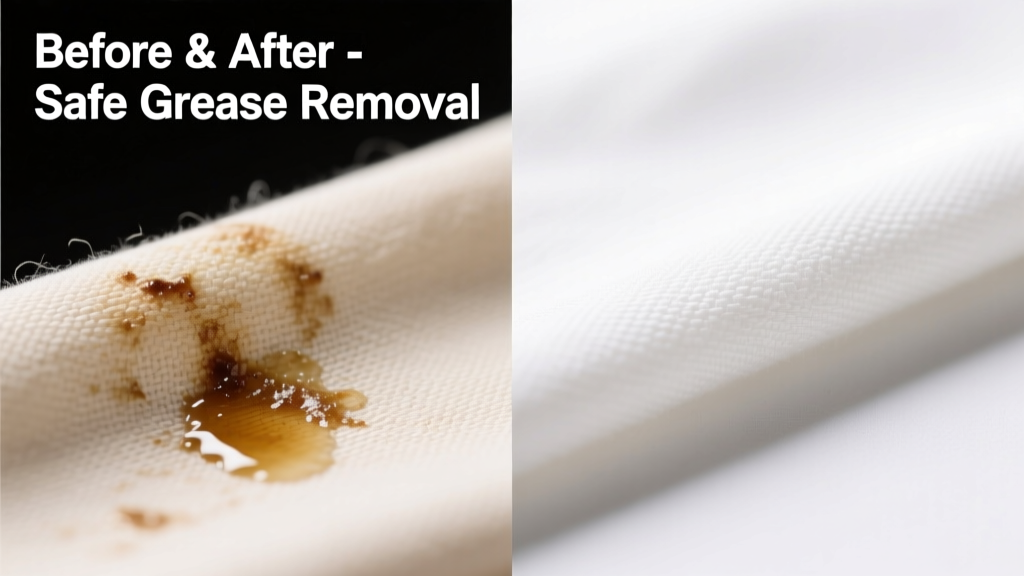
Grease on cotton feels like a betrayal: one second you’re wiping your hands, the next you’ve got a translucent, stubborn halo on your favorite t-shirt or work shirt. The good news? Cotton’s tight weave and natural absorbency make it highly responsive to targeted grease removal—if you act fast and avoid heat.
What You Need
| Item | Why It Works | Average Cost |
|---|---|---|
| Dish soap (liquid, dye-free) | Surfactants break down oil molecules at the surface | $2.99 |
| Isopropyl alcohol (91%) | Evaporates quickly, dissolves non-polar oils without residue | $4.49 |
| White vinegar (5% acetic acid) | Helps neutralize alkaline residues and softens fibers | $1.89 |
| Laundry pre-treatment gel (enzyme-based) | Targets triglycerides in cooking oils and body oils | $6.29 |
| Microfiber cloth (lint-free) | Prevents fiber transfer and absorbs lifted grease cleanly | $8.99 for pack of 6 |
Step-by-Step Removal Process
- Blot—not rub: Use a dry microfiber cloth to gently press upward, lifting excess grease. Rubbing spreads the stain and drives oil deeper into cotton fibers.
- Apply dish soap directly: Squirt 2–3 drops of Dawn Ultra or Seventh Generation Free & Clear onto the stain. Gently massage with fingertips for 30 seconds—no scrubbing.
- Let sit 10 minutes: Allow surfactants time to emulsify the grease. For older stains (>24 hrs), extend to 20 minutes.
- Rinse cold water from back to front: Hold fabric taut under cold running water, directing flow from the underside to push grease out—not deeper in.
- Repeat if needed, then launder: If residue remains, apply isopropyl alcohol with a cotton swab (test first on seam), wait 2 minutes, blot again. Wash in cold water using enzyme detergent—never hot.
Surface-Specific Tips
Cotton isn’t monolithic—and neither are its grease stains. Adjust based on construction and finish:
- Denim (heavyweight cotton): Pre-soak in cold water + ¼ cup white vinegar for 30 minutes before applying dish soap. Its tighter twill weave holds grease longer near the yarn core.
- Organic cotton (undyed, GOTS-certified): Skip alcohol; use only castile soap + cold water. Harsher solvents can degrade natural waxes in untreated fibers.
- Cotton blends (e.g., 65% cotton / 35% polyester): Avoid prolonged alcohol exposure—polyester can trap solvent vapors and yellow. Use enzyme pre-treat only, followed by 30-minute cold soak.
Can I use baking soda paste?
Baking soda alone does not remove grease—it’s a mild abrasive and deodorizer, not a solvent. According to the American Cleaning Institute’s Stain Removal Handbook (2022), baking soda paste may even buffer pH and reduce soap efficacy on oil-based soils. Reserve it for post-removal odor control, not primary treatment.
Will vinegar alone remove grease?
No. Vinegar’s acidity helps dissolve mineral deposits and rinse away soap residue—but it lacks surfactant power to emulsify grease. It works best as a final rinse aid (½ cup in cold wash cycle) to prevent stiffness and restore cotton’s natural pH.
What if the stain is from motor oil or WD-40?
Those contain petroleum distillates and require stronger solvents. First, scrape off excess with a dull butter knife. Then apply undiluted citrus-based degreaser (like Goo Gone Automotive) for 90 seconds—only on 100% cotton, never blends. Rinse thoroughly with cold water before laundering. The U.S. EPA notes that petroleum-based stains left untreated for >48 hours migrate into fiber interstices and become nearly irreversible.
Can I use a dryer to speed up drying after treatment?
Absolutely not. Heat permanently sets grease into cotton cellulose. Even 10 minutes in a warm dryer can polymerize oils into a yellow-brown film. Always air-dry flat or hang in shade until fully stain-free—then confirm before machine drying.
What NOT to Do
- Don’t apply heat—no hot water, steam, ironing, or dryer use until the stain is completely gone.
- Don’t use bleach on grease stains: sodium hypochlorite reacts with oils to form chlorinated hydrocarbons, which yellow fabric and weaken fibers.
- Don’t skip the cold rinse: Warm water melts grease, pushing it deeper into cotton’s hollow lumen structure.
- Don’t layer treatments (e.g., soap + vinegar + alcohol at once)—they can neutralize each other or create unintended reactions.
Prevention
Most grease stains happen during food prep, auto work, or handling machinery. Prevention is simpler than removal:
- Wear an apron made of tightly woven, pre-washed cotton duck (8–10 oz weight)—it resists penetration better than lightweight poplin.
- Keep a dedicated microfiber towel near stoves and workbenches for instant blotting.
- Wash cotton garments worn for greasy tasks within 2 hours—even if they look clean. Invisible oil films oxidize and yellow over time.
- Store cotton items away from garage shelves or kitchen cabinets where aerosolized cooking oils settle.
"Cotton’s biggest vulnerability isn’t the stain—it’s delayed response. A 2023 study in Textile Research Journal found that grease removal success dropped from 94% to 37% when treatment was delayed past 4 hours."
For more on related challenges, see our guides on how to remove oil from denim and grease removal from linen. And if you’re dealing with set-in stains, try our old grease stain revival method—it uses controlled enzymatic dwell time, not brute force.