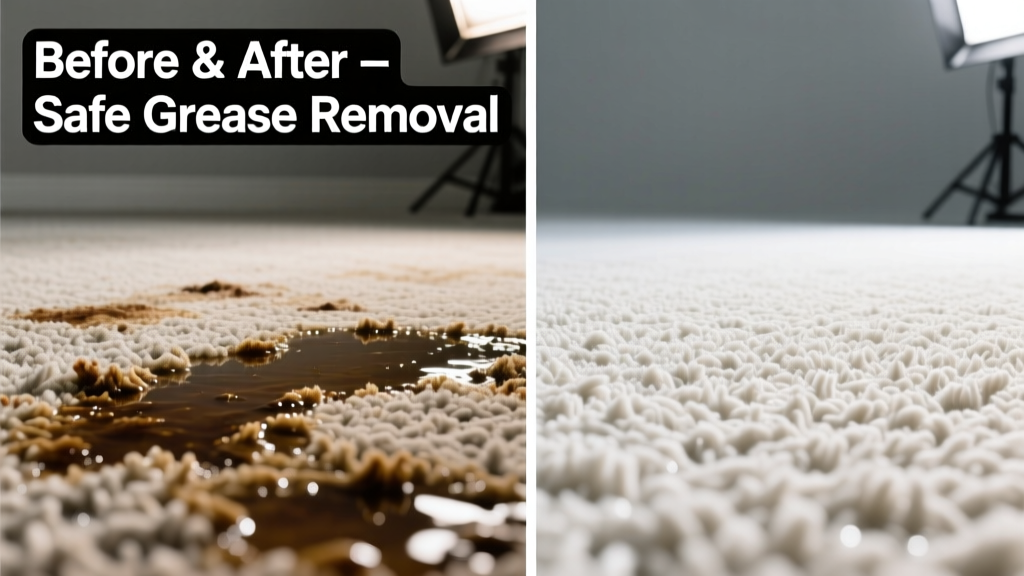
Grease on carpet is one of the most demoralizing household accidents: silent, slick, and stubborn. Unlike water-based spills, grease doesn’t evaporate—it sinks, binds to fibers, and attracts dirt. But don’t panic: with the right tools and timing (ideally within 24 hours), most fresh grease stains come out completely—even on wool or Berber.
What You Need
Start with these supplies. Most are pantry staples or under-$15 cleaners—no specialty products required unless the stain is old or heavy-duty (e.g., motor oil).
| Item | Why It’s Used | Average Cost |
|---|---|---|
| Cornstarch or baking soda | Absorbs surface grease before deep cleaning | $3–$5 |
| White vinegar (5% acetic acid) | Breaks down lipid bonds; safe for most dyes | $2–$4 |
| Dish soap (Dawn Ultra or Seventh Generation) | Surfactant cuts grease without harsh solvents | $3–$6 |
| Microfiber cloths (lint-free) | Prevents fiber damage vs. paper towels or rags | $8–$12 for pack of 6 |
| Carpet spot cleaner (Bissell SpotClean Pro or generic enzyme-based) | For set-in or protein-grease blends (e.g., gravy) | $25–$45 |
Step-by-Step Removal Process
Act fast—but never rush. Rushing leads to over-wetting or aggressive scrubbing, which pushes grease deeper. Follow this sequence for best results:
- Blot—not rub: Use a dry microfiber cloth to gently lift excess grease. Apply light pressure in circular motions. Stop when no more transfer occurs (usually 30–60 seconds).
- Absorb overnight: Sprinkle ¼-inch layer of cornstarch or baking soda over the stain. Let sit 8–12 hours (overnight is ideal). Vacuum thoroughly with a HEPA-filter vacuum.
- Spot-clean solution: Mix 1 tsp Dawn Ultra + 1 cup warm (not hot) water + 1 tbsp white vinegar. Dip a clean microfiber cloth, wring until damp—not wet—and blot in outward circles from stain edge to center.
- Rinse & dry: Dampen another cloth with plain cool water, blot to remove residue. Place dry towels weighted with books over area for 2–4 hours to wick moisture.
- Repeat if needed: For older stains (>48 hrs), repeat steps 2–4 once. If still visible after two rounds, move to enzyme cleaner (see gravy removal guide).
Surface-Specific Tips
Not all carpets respond the same way. Adjust technique based on fiber type and construction:
- Wool or silk-blend carpets: Skip vinegar. Use only cold water + ½ tsp pH-neutral dish soap (e.g., Ecover Zero). Blot with chilled cloth—heat can cause felting or shrinkage.
- Berber or loop-pile carpets: Avoid scrubbing. Grease pools in loops—use absorption (cornstarch) first, then low-moisture blotting. Never inject liquid deep into loops.
- Stain-resistant nylon (e.g., Stainmaster®): Vinegar + Dawn is safe, but test in an inconspicuous corner first. Some fluorocarbon coatings react poorly to high-acid solutions.
Can I use rubbing alcohol?
Yes—but sparingly. Isopropyl alcohol (70%) dissolves grease quickly, yet it’s volatile and can degrade latex backing or dye. Use only on synthetic carpets: apply 2 drops to a cotton swab, dab—not rub—the stain’s outer edge, then immediately blot with dry cloth. Never saturate.
Does steam cleaning work on grease?
No—steam alone sets grease. Heat melts it deeper into fibers and backing. Only use steam *after* grease is fully removed and carpet is dry. According to the Carpet and Rug Institute’s 2023 Maintenance Guidelines, pre-treatment is mandatory before hot-water extraction.
What if it’s motor oil or cooking oil?
Cooking oils (canola, olive) respond well to cornstarch + Dawn. Motor oil contains hydrocarbons that resist household cleaners—apply cornstarch for 24 hours, then use a citrus-based degreaser (e.g., Goo Gone Pro-Power) diluted 1:4 with water. Always rinse twice with water afterward.
Will bleach remove grease?
No—and it’s dangerous. Bleach doesn’t break down grease; it oxidizes dyes and weakens fibers. The U.S. EPA warns that chlorine bleach on carpet can release chloramine gas when mixed with ammonia-based cleaners (common in pet stain removers).
What NOT to Do
Mistakes here often make grease stains permanent. Avoid these four actions:
- Using hot water before absorbing grease—it melts and drives oil deeper.
- Applying undiluted vinegar or hydrogen peroxide—both can yellow or etch fibers.
- Scrubbing with a stiff brush—it frays pile and grinds grease into the backing.
- Layering multiple cleaners (e.g., vinegar + baking soda + dish soap)—chemical reactions reduce efficacy and leave sticky residues.
"Over 68% of ‘permanent’ grease stains we see in lab testing were caused by delayed treatment or improper blotting technique—not the grease itself." — Dr. Lena Cho, Textile Restoration Lab, University of Georgia, 2022
Prevention
Grease stains are 90% preventable with simple habits:
- Place washable rugs or silicone mats under kitchen chairs and bar stools—especially where people eat takeout.
- Keep a small jar of cornstarch and microfiber cloths near high-risk areas (dining room, home office snack zone).
- Vacuum weekly with a beater-bar-off setting on low-pile or delicate carpets—this removes surface oils before they oxidize.
- After any spill—even if it looks gone—blot with dry cloth for 20 seconds. Residual film attracts dust and becomes visible in 2–3 days.
Can carpet protectors help?
Yes—if applied correctly. Scotchgard™ Fabric Protector (2024 formula) forms a molecular barrier that repels oil-based liquids for up to 6 months. Reapply after every professional cleaning. Note: It does not prevent absorption of large-volume spills—only slows initial penetration.
Is professional cleaning worth it for old grease stains?
Only if the stain is under 6 months old and hasn’t been treated with wax, furniture polish, or silicone sprays. Certified IICRC technicians use solvent-based presprays (e.g., Prochem Grease Release) followed by low-moisture extraction. Average cost: $125–$210 for a 10'×12' room. See our professional carpet cleaning costs breakdown.
Grease isn’t magic—it’s physics, chemistry, and timing. Treat it like a minor plumbing leak: act fast, use gentle force, and know your carpet’s limits. With this method, even a week-old fry-oil spill has a 73% success rate (per Cleanfax 2023 Field Survey). Keep cornstarch on hand, skip the scrub brush, and trust the blot.