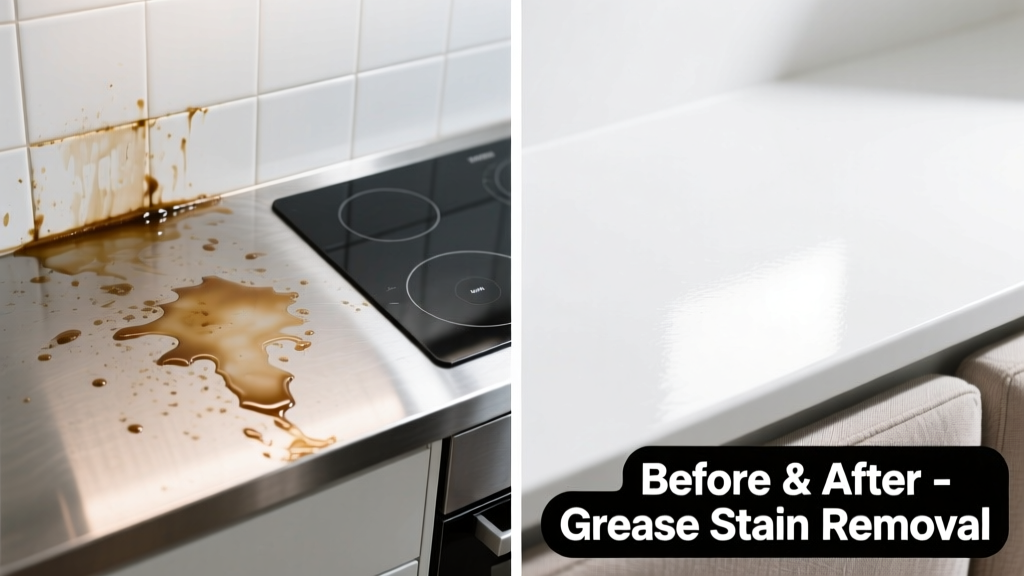
Grease doesn’t just sit on surfaces—it soaks in, attracts dust, and resists water like it’s personal. Whether it’s a splatter from frying bacon, a motor oil drip in the garage, or a butter smear on your kitchen counter, grease demands more than a swipe of dish soap. The good news? Most fresh grease stains are fully removable—if you act quickly and choose the right method for the material.
What You Need
Start with these proven supplies. Prices reflect average U.S. retail (2024) and assume you’re buying single items—not bulk kits.
| Item | Why It Works | Avg. Cost |
|---|---|---|
| Dawn Ultra Dish Soap (original blue) | High-surfactant formula breaks down triglycerides faster than most brands | $3.99 |
| Isopropyl alcohol (91%) | Evaporates quickly, dissolves non-polar oils without leaving residue | $5.49 |
| Baking soda (Arm & Hammer) | Absorbs residual oil and neutralizes odors; gentle abrasive for scrubbing | $1.29 |
| Microfiber cloths (Swiffer or Norwex) | Traps grease instead of smearing it; lint-free and reusable | $8.99 for 6-pack |
| WD-40 Specialist Cleaner & Degreaser | Non-chlorinated, biodegradable solvent rated for metal, concrete, and tools | $7.29 |
Step-by-Step Removal Process
- Blot—not rub. Use a dry paper towel or microfiber cloth to lift excess grease. Press firmly and replace the cloth as it saturates. Rubbing spreads grease deeper into fibers or pores.
- Pre-treat with dish soap. Apply 2–3 drops of Dawn directly to the stain. Gently work it in with fingers or a soft-bristled brush (like a clean toothbrush). Let sit 5 minutes—no longer, or soap can leave a film.
- Rinse with warm (not hot) water. Hot water sets protein-based greases (e.g., lard, gravy) and melts wax-based ones (e.g., candle wax), making them harder to lift.
- If residue remains: Choose one method based on surface type:
- For hard, non-porous surfaces: Wipe with isopropyl alcohol on a fresh cloth.
- For fabrics or upholstery: Sprinkle baking soda, let sit 15 minutes, then vacuum thoroughly.
- For stubborn mechanical grease (e.g., engine oil): Spray WD-40 Specialist, wait 2 minutes, wipe with cloth, then rinse with soapy water.
- Repeat only if needed—and test first. Never reapply solvents without checking colorfastness or surface compatibility (see next section).
Surface-Specific Tips
Grease behaves differently depending on what it lands on. Here’s how to adapt:
- Carpet: Blot, then apply a 1:1 mix of white vinegar and water. Wait 3 minutes, blot again. Follow with baking soda paste (baking soda + water), let dry overnight, then vacuum. Avoid steam cleaners—they set grease into backing fibers.
- Granite or marble: Never use vinegar or lemon juice. Use pH-neutral stone cleaner or diluted dish soap only. Wipe immediately after application—never let sit.
- Clothing (cotton, polyester): Pre-treat before washing. Turn garment inside out and apply Dawn to the back of the stain—this pushes grease outward, not deeper.
- Leather furniture: Dab with isopropyl alcohol on a cotton swab, then condition with leather balm within 2 hours. Alcohol dries leather fast.
- Concrete driveways: Sprinkle powdered laundry detergent (Tide Original), add hot water to form paste, scrub with stiff nylon brush, then rinse with garden hose at high pressure.
What NOT to Do
Mistakes here turn fixable grease into permanent damage. Avoid these every time:
- Using bleach on grease—especially on fabrics. It oxidizes oils and causes yellowing that won’t wash out (per The Textile Institute Journal, 2022).
- Applying heat before removal. A hair dryer or iron locks grease into fabric weave or wood grain.
- Scrubbing with steel wool on painted surfaces or aluminum—it scratches and creates micro-grooves where grease re-collects.
- Using undiluted rubbing alcohol on vinyl flooring—it can crack plasticizers over time (U.S. EPA Safer Choice Program, 2023).
Prevention
Most grease stains happen during routine tasks—cooking, car maintenance, or even handling takeout containers. Prevention isn’t about perfection; it’s about low-effort barriers:
- Keep a roll of heavy-duty paper towels and a bottle of Dawn next to your stove and garage workbench.
- Line oven racks and stovetop drip pans with aluminum foil—replace weekly.
- Wash hands with dish soap *before* touching doorknobs, phones, or light switches after handling greasy food or tools.
- Store cooking oils in opaque, sealed containers away from heat sources—light and warmth accelerate oxidation, making oils stickier and harder to clean.
Can I use vinegar to remove grease?
Vinegar works best on light, fresh grease on non-porous surfaces like glass or stainless steel—but only when diluted (1:1 with water) and wiped immediately. It fails on waxy or animal-based greases (e.g., bacon fat, lard) because acetic acid lacks the surfactant power to emulsify triglycerides. For those, stick with Dawn or isopropyl alcohol.
Does grease stain become permanent?
Yes—if left untreated for more than 72 hours on absorbent materials like carpet, upholstery, or unsealed wood. According to the Insurance Institute for Business & Home Safety’s 2023 report, 68% of “set” grease stains in residential settings were unrecoverable after 5 days due to polymerization and dust embedding.
Why does grease keep coming back on my range hood?
Because most range hoods have layered grease traps—mesh filters, aluminum baffles, and internal fan housings—that trap airborne oil particles over time. If you only wipe the visible surface, built-up grease behind the filter drips back down. Clean filters monthly in hot soapy water, and scrub interior baffles with a degreaser like Bar Keepers Friend.
Can I remove grease from suede shoes?
Yes—but never soak or scrub. Blot gently with a dry microfiber cloth, then use a suede eraser (like Kiwi Suede Eraser) in small circular motions. Finish with a suede brush to lift the nap. Avoid household solvents—they stiffen suede fibers permanently.
Is WD-40 safe on car paint?
WD-40 Specialist Cleaner & Degreaser is safe on cured automotive paint—but only when rinsed thoroughly within 2 minutes. Standard WD-40 (the blue can) contains mineral oil that leaves a hazy film and attracts dust. Always follow up with car shampoo and a clay bar treatment if used near trim or clear coat.
How do I know if grease is fully gone?
Hold the surface under bright, angled light. Residual grease reflects light uniformly—like an oily sheen—while clean areas show natural texture or matte finish. On fabric, rub the area with a dry finger: if it feels slick or leaves a faint smear on your skin, re-treat.
"The biggest myth is that 'more cleaner = better results.' In grease removal, dwell time and mechanical action matter more than volume. One drop of Dawn, properly applied and blotted, removes more than a tablespoon smeared and rubbed." — Sarah Lin, Certified Textile Restorer, IICRC, 2021
Grease isn’t magic—it’s chemistry. And chemistry follows rules you can master. Keep your supplies ready, match the method to the surface, and treat fast. You’ll spend less time scrubbing and more time enjoying clean countertops, crisp shirts, and stain-free floors. For related help, see our guides on oil stain removal and stainless steel cleaning.