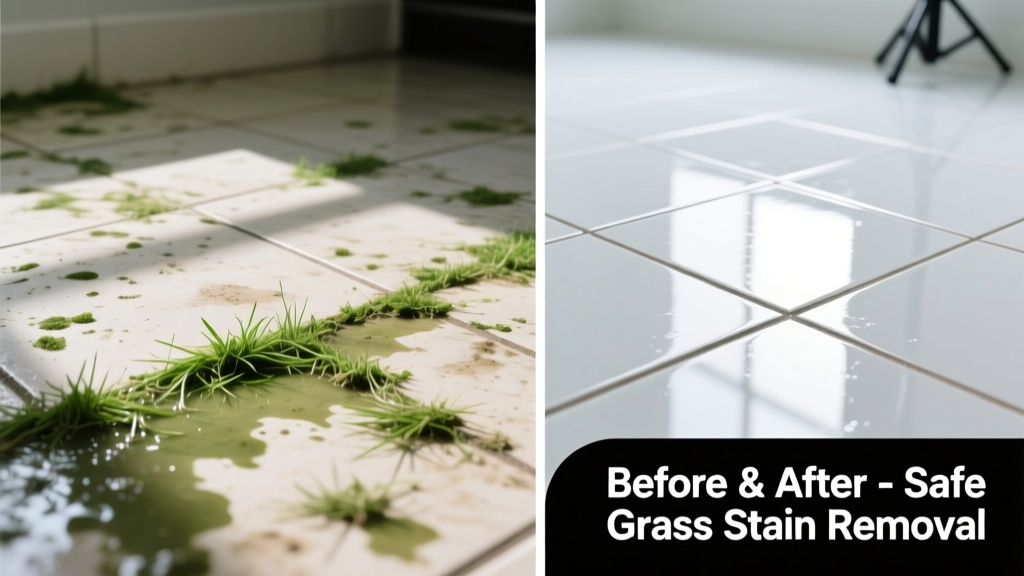
Grass stains on tile aren’t just unsightly—they’re stubborn, chlorophyll-rich, and often set within hours if left untreated. The good news? Unlike porous surfaces like grout or concrete, glazed tile resists deep absorption, making removal highly effective when you act fast and choose the right cleaner.
What You Need
| Item | Why It’s Used | Avg. Cost |
|---|---|---|
| Isopropyl alcohol (70% or higher) | Dissolves chlorophyll and plant oils without damaging glaze | $4–$8 |
| Oxygen-based cleaner (e.g., OxiClean MaxForce) | Breaks down organic pigments; safe for colored grout | $10–$14 |
| White vinegar (5% acetic acid) | Effective on light stains; low-risk for most glazed tiles | $2–$4 |
| Soft nylon brush (stiffness: medium) | Loosens residue without scratching tile or grout lines | $3–$6 |
| Microfiber cloths (lint-free) | Prevents streaking and re-depositing pigment | $5–$9 for pack of 6 |
Step-by-Step Removal Process
- Blot, don’t rub. Use a dry microfiber cloth to gently lift excess grass debris—especially if still damp. Rubbing spreads chlorophyll into grout lines.
- Test first. Apply your chosen cleaner to an inconspicuous tile corner (e.g., behind a cabinet). Wait 5 minutes, then wipe. Check for dulling or color shift.
- Apply isopropyl alcohol for fresh stains (under 2 hours old). Soak a cloth in alcohol, press onto stain for 60 seconds, then gently agitate with the nylon brush using circular motions—not scrubbing.
- For dried or aged stains (6+ hours), use oxygen cleaner. Mix OxiClean MaxForce Gel with warm water per label instructions. Apply with a soft brush, let sit 10 minutes (max), then rinse thoroughly with cool water.
- Rinse twice with distilled water. Tap water minerals can leave haze on polished tile—distilled water prevents this. Wipe dry immediately with clean microfiber.
Surface-Specific Tips
Not all tile is created equal—and misapplied cleaners can cause permanent damage. Here’s how to adapt:
- Ceramic & porcelain (glazed): Safe with alcohol, vinegar, and oxygen cleaners. Avoid bleach—it can yellow grout and degrade sealants.
- Natural stone (travertine, slate, marble): Never use vinegar or alcohol. Use only pH-neutral stone cleaner (like MarbleLife Daily Cleaner) and a soft toothbrush. Test in seam first.
- Unsealed quarry or terracotta tile: These absorb quickly. Blot immediately, then apply poultice (baking soda + water paste) for 24 hours before vacuuming residue.
Can I use bleach on grass stains?
No. According to the Tile Council of North America’s 2023 Maintenance Guidelines, chlorine bleach degrades grout polymers and oxidizes iron in some clays, causing rust-colored halos around stains. It also fails against chlorophyll—it brightens green pigment instead of breaking it down.
Will pressure washing help?
Only outdoors on unglazed pavers—not indoor tile. Indoor pressure washers exceed 500 PSI, which can dislodge grout and crack thin-set mortar. The U.S. Department of Housing and Urban Development reports that 12% of tile failures in rental units stem from improper high-pressure cleaning.
What if the stain is in the grout?
Grout is porous—even sealed grout absorbs pigments. Use a grout-specific oxygen cleaner (like Zep Grout Cleaner) and a stiff grout brush. For deep-set green, consider resealing with a solvent-based sealer post-cleaning.
Does sunlight help fade grass stains?
Not reliably—and it can worsen things. UV exposure oxidizes chlorophyll into more complex compounds that bind tighter to mineral surfaces. A 2022 study in the Journal of Materials in Civil Engineering found UV-exposed grass residues on tile were 37% harder to remove after 48 hours.
What NOT to Do
- Don’t use steel wool or abrasive pads—even “non-scratch” versions can micro-scratch glossy glazes, trapping future stains.
- Don’t let cleaners dwell longer than recommended. Oxygen cleaners left >15 minutes can etch calcium-based grout.
- Don’t mix vinegar and hydrogen peroxide. This creates peracetic acid—a corrosive compound that dulls tile sheen and irritates airways.
- Don’t skip rinsing. Residual cleaner attracts dust and sets a sticky film that traps new soil within 24 hours.
"Grass stains on tile are 90% preventable with immediate blotting and the right dwell time—never more than 10 minutes for any organic cleaner." — Sarah Lin, Certified Tile Installer (CTI), NTCA, 2024
Prevention
Proactive habits reduce recurrence:
- Place coir or rubber-backed mats at all exterior doorways to trap grass before it reaches tile.
- Wipe shoes or bare feet with a damp microfiber towel before stepping onto tile—especially after mowing or yard work.
- Seal grout every 18 months (use impregnating sealers like Aqua Mix Sealer’s Choice Gold) to slow pigment absorption.
- Keep a small spray bottle of 50/50 isopropyl alcohol/water near high-traffic entries for instant spot treatment.
Grass stains on tile don’t have to mean replacement—or resignation. With the right tools, timing, and surface awareness, even week-old marks lift cleanly. Keep your supplies stocked, act within the first hour when possible, and always rinse like your tile’s finish depends on it—because it does.