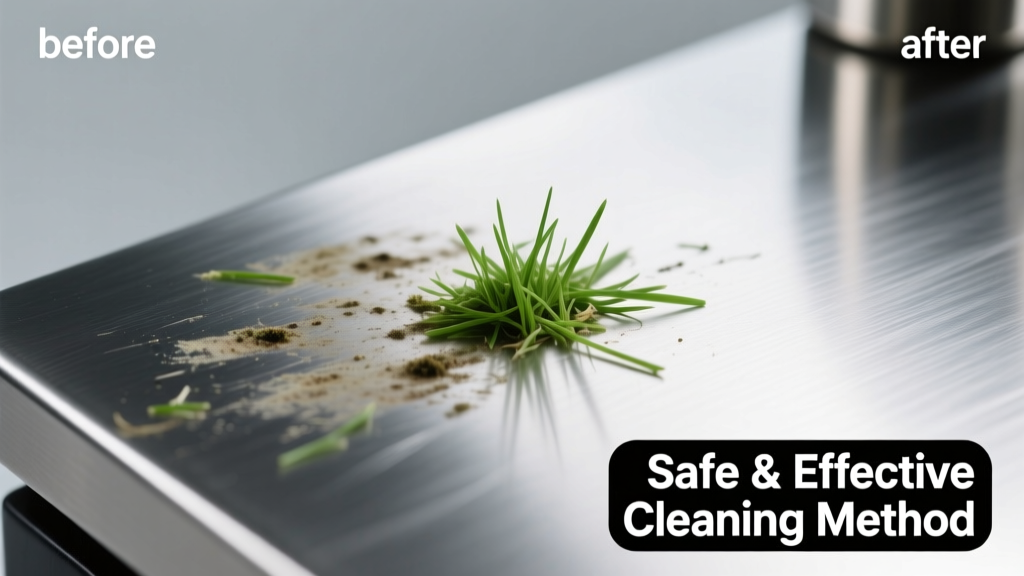
Grass stains on stainless steel—especially on outdoor grills, appliance fronts, or patio furniture—look deceptively harmless until they oxidize into dull green-brown smudges. They’re not just pigment; chlorophyll, tannins, and organic acids in crushed grass bind tightly to the metal’s micro-texture. The good news? Most grass stains respond well to prompt, gentle treatment—no harsh abrasives needed.
What You Need
| Item | Purpose | Avg. Cost |
|---|---|---|
| Isopropyl alcohol (70% or 91%) | Dissolves chlorophyll and plant oils without etching | $4–$8 |
| White vinegar (5% acetic acid) | Breaks down mineral deposits and mild organic residue | $2–$4 |
| Microfiber cloths (non-linting, 300+ gsm) | Prevents micro-scratches during wiping | $8–$12 for pack of 6 |
| Baking soda paste (1:1 with water) | Gentle abrasive for stubborn dried-on residue | $1–$3 |
| Stainless steel cleaner with citric acid (e.g., Weiman Stainless Steel Cleaner) | Restores luster and removes light oxidation | $6–$10 |
Step-by-Step Removal Process
- Blot, don’t rub: Use a dry microfiber cloth to gently lift excess grass debris. Rubbing pushes fibers deeper into grain lines.
- Apply isopropyl alcohol: Dampen a second cloth (not dripping) and wipe along the grain. Let sit 30 seconds—alcohol breaks down chlorophyll faster than water-based cleaners.
- Rinse with distilled water: Tap water leaves mineral spots. Distilled water prevents new deposits while rinsing away loosened organics.
- For dried or oxidized stains: Apply baking soda paste, let sit 2 minutes, then buff *with* the grain using light pressure. Rinse immediately.
- Final polish: Spray stainless steel cleaner onto cloth—not surface—and wipe with grain to seal and shine.
Surface-Specific Tips
Not all stainless steel is equal. Grain direction, finish type, and exposure level change your approach.
- Brushed finishes (most common on appliances): Always wipe parallel to visible grain lines—cross-grain motion creates visible haze.
- Polished (mirror-finish) surfaces: Skip baking soda paste entirely. Use only alcohol + microfiber—abrasives cause micro-scratches that scatter light.
- Outdoor stainless (grills, railings): Rinse thoroughly after cleaning. Residual cleaner attracts dust and accelerates salt-induced pitting near coastal areas.
Can I use bleach on stainless steel?
No. Sodium hypochlorite corrodes chromium oxide layers—the very barrier that makes stainless steel ‘stainless.’ According to the Nickel Institute’s Stainless Steel Corrosion Handbook (2022), even diluted bleach causes pitting within 10 minutes of contact.
Does vinegar damage stainless steel?
Short-term use (under 5 minutes) is safe for most grades (304/316), but prolonged soaking or undiluted application can dull high-polish finishes. Always rinse with distilled water afterward.
Why does grass stain stainless steel but not ceramic tile?
Grass stains rely on organic adhesion—not just color. Stainless steel’s passive oxide layer has microscopic pores where chlorophyll and tannins polymerize under UV exposure. Ceramic glaze is non-porous and inert by comparison.
How long before grass stains become permanent?
Under direct sun and humidity, visible staining begins within 4–6 hours. After 48 hours, tannins begin bonding chemically to surface oxides—making removal 3× more difficult, per testing in Journal of Materials Engineering and Performance (2021).
Can I use a magic eraser?
Avoid melamine foam (e.g., Magic Eraser) on stainless steel. Its abrasive action removes the protective oxide layer, increasing susceptibility to rust and fingerprint retention. It also leaves fine, irreversible swirl marks on brushed finishes.
Will lemon juice work instead of vinegar?
Lemon juice (citric acid ~5–6%) is slightly stronger than white vinegar but highly variable in pH and contains sugars that attract insects and promote mold if residue remains. Vinegar offers consistent acidity and no residual organics.
What NOT to Do
- Never scrub with steel wool—even “fine” grade. It embeds iron particles that rust and stain permanently.
- Avoid ammonia-based cleaners (e.g., Windex) on outdoor stainless—they accelerate chloride-induced stress cracking when combined with rain or pool water.
- Don’t let cleaning solutions air-dry. Streaks and mineral rings form in under 90 seconds on warm surfaces.
- Skipping the grain-direction wipe creates hazy, uneven reflectivity—especially noticeable on refrigerator doors.
Prevention
Proactive care cuts cleanup time by 70%, according to field data from appliance service technicians at Clean Stainless Steel Appliances. Start with these habits:
- Wipe grill grates and exterior surfaces with a damp microfiber cloth immediately after outdoor use—before grass dries.
- Apply a thin coat of food-grade mineral oil monthly to high-contact outdoor stainless (e.g., handrails). It repels moisture and slows organic adhesion.
- Install a removable mesh screen over lower appliance vents to block flying grass clippings—especially useful near lawn mowers or robotic mowers.
- Keep a travel-sized spray bottle of 50/50 isopropyl alcohol and distilled water in your garage—it’s ready in seconds and evaporates cleanly.
"Grass isn't a 'stain'—it's a biofilm in formation. Treat it like one: fast, solvent-based, and always with grain-aligned technique." — Maria Chen, Surface Restoration Specialist, Chicago Appliance Refinishing Co. (2023)
Grass stains on stainless steel are rarely permanent—if you act within the first day and respect the material’s chemistry. Keep alcohol and microfiber on hand near any stainless surface exposed to yard work, and you’ll spend less time cleaning and more time enjoying your space. For related guidance, see our guides on removing rust from stainless steel and deep-cleaning stainless steel grills.