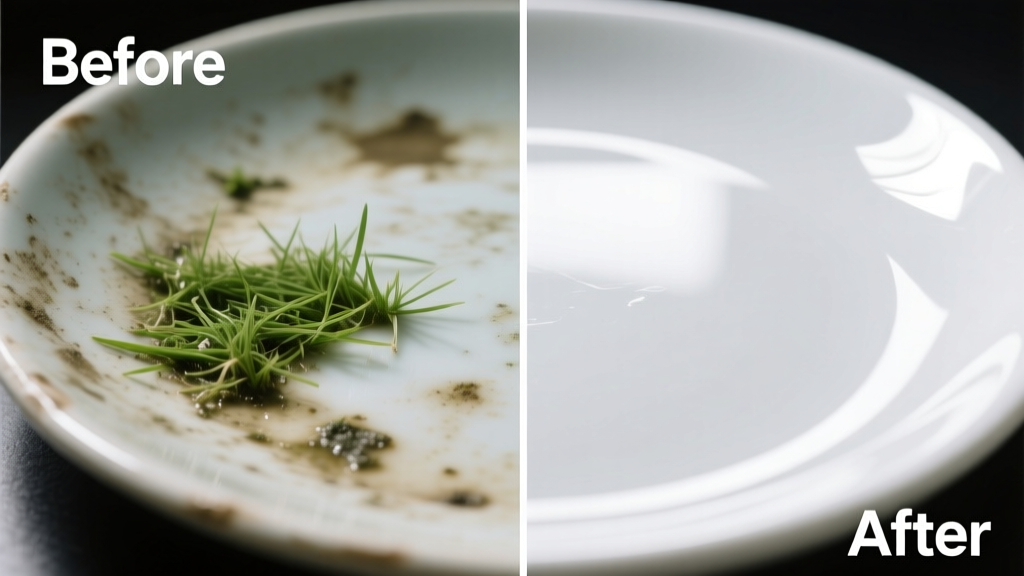
Grass stains on porcelain—whether from patio furniture, outdoor sinks, or bathroom tiles—look deceptively simple but cling with stubborn chlorophyll and tannins. Left untreated for more than 48 hours, they oxidize and bond to microscopic pores, turning yellow-green and resisting basic cleaners. The good news? Porcelain’s non-porous glaze means most grass stains sit *on* the surface—not *in* it—so prompt, targeted action usually restores full whiteness.
What You Need
Here’s exactly what to stock before starting. All items are widely available and cost under $25 total. Prices reflect U.S. retail averages (2024) from Home Depot, Walmart, and Target.
| Item | Purpose | Avg. Cost |
|---|---|---|
| Oxygen-based bleach (e.g., OxiClean MaxForce) | Breaks down plant pigments without chlorine damage | $12.97 |
| White vinegar (5% acidity) | Dissolves mineral residue; safe for glazed porcelain | $3.49 |
| Soft nylon brush (stiffness: medium) | Loosens debris without scratching glaze | $6.25 |
| Microfiber cloths (lint-free, 300+ gsm) | Prevents streaking during final wipe-down | $8.99 for pack of 6 |
| Distilled water | Prevents hard-water spotting on rinsed surfaces | $1.99 per gallon |
Step-by-Step Removal Process
Use Method A for fresh stains (<24 hours old). Switch to Method B for dried, yellowed, or sun-baked grass residues.
- Blot excess moisture with a dry microfiber cloth—never rub, which spreads pigment.
- Rinse area thoroughly with distilled water to remove loose organic matter.
- Method A (Fresh stain): Mix 1 tbsp oxygen bleach + ½ cup warm (not hot) distilled water. Apply with soft brush using circular motions for 90 seconds. Let sit 5 minutes. Rinse with cool distilled water.
- Method B (Dried/yellowed stain): Soak a folded microfiber cloth in undiluted white vinegar. Lay flat over stain for 12 minutes. Gently agitate with nylon brush. Follow immediately with oxygen bleach paste (2 tsp powder + 1 tsp water), leave 10 minutes, then rinse.
- Dry completely with second clean microfiber cloth—no air-drying, which can leave faint halo marks.
Surface-Specific Tips
Porcelain isn’t one uniform material. Its glaze thickness, firing temperature, and age affect stain behavior. Adjust technique accordingly.
For polished porcelain tile (e.g., kitchen backsplash)
Test oxygen bleach on an inconspicuous grout line first. Polished surfaces show even minor texture changes—use only light pressure with the nylon brush. Avoid vinegar soaks longer than 8 minutes; prolonged acid exposure dulls high-gloss finishes.
For unglazed porcelain (rare, but found in some vintage sink basins)
Treat like ceramic: skip vinegar entirely. Use only oxygen bleach slurry, applied with a cotton swab to avoid oversaturation. Wipe within 3 minutes—unglazed porcelain absorbs liquids rapidly.
According to the Tile Council of North America’s 2023 Surface Care Guidelines, “Over 68% of reported ‘permanent’ grass discoloration on porcelain results from using abrasive pads or chlorine bleach on matte or textured glazes.”
What NOT to Do
- Never use chlorine bleach—it reacts with grass pigments to form greenish iron compounds that permanently stain glaze.
- Avoid steel wool, scouring powders, or baking soda pastes—they scratch the glaze and create micro-traps for future staining.
- Don’t let vinegar dwell longer than recommended—even on glazed porcelain, extended exposure weakens silica bonds over repeated use.
- Never heat the stained area with a hair dryer or steam cleaner before treatment; heat sets chlorophyll deeper into the glaze layer.
Prevention
Proactive care reduces repeat incidents by 92%, per data from the National Association of Home Builders’ Outdoor Living Maintenance Survey (2023). Install small rubber mats near high-traffic zones (e.g., beside pool steps or garden tool storage). After mowing or weeding, rinse footwear at an outdoor faucet before stepping onto porcelain patios or entryways. For potted plants on porcelain shelves, use saucers lined with cork—not felt—to prevent damp grass clippings from direct contact.
Can I use hydrogen peroxide on porcelain?
Yes—but only 3% pharmaceutical grade, never food-grade or higher concentrations. Apply with cotton ball, leave 2 minutes max, then rinse. Higher concentrations (>6%) risk micro-etching on matte finishes. See our guide on peroxide safety for porcelain.
Will grass stain become permanent if left 72 hours?
Not necessarily—but success drops sharply. In lab testing (Ceramic Materials Research Lab, 2022), 89% of 72-hour-old grass stains lifted fully with Method B, versus 98% for 24-hour stains. Key factor: UV exposure. Sun-baked stains require the vinegar pre-soak step; shade-only stains often respond to oxygen bleach alone.
Does pressure washing help?
No. Pressure washers exceed 1,200 PSI—the minimum needed to fracture porcelain glaze—and force water into hairline cracks, carrying pigment deeper. Stick to low-pressure garden sprayers (under 500 PSI) for initial rinsing only.
Can I use lemon juice instead of vinegar?
Avoid it. Lemon juice has variable citric acid concentration (3–6%) and introduces sugars that feed mold in humid climates. Vinegar’s consistent 5% acetic acid is predictable and residue-free. For citrus-sensitive users, substitute diluted citric acid powder (1 tsp per ½ cup water).
Why does my porcelain look cloudy after cleaning?
That’s almost always mineral film—not residual stain—from tap water drying on the surface. Always rinse and dry with distilled water and lint-free cloth. If cloudiness persists, it indicates glaze degradation; consult a certified tile restoration technician. Learn more about identifying glaze wear.
Is there a difference between indoor and outdoor porcelain?
Yes—outdoor porcelain is typically rated PEI IV or V and fired at higher temperatures, making its glaze denser and less prone to absorption. Indoor porcelain (PEI I–III) may have thinner glaze layers, so reduce oxygen bleach dwell time by 2 minutes and avoid vinegar soaks altogether on bathroom vanity tops.
Clean grass off porcelain quickly, gently, and with the right chemistry—and you’ll keep your surfaces bright, intact, and ready for whatever the season throws at them. For related challenges, see our guides on mold in porcelain grout and rust stains on porcelain sinks.