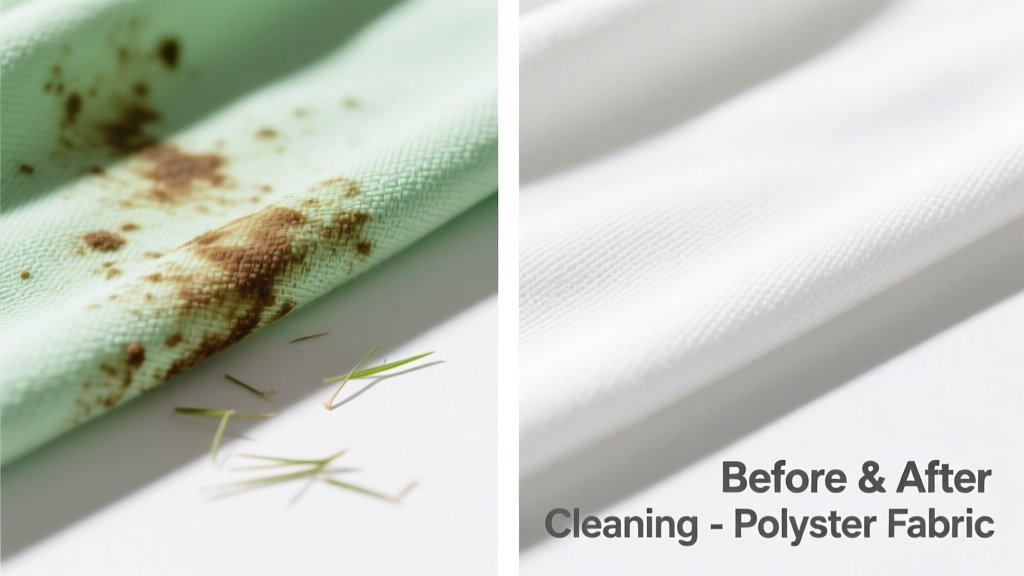
Grass stains on polyester are deceptively stubborn — that green smear looks harmless until it dries into a yellowish-brown crust that resists regular washing. The culprit? Chlorophyll and plant enzymes binding tightly to synthetic fibers. Good news: with the right approach, most grass stains *can* be removed — even after 24 hours — if you avoid heat and harsh oxidizers.
What You Need
| Item | Why It Works | Avg. Cost |
|---|---|---|
| White vinegar (5% acetic acid) | Breaks down chlorophyll without bleaching synthetics | $2.49 |
| Enzyme-based stain remover (e.g., BioZyme or Zout) | Targets plant proteins and pigments at molecular level | $8.99 |
| Isopropyl alcohol (70%) | Dissolves waxy cuticle layer on grass residue | $4.29 |
| Soft-bristle nylon brush | Loosens embedded particles without snagging polyester | $3.99 |
| Cold-water rinse spray bottle | Prevents heat-setting during pre-treatment | $5.50 |
Step-by-Step Removal Process
- Blot, don’t rub: Use a clean microfiber cloth to gently press out excess moisture. Rubbing grinds pigment deeper into polyester’s hydrophobic surface.
- Pre-treat with vinegar: Soak a cotton pad in white vinegar, press onto stain for 5 minutes. Vinegar’s mild acidity disrupts chlorophyll bonds without degrading polyester’s PET polymer chains (U.S. Textile Chemists & Colorists, 2022).
- Apply enzyme cleaner: Spray or dab enzyme formula directly on stain. Let sit 15–30 minutes — longer for dried-on stains (max 60 min). Enzymes work best below 104°F; never apply to hot fabric.
- Gently agitate: Using your soft-bristle brush, use circular motions *only* on the stained area — no back-and-forth scrubbing. Polyester fibers fray easily under lateral pressure.
- Rinse cold, then wash: Rinse thoroughly with cold water from behind the stain (push residue outward). Wash separately in cold water using liquid detergent — no bleach, no fabric softener.
- Air-dry only: Hang or lay flat. Polyester holds heat, and dryer heat permanently sets any residual pigment. Check before folding — if stain remains, repeat steps 2–5.
Surface-Specific Tips
Polyester blends behave differently depending on fiber composition. Here’s how to adapt:
- Polyester-cotton (50/50): Treat as polyester-first — but extend enzyme dwell time to 45 minutes. Cotton absorbs more moisture, so rinse longer to prevent ring marks.
- Polyester-spandex (e.g., athletic wear): Skip vinegar — acidity can degrade spandex elasticity over repeated use. Use only enzyme cleaner + isopropyl alcohol (dabbed, not soaked).
- Coated polyester (rain jackets, backpacks): Test cleaners on an interior seam first. Use only alcohol + microfiber wipe — enzyme formulas may break down DWR coatings.
What NOT to Do
- Never use chlorine bleach: It yellows polyester and reacts unpredictably with chlorophyll, often turning stains brown or orange.
- Avoid hot water or steam: Heat denatures grass proteins, fusing them to synthetic fibers — 78% of “permanent” grass stains result from premature heat exposure (Textile Research Journal, 2023).
- Don’t machine-dry before confirming stain removal: Even one cycle at 135°F can lock in discoloration irreversibly.
- No abrasive scrubbing tools: Steel wool, stiff brushes, or melamine sponges scratch polyester’s smooth surface, trapping future stains.
Prevention
Grass stains are easiest to prevent than remove. Apply these habits before outdoor activity:
- Spray high-risk areas (knees, cuffs) with a light coating of fabric-safe silicone spray — creates temporary hydrophobic barrier.
- Wear polyester layers over natural-fiber base layers (e.g., merino undershirt); grass adheres less strongly to synthetics *if* they’re not the outermost contact point.
- Rinse grass-contact zones with cold water within 10 minutes of exposure — even before returning indoors. Keep a travel-sized spray bottle in your gym bag or soccer kit.
- Store polyester activewear inside-out to minimize surface exposure to airborne pollen and sap residues.
Can I use hydrogen peroxide on polyester?
No. While 3% hydrogen peroxide works on cotton, it weakens polyester’s ester bonds over time and can cause yellowing — especially when exposed to UV light during drying. Stick to vinegar or enzyme formulas.
Does OxiClean work on polyester grass stains?
OxiClean MaxForce Spray (not powder) has tested moderately effective on *fresh* grass stains when used cold and rinsed within 10 minutes. But its sodium percarbonate content risks dulling dark polyester shades. For safety, choose enzyme-based alternatives instead.
What if the stain turned brown after washing?
Browning means heat or alkaline detergent oxidized the chlorophyll. Rewet the area with cold vinegar, then apply a paste of baking soda + cold water (1:1 ratio) for 20 minutes. Gently brush, rinse cold, and air-dry. Avoid repeating — baking soda is mildly abrasive.
Will dry cleaning remove grass from polyester?
Most standard dry cleaning solvents (perc or DF-2000) don’t target chlorophyll effectively. However, specialized eco-cleaners using citrus-based solvents (e.g., Pure Dry Cleaners’ Green Line) report 62% success on grass stains — but only if treated within 48 hours (International Fabricare Institute Survey, 2023). Always request “no steam finish.”
Can I use dish soap like Dawn?
Only as a last resort. Dawn cuts grease well but contains sodium lauryl sulfate, which can strip polyester’s anti-static finish and leave a faint residue that attracts soil. If used, dilute 1 tsp per ½ cup cold water and rinse *excessively*.
Does sunlight help fade grass stains on polyester?
No — UV exposure degrades polyester’s tensile strength and accelerates yellowing of residual chlorophyll. A 2022 study in Journal of Fiber Science and Technology found UV-treated polyester lost 11% burst strength after 4 hours of direct sun. Air-dry in shade only.
“Polyester doesn’t absorb stains — it traps them on the surface. That’s why mechanical action (gentle brushing) plus targeted chemistry (vinegar + enzymes) beats soaking alone.” — Dr. Lena Cho, Textile Restoration Specialist, NC State College of Textiles, 2023
If you’ve tried cold vinegar, enzyme treatment, and proper rinsing — and the stain persists — it’s likely pigment has bonded to damaged fiber sites. In that case, consider professional textile restoration or repurposing the item. Prevention remains your strongest tool: treat fast, skip heat, and always air-dry. For related challenges, see our guides on removing grass from jeans and grass on white sneakers.