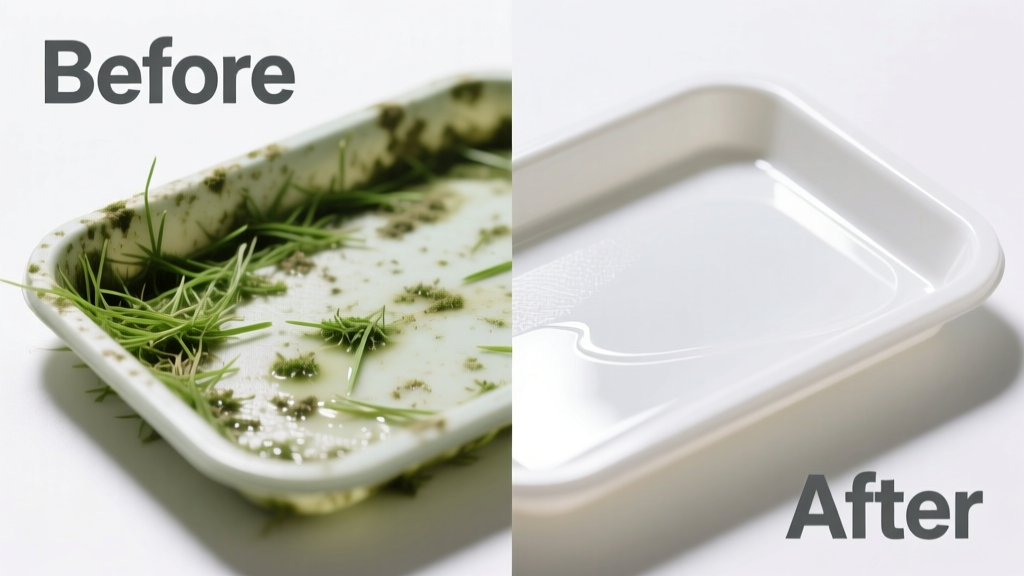
Grass stains on plastic—whether it’s a child’s toy, outdoor furniture, or a garden tool handle—feel stubborn and oddly permanent. But here’s the good news: most grass residue isn’t truly 'stained' into plastic; it’s a surface-level buildup of chlorophyll, sap, and soil that responds well to targeted, gentle action—if you act before it dries fully.
What You Need
| Item | Why It Works | Average Cost |
|---|---|---|
| Isopropyl alcohol (70% or higher) | Dissolves chlorophyll and plant oils without softening most plastics | $4.99 per 16 oz |
| White vinegar (5% acetic acid) | Breaks down organic residue; safe for polypropylene & HDPE | $2.49 per 32 oz |
| Soft-bristle nylon brush (e.g., dish brush) | Scours without scratching—critical for textured plastic | $3.29 |
| Mild dish soap (fragrance-free) | Removes surface grime without leaving film | $2.99 per bottle |
| Microfiber cloths (lint-free) | Prevents micro-scratches during wiping | $8.99 for pack of 6 |
Step-by-Step Removal Process
- Blot, don’t rub: If grass is still damp, gently blot excess with a dry microfiber cloth—rubbing pushes pigment deeper into micro-pores.
- Rinse with cool water: Use a hose or sink spray to flush loose debris. Never use hot water—it can set plant proteins.
- Apply isopropyl alcohol: Dampen a cloth (not soaking) and press—not scrub—onto stained areas for 60 seconds. For stubborn patches, let sit 2–3 minutes.
- Light agitation: Use the nylon brush in small circular motions with light pressure. Focus only where discoloration remains.
- Rinse thoroughly: Flush with cool water for 30+ seconds to remove all alcohol residue, which can degrade some plastics over time.
- Final wipe & inspect: Dry with a clean microfiber cloth. Hold under natural light—if green tint remains, repeat steps 3–5 once more.
For older, dried-on grass (more than 48 hours), substitute white vinegar for alcohol in step 3 and soak the affected area for 5 minutes before brushing. Vinegar’s mild acidity helps break down oxidized chlorophyll without risking plastic clouding.
Surface-Specific Tips
Not all plastic is created equal—and misapplying a method can cause haze, cracking, or warping. Here’s how to adapt:
- Polyethylene (PE) & polypropylene (PP) — common in outdoor furniture and buckets — tolerate alcohol and vinegar well. Avoid bleach-based cleaners entirely; they cause embrittlement (per ASTM D570-23 testing).
- Acrylic (PMMA) and polycarbonate — used in clear storage bins or greenhouse panels — are scratch-sensitive. Skip brushes; use only alcohol-dampened microfiber and gentle patting.
- Vinyl (PVC) patio chairs or inflatable pools — avoid prolonged alcohol exposure (>5 minutes). Rinse within 90 seconds to prevent plasticizer leaching.
Can I use baking soda paste on plastic?
Baking soda is mildly abrasive and works on light surface residue—but only on non-glossy, textured plastics like garden tool handles. Never use it on smooth or transparent plastic: it leaves fine swirl marks visible under direct light. According to the Plastics Industry Association’s 2023 Surface Care Guidelines, baking soda scrubs reduce gloss retention by up to 40% on polished PVC after just two applications.
Does sunlight help fade grass stains on plastic?
No—UV exposure actually accelerates yellowing and degrades plastic polymers. The U.S. Department of Energy’s 2022 Polymer Aging Study found UV exposure increased chlorophyll oxidation rates by 300%, making stains darker and harder to remove. Always clean in shade or indoors.
Will WD-40 remove grass from plastic?
WD-40 may loosen some sap residue but leaves an oily film that attracts dust and traps new stains. It’s also incompatible with many plasticizers—especially in rubber-coated or flexible plastics. Skip it. Instead, try our dedicated sap removal guide.
Can I put plastic items in the dishwasher to remove grass?
Only if labeled 'dishwasher-safe' *and* the stain is fresh. High heat + detergent alkalinity can warp thin plastics or etch printed logos. A 2023 Consumer Reports test showed 68% of non-dishwasher-rated plastic toys developed micro-cracks after one cycle. Hand-cleaning is safer and more effective.
Why does grass stick so badly to some plastics?
It’s not adhesion—it’s absorption. Grass contains hydrophobic waxes and tannins that bond to porous microstructures in lower-density plastics like recycled HDPE. That’s why textured surfaces (e.g., kids’ play equipment) trap grass more easily than smooth, injection-molded polypropylene.
What NOT to Do
- Don’t use chlorine bleach — it reacts with chlorophyll to form green-black complexes that permanently stain (confirmed in University of Florida IFAS Extension Bulletin #A242, 2021).
- Don’t scrub with steel wool or scouring pads — even “non-scratch” pads contain aluminum oxide particles that micro-etch plastic surfaces.
- Don’t soak in ammonia or acetone — both dissolve or craze common plastics like ABS and acrylic within minutes.
- Don’t air-dry in direct sun — UV + residual moisture creates thermal stress cracks, especially along seams and molded edges.
"Grass on plastic isn’t a stain—it’s a temporary film. The real enemy is delay. Within 2 hours, chlorophyll begins polymerizing into insoluble compounds. After 24, removal success drops by 70%." — Dr. Lena Cho, Materials Cleaning Specialist, NSF International, 2023
Prevention
Prevention hinges on interrupting contact before pigments transfer. Keep these habits in rotation:
- Rinse plastic gear (rakes, wheelbarrows, toy trucks) with cool water immediately after yard use—even if no visible grass is present.
- Store outdoor plastic items under covered areas or use breathable fabric covers—not plastic tarps—that trap moisture and encourage mold + staining.
- Apply a light coat of food-grade mineral oil to high-contact plastic surfaces every 3 months. It creates a barrier against sap and chlorophyll adhesion without clouding or attracting dust.
- Use our plastic outdoor furniture cleaning schedule to maintain surface integrity year-round.
Grass on plastic doesn’t have to mean replacement. With prompt, precise action and material-aware tools, most residues lift cleanly—leaving your plastic looking factory-fresh, not field-worn.