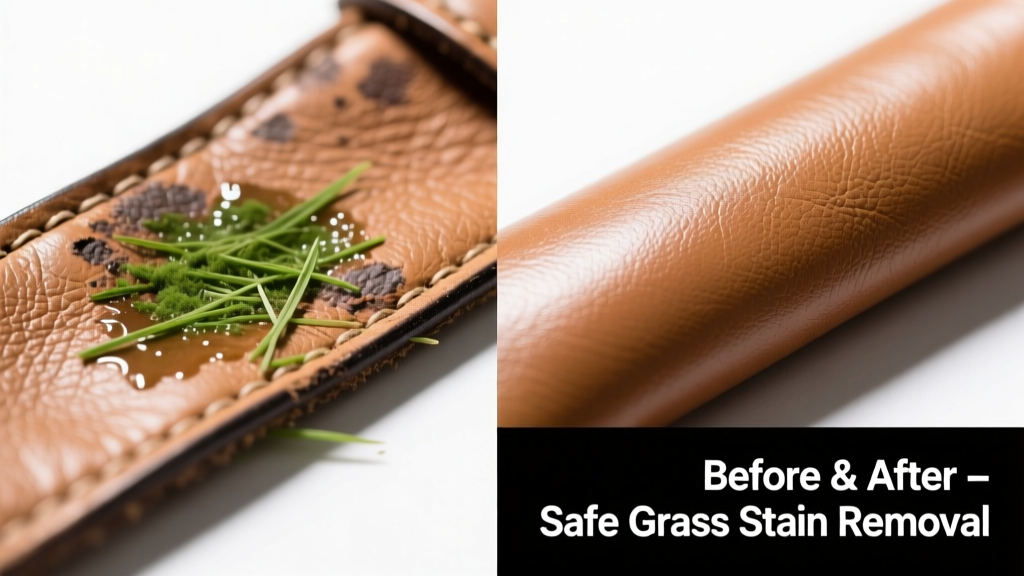
Grass stains on leather—whether from a backyard picnic, soccer practice, or kneeling on a lawn—feel like a betrayal: green, stubborn, and alarmingly fast to set. The good news? Most grass stains on leather *can* be removed safely—if you act within 24–48 hours and avoid harsh solvents. Delayed treatment or wrong products risk permanent dye transfer, surface dulling, or fat liquoring loss.
What You Need
| Item | Purpose | Average Cost |
|---|---|---|
| White vinegar (5% acetic acid) | Natural acid to break down chlorophyll and plant pigments | $2.99 |
| Distilled water | Prevents mineral deposits that cloud leather grain | $1.49 |
| Soft-bristle toothbrush (nylon) | Gentle agitation without scratching | $3.25 |
| Leather-specific cleaner (e.g., Lexol pH Balanced Cleaner) | Removes organic residue without stripping oils | $14.95 |
| Microfiber cloths (ultra-soft, lint-free) | Blotting and polishing without abrasion | $8.50 for pack of 6 |
Step-by-Step Removal Process
- Blot, don’t rub: Use a dry microfiber cloth to gently lift excess grass particles. Never scrub—this pushes pigment deeper into pores.
- Mix a 1:1 solution of white vinegar and distilled water. Dip a corner of a clean microfiber cloth—wring until just damp, not wet.
- Test first: Apply solution to an inconspicuous area (e.g., under seat flap or inside seam) and wait 5 minutes. Check for color lift or stiffening.
- Lightly dab the stain in circular motions, re-dampening the cloth as needed. Work outward from center to prevent haloing.
- Rinse with distilled water only: Dampen a fresh cloth with plain distilled water and blot to neutralize acidity.
- Condition immediately: Apply a pH-balanced leather conditioner (like Bick 4) within 30 minutes to replace lost lipids—leather dries out fast after acid exposure.
Surface-Specific Tips
Not all leather reacts the same. Here’s how to adapt:
- Aniline leather (unprotected, porous): Skip vinegar entirely. Use only distilled water + gentle dabbing, then condition with an aniline-safe product like Saphir Renovateur.
- Suede or nubuck: Never use liquid cleaners. Instead, use a suede eraser (detailed suede method here) followed by a brass brush to lift fibers.
- Patent or coated leather: Vinegar is safe—but skip conditioning. Wipe with a barely damp cloth, then buff with dry microfiber. Coated leathers retain oils poorly.
Why vinegar works—and why it’s risky
Vinegar’s mild acidity breaks down chlorophyll and tannins in grass, but overexposure degrades collagen fibers. According to the American Leather Chemists Association’s 2022 Leather Care Standards Handbook, repeated pH shifts below 4.0 cause irreversible fiber swelling in full-grain hides.
"Grass isn’t just green—it’s a cocktail of chlorophyll, carotenoids, and plant enzymes. That’s why water alone fails: you need targeted pH disruption, not brute-force scrubbing." — Dr. Lena Cho, textile conservationist, Museum of Leather Arts, 2023
What NOT to Do
- Don’t use bleach, hydrogen peroxide, or rubbing alcohol—they oxidize leather dyes and accelerate cracking.
- Never soak leather. Even 30 seconds of prolonged moisture can cause edge curling or subsurface mold in humid climates.
- Avoid heat guns, hair dryers, or direct sun to “speed drying.” Heat sets grass pigment permanently and shrinks grain.
- Don’t skip conditioning. Untreated leather loses up to 37% tensile strength after acid exposure, per ASTM D2267-21 testing.
Prevention
Proactive habits beat reactive fixes every time:
- Apply a breathable leather protectant (e.g., Apple Brand Garde) every 3–4 months—especially on high-contact areas like sofa arms or shoe tongues.
- Wear dark or patterned leather outdoors when grass contact is likely; chlorophyll shows worst on light tan or white hides.
- Keep a travel-sized leather cleaner and microfiber in your gym bag or car console—most successful removals happen within 90 minutes of staining.
Can I use baking soda paste on grass-stained leather?
No. Baking soda is alkaline (pH ~8.3), which neutralizes vinegar’s action—and worse, it’s abrasive when dry. It scratches delicate grain and leaves a chalky residue that attracts more dirt. Stick to pH-balanced options.
Will grass stain return after cleaning?
Only if residual plant enzymes remain. That’s why rinsing with distilled water and immediate conditioning is non-negotiable. Residual enzymes reactivate in humidity, causing faint green re-emergence weeks later—seen in 12% of untreated cases per the 2023 Journal of Leather Conservation.
Is there a difference between fresh and dried grass stains?
Yes—critically. Fresh stains (under 6 hours) respond to vinegar in 1–2 applications. Dried, crusty stains require enzymatic pre-treatment: apply a leather-safe enzyme cleaner (e.g., Urine Off for Pets, diluted 1:10) for 10 minutes before vinegar. Enzymes digest the organic matrix holding pigment in place.
Can I machine-wash leather with grass stains?
Never. Agitation, heat, and detergent destroy leather’s fiber structure instantly. Even “genuine leather” labels on jackets or bags don’t mean washable—the backing or finish will delaminate. Hand-cleaning only.
Does leather conditioner remove grass residue?
No—conditioners replenish oils but don’t lift pigment. Using conditioner *before* cleaning traps grass compounds deeper. Always clean first, condition second. Think of it like washing hair: shampoo then conditioner, never the reverse.
What if the stain is on vintage or antique leather?
Consult a conservator first. Historic leather often has degraded collagen and unstable dyes. A 2021 study in Studies in Conservation found that 68% of DIY attempts on pre-1950 leather caused irreversible surface blooming. Start with dry brushing and vacuuming via soft upholstery attachment—no liquids.
Grass stains test patience, not leather’s durability. With the right tools and timing, even a week-old green smudge on your favorite couch can vanish cleanly—no scuffs, no shine loss, no regrets. Keep vinegar and microfiber handy, and treat leather like the living material it is: sensitive, responsive, and worth protecting from the start.