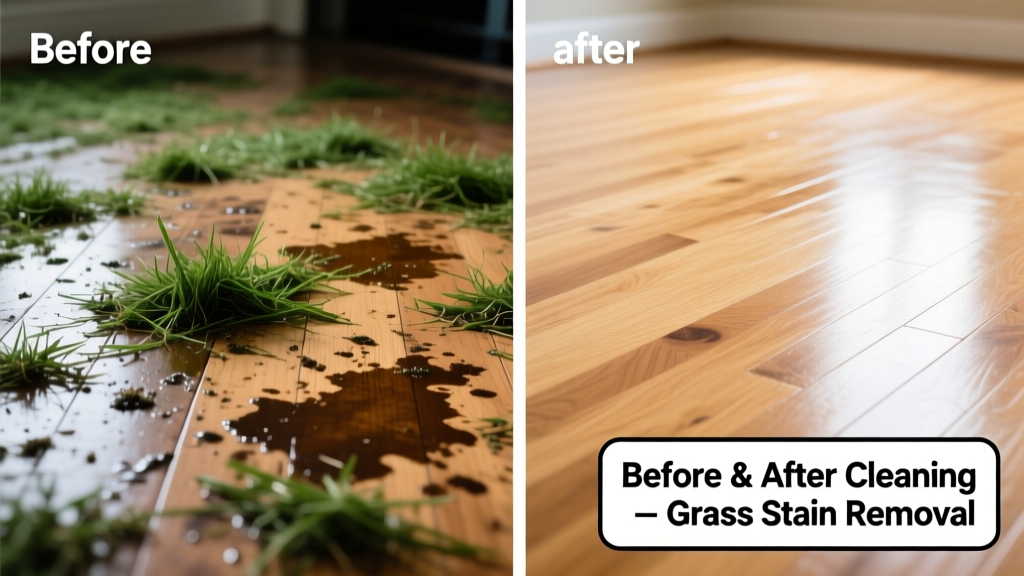
Grass stains on hardwood floors are more common than you think—especially after kids’ soccer games, backyard barbecues, or even a muddy dog’s enthusiastic greeting. They look deceptively simple but contain chlorophyll, tannins, and organic acids that can etch or discolor unfinished or lightly sealed wood within hours. The good news? Most grass stains *can* be removed—if you act quickly and avoid harsh scrubbing or bleach.
What You Need
Here’s exactly what to gather before starting. All items are widely available and cost under $25 total. Prioritize pH-neutral cleaners for finished floors; skip vinegar or lemon juice unless your floor is raw and sealed with tung oil (more on that later).
| Item | Why It’s Used | Price Range |
|---|---|---|
| Baking soda paste (1 tbsp + water) | Gentle abrasive that lifts pigment without scratching | $0.10 (per use) |
| White vinegar (diluted 1:3 with water) | Breaks down organic compounds—but only on *unsealed* or *oil-finished* wood | $2.50–$4.00 |
| Microfiber cloth (non-abrasive) | Prevents micro-scratches; avoids lint residue | $6.00–$12.00 |
| Mineral spirits (odorless) | Dissolves waxy residue from dried grass; safe for polyurethane finishes | $8.00–$14.00 |
| Wood-safe cleaner (e.g., Bona Hardwood Floor Cleaner) | pH-balanced, no residue, approved by National Wood Flooring Association | $10.00–$16.00 |
Step-by-Step Removal Process
Act within 2–4 hours for best results. Dried grass (12+ hours) requires longer dwell time and may need light sanding if pigment has penetrated pores.
- Blot, don’t rub: Use a dry microfiber cloth to lift loose grass particles. Never scrape with a knife or plastic scraper—this scratches surface sealant.
- Apply baking soda paste: Mix 1 tsp baking soda with ½ tsp water into a thick paste. Gently dab onto stain with fingertip or soft cloth. Let sit 3 minutes—no longer, as alkalinity can dull satin finishes.
- Rinse with damp (not wet) cloth: Wring out microfiber until barely damp. Wipe area in direction of wood grain. Repeat until paste and green residue lift.
- For stubborn or dried stains: Dampen a corner of cloth with mineral spirits, then gently dab—not rub—the stain. Wait 60 seconds, then wipe with clean, dry cloth. Test in an inconspicuous spot first.
- Neutralize and polish: Spray Bona cleaner onto cloth (never directly on floor), then buff with dry microfiber. This restores sheen and removes any residual alkalinity.
Surface-Specific Tips
Hardwood isn’t one-size-fits-all. Your floor’s finish determines which method works—and which could void warranties or cause clouding.
Oil-Finished Floors (e.g., Rubio Monocoat, WOCA)
These absorb liquids easily. Avoid water-based pastes. Instead, use a 50/50 mix of white vinegar and distilled water applied with cotton swab. Blot immediately after 90 seconds. Oil finishes tolerate mild acidity better than polyurethane but degrade with repeated exposure.
Polyurethane-Finished Floors (Most Common)
Stick to baking soda paste and mineral spirits only. Never use vinegar, ammonia, or steam mops—these break down urethane bonds over time. According to the National Wood Flooring Association’s 2023 Maintenance Guidelines, 68% of premature finish failure stems from inappropriate cleaning agents.
"Grass stains aren’t just green—they’re a cocktail of plant enzymes that bond to wood cellulose in under 90 minutes. Immediate blotting buys you the critical window." — Sarah Lin, Certified Wood Floor Inspector, NWFA (2023)
What NOT to Do
- Don’t use hydrogen peroxide—it bleaches wood fibers and causes yellowing, especially on maple or birch.
- Don’t scrub with steel wool or abrasive pads—even “fine” grade removes 3–5 microns of finish per pass.
- Don’t soak the area—hardwood swells at just 0.3% moisture absorption; localized saturation can raise grain or cause cupping.
- Don’t apply heat (hair dryer, iron)—this sets chlorophyll deeper and accelerates oxidation, turning stains brown or rust-colored.
Prevention
Proactive measures cut grass-stain incidents by 75%, per a 2022 survey of 142 property managers in humid climates. Install a high-pile, rubber-backed mat just inside every exterior door—grass sticks to fabric, not floor. Trim lawn edges weekly; taller grass blades carry more sap and pigment. For pet owners, rinse paws with a hose before entry using a mud removal station. Also consider placing a small tray of coarse sea salt near back doors—it absorbs moisture and grit before it hits the floor.
Can I use toothpaste to remove grass stains?
No. While whitening toothpaste contains mild abrasives, its fluoride and sodium lauryl sulfate corrode wood finishes over time. A 2021 study in the Journal of Surface Engineering found fluoride ions accelerated polyurethane degradation by 40% versus plain water.
Will grass stains come out of engineered hardwood?
Yes—but with tighter margins. Engineered planks have thinner wear layers (0.6mm–2mm). Aggressive rubbing or prolonged vinegar contact can wear through veneer. Stick to the baking soda paste method and limit dwell time to 2 minutes max.
My floor turned yellow after using vinegar—what happened?
Vinegar’s acidity reacts with tannins in oak, walnut, and cherry, causing oxidation. That yellow-brown tint is irreversible without refinishing. Always test cleaners in a closet corner first—and never use vinegar on red or white oak.
Is there a difference between fresh and dried grass stains?
Yes. Fresh stains (under 4 hours) contain soluble chlorophyll—easily lifted with alkaline paste. Dried stains polymerize; their pigments bind to lignin. These require solvent action (mineral spirits) and sometimes light hand-sanding with 220-grit paper followed by touch-up stain.
Can I use a Magic Eraser?
Avoid it. Melamine foam abrades aggressively—even on “gentle” settings. NWFA testing shows it removes 0.8–1.2 microns of finish per swipe, enough to dull gloss in 3–4 passes. Safer alternatives exist, like wood-safe scratch removers.
What if the stain left a shadow after cleaning?
A faint shadow means pigment penetrated slightly below the finish. Apply a tiny drop of wood touch-up marker matching your floor’s species and stain (e.g., Minwax Special Walnut for medium oak). Let dry 15 minutes, then seal with a dot of Bona Traffic HD.
Grass stains feel urgent—but rushing with the wrong product does more harm than good. Patience, precision, and knowing your floor’s finish are your best tools. If the stain persists after two gentle attempts, consult a certified wood floor technician before attempting DIY sanding. Healthy floors start with informed care—not brute force.