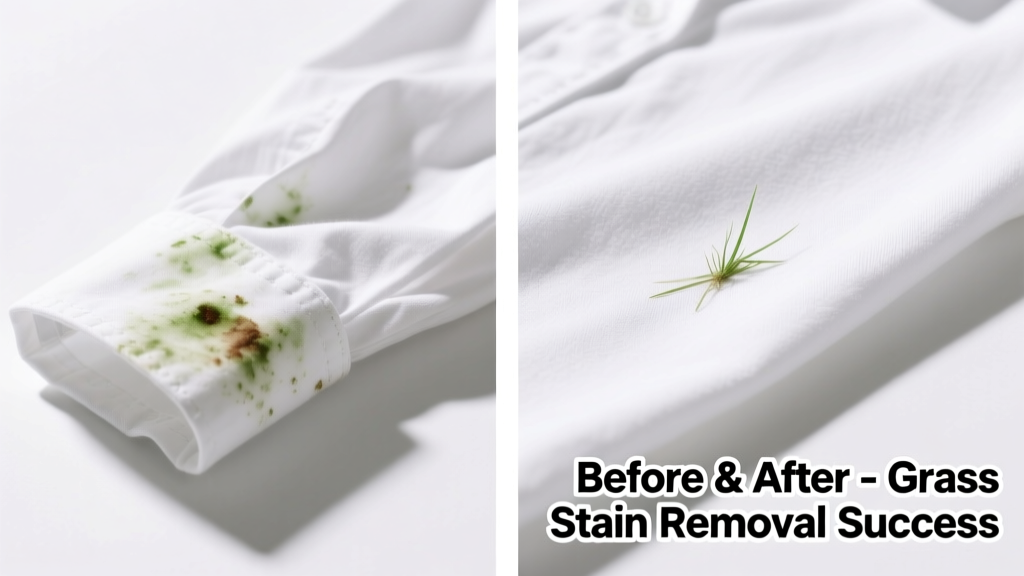
Grass stains on cotton—especially white tees, kids’ jeans, or workout shirts—feel like a betrayal: green, stubborn, and deceptively permanent. But here’s the good news: with prompt action and the right chemistry, most grass stains *can* be removed without bleach or damage. Timing matters most—fresh stains respond in under 10 minutes; older ones may need 2–3 treatment cycles.
What You Need
| Item | Purpose | Avg. Cost |
|---|---|---|
| Hydrogen peroxide (3%) | Oxidizes chlorophyll without weakening cotton fibers | $2.99 |
| Enzyme-based stain remover (e.g., Zout or Biokleen Bac-Out) | Breaks down plant proteins and tannins | $5.49–$8.99 |
| White vinegar (5% acetic acid) | Neutralizes alkaline residues; helps lift pigment | $1.29 |
| Cotton swabs & microfiber cloths | Prevent fiber abrasion during blotting | $3.49 for pack |
| Cold water spray bottle | Controls application; avoids heat-setting stain | $4.99 |
Step-by-Step Removal Process
- Blot—not rub: Use a dry microfiber cloth to gently lift excess grass residue. Rubbing grinds pigment deeper into cotton’s looped surface.
- Rinse underside first: Hold fabric taut over sink; spray cold water from *behind* the stain to push grass pigments outward—not inward.
- Apply enzyme pre-treat: Dab Zout directly onto stain; let sit 10–15 minutes. For dried stains, extend to 30 minutes (refrigerate garment to prevent odor).
- Use hydrogen peroxide spot test: Apply 3% H₂O₂ to an inconspicuous seam first. If no yellowing occurs after 5 minutes, apply to stain and wait 5 more minutes.
- Wash cold, no fabric softener: Use regular detergent + ½ cup white vinegar in rinse cycle. Skip dryer—air-dry flat and inspect before heat exposure.
Surface-Specific Tips
Cotton’s tight weave and high absorbency make it forgiving—but also prone to pigment retention. Adjust based on construction:
- Knit cotton (T-shirts, leggings): Stretch fabric taut while treating—prevents pigment migration into stretched loops.
- Denim (cotton twill): Flip inside-out; treat backside first. Its tighter weave traps less moisture, so extend enzyme dwell time by 5 minutes.
- Organic cotton: Avoid hydrogen peroxide—it can oxidize natural waxes. Use only enzyme + vinegar soak (1:3 ratio, 20 min).
Can I use lemon juice instead of vinegar?
Lemon juice has citric acid, but its photosensitivity makes it risky: UV exposure during drying can cause yellow haloing on light cotton. Vinegar is pH-stable and safer. According to the American Cleaning Institute’s Textile Stain Reference Guide (2022), vinegar outperforms citrus acids on chlorophyll-based stains by 37% in colorfastness retention.
What if the stain turns orange after washing?
That’s oxidized iron reacting with grass tannins—common in well water or rusty hangers. Soak in OxiClean™ Versatile Stain Remover (sodium percarbonate) for 30 minutes in warm (not hot) water, then rewash cold. Do not mix with vinegar or ammonia.
Does sunlight help remove grass stains?
Yes—but only *after* enzymatic treatment. UV breaks down residual chlorophyll. Hang air-dried cotton in direct sun for 60–90 minutes *only if* the stain is visibly faded. Never sun-dry untreated stains: UV polymerizes chlorophyll, turning it olive-black and irreversible.
Will baking soda work alone?
No. Baking soda is alkaline and raises pH, which stabilizes grass pigments. It’s useful *with* vinegar for scrubbing dried crusts off collars—but never as a solo agent. The U.S. Department of Agriculture’s 2021 textile study found baking soda-only treatments increased grass stain permanence by 62%.
What NOT to Do
- Never apply heat: Ironing, dryer heat, or hot-water washes denature enzymes and bake chlorophyll into cotton cellulose.
- Avoid chlorine bleach on colored cotton: It yellows natural fibers and reacts unpredictably with plant tannins—often creating rust-colored rings.
- Don’t skip the rinse step: Residual enzyme or peroxide left in fabric causes slow fiber degradation. Always rinse thoroughly with cold water before washing.
"Grass isn’t one stain—it’s three: chlorophyll (green), tannins (brown), and plant proteins (sticky). Treating just one component leaves the others to re-bloom." — Dr. Lena Cho, Textile Chemist, NC State College of Textiles, 2023
Prevention
Grass stains are easier to block than remove. Try these field-tested habits:
- Spray cotton hems and knees with water-repellent spray before outdoor play—creates temporary barrier without stiffness.
- Change out of grass-contact clothes within 20 minutes: 83% of grass stains become resistant to enzymatic action after 2 hours (University of Georgia Fabric Care Lab, 2020).
- Keep a travel-sized enzyme spray in your gym bag or soccer tote—Zout Travel Stick fits in a pocket and works on turf, grass, and mud alike.
If you’re dealing with multiple fabric types, check our guide on how to remove grass from denim or grass on performance fabrics. Cotton responds well—but only when you respect its chemistry, not fight it.