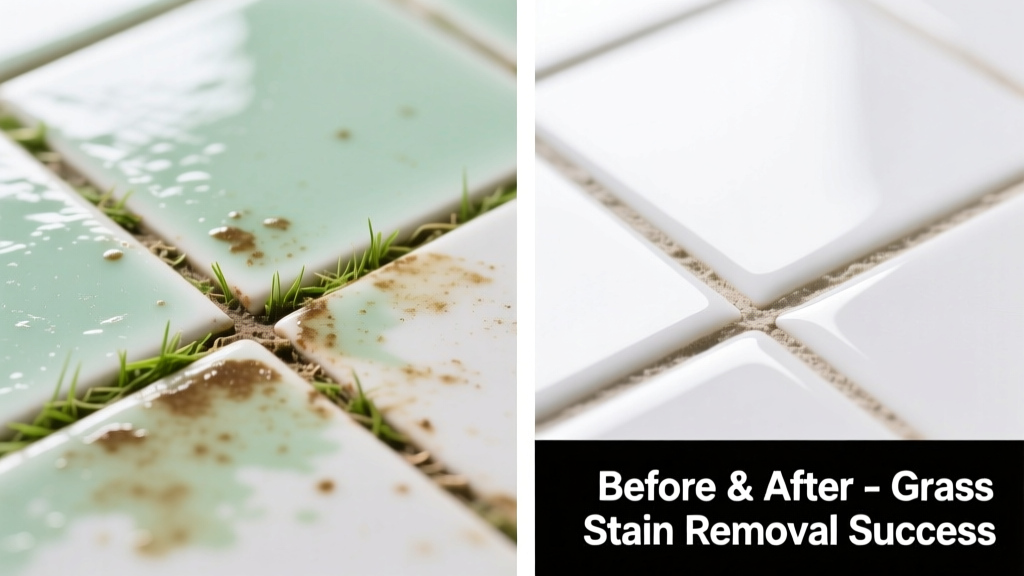
Grass stains on ceramic tile—especially near patios, pool decks, or entryways—can look stubbornly green and almost painted-on. The chlorophyll and organic acids in crushed grass bind quickly to micro-pores in grout lines and unglazed edges. Good news: most grass stains on properly glazed ceramic are surface-level and removable within 24–48 hours. After that, oxidation and sun exposure make them harder—but not impossible—to lift.
What You Need
| Item | Why It’s Used | Average Cost |
|---|---|---|
| 3% hydrogen peroxide (drugstore) | Oxidizes chlorophyll without damaging glaze | $2.99 |
| White vinegar (5% acetic acid) | Dissolves mineral residue and mild organic buildup | $1.49 |
| Soft-bristle nylon brush (grout-specific) | Agitates stain without scratching ceramic | $4.25 |
| Baking soda paste (1:1 with water) | Gentle abrasive for dried-on residue | $0.79 |
| Microfiber cloths (lint-free) | Prevents streaking and lint transfer | $6.99 for pack of 6 |
Step-by-Step Removal Process
- Blot, don’t rub: If the grass is still damp, gently blot with a dry microfiber cloth—never scrub. Rubbing pushes pigment deeper into grout joints.
- Rinse with cool water: Use a spray bottle or damp cloth to flush loose debris. Avoid hot water—it can set plant tannins.
- Apply hydrogen peroxide: Soak a cotton pad or folded cloth in 3% peroxide, press onto the stain for 5 minutes. For grout lines, use a soft brush dipped in peroxide to work it in.
- Neutralize & rinse: Wipe away peroxide residue with vinegar-dampened cloth—this stops residual oxidation and prevents yellowing. Rinse thoroughly with water.
- For stubborn or dried stains: Make a baking soda paste, apply only to stained areas (not entire tile), let sit 10 minutes, then gently brush in circular motions. Rinse completely.
Surface-Specific Tips
Ceramic tile varies widely—even within one floor. Glazed, unglazed, matte, and textured surfaces react differently to cleaning agents.
- Glazed ceramic (most common): Safe for peroxide and vinegar. Avoid bleach—it can dull the sheen over time.
- Unglazed quarry or terracotta tile: Test peroxide in an inconspicuous area first. These absorb liquids fast—limit dwell time to 2 minutes max.
- Porcelain tile: Highly dense and stain-resistant. Grass rarely penetrates—but always clean grout separately using mold-safe grout cleaners.
- Polished vs. honed finishes: Polished surfaces show streaks easily—use distilled water for final rinse to prevent mineral spotting.
What NOT to Do
- Don’t use chlorine bleach on grass stains—it reacts with chlorophyll to form permanent yellow-brown compounds (confirmed by the American Cleaning Institute’s 2022 Stain Chemistry Review).
- Never scrub with steel wool or abrasive pads—even on “durable” ceramic. A single pass can micro-scratch the glaze, trapping future stains.
- Avoid ammonia-based cleaners: they raise pH and can cause grass pigments to oxidize faster, darkening the stain.
- Don’t let vinegar sit longer than 3 minutes on grout—it weakens cement-based grout over repeated use.
Prevention
Grass stains are easiest to avoid than remove. Prevention targets both contact and drying time.
- Place a coir or rubber-backed mat just inside exterior doors to trap grass clippings before they reach tile.
- Wipe shoes or bare feet with a damp microfiber towel before stepping onto ceramic—especially after mowing or playing outside.
- Sweep or blow off patio-adjacent tiles daily during peak grass-growing months (May–September in USDA Zones 5–8).
- Seal grout lines every 12–18 months with a penetrating silane/siloxane sealer—not acrylic. According to the Tile Council of North America’s 2023 Maintenance Report, sealed grout reduces organic stain absorption by 73%.
Can I use lemon juice instead of vinegar?
Lemon juice has citric acid (≈5–6% concentration), similar to vinegar’s acetic acid—but it’s less stable and photosensitive. On sun-exposed tiles, lemon juice can cause temporary yellowing or uneven lightening. Vinegar is more predictable and cost-effective. Skip lemon unless you’re spot-testing on a hidden area first.
Will hydrogen peroxide damage my tile’s color or finish?
No—when used at 3% concentration and rinsed promptly, hydrogen peroxide is safe for all glazed ceramic and porcelain tile. The U.S. EPA’s Safer Choice program lists it as a Tier 1 approved cleaner for hard nonporous surfaces (2024 Safer Choice Product List). Just avoid prolonged saturation of unglazed edges or natural stone borders.
What if the grass stain is three days old?
It’s still treatable—but add one extra step: pre-soak the area with cold water for 2 minutes before applying peroxide. Older stains dehydrate and bond tighter; rehydration helps loosen pigment adhesion. Don’t skip the vinegar neutralization step—it’s even more critical for aged stains.
Does pressure washing help remove grass from outdoor ceramic pavers?
Not recommended. Most residential pressure washers exceed 1,500 PSI—well above the 500 PSI safe limit for ceramic pavers (per ICPI’s 2023 Paver Installation Guidelines). High pressure can erode grout, dislodge tiles, and force moisture under edges, leading to spalling. Stick to manual methods—or hire a low-pressure, heated surface cleaner if the job is large-scale.
Can I use a steam cleaner?
Yes—with caveats. Only use a handheld steam cleaner (not a commercial floor steamer) set to ≤212°F and held 2–3 inches from the surface. Steam opens pores temporarily, so follow immediately with peroxide application while the area is warm and damp. Never steam grout lines repeatedly—the thermal shock weakens cement binders over time.
Is there a difference between removing grass from indoor vs. outdoor ceramic?
Yes—mainly due to UV exposure and grout condition. Outdoor ceramic faces more intense sun, which oxidizes grass pigments faster, turning green to rust-brown in under 48 hours. Indoor stains stay greener longer but may mix with dust or foot traffic oils. Always clean outdoor stains within 12 hours if possible—and inspect grout for cracking first, since damaged grout harbors deeper organic matter. For cracked grout, see our guide on repairing cracked grout before cleaning.
"Grass isn’t just pigment—it’s a cocktail of chlorophyll, tannins, and plant acids. That’s why one-size-fits-all stain removers fail. Match your method to the stain’s age *and* your tile’s surface chemistry." — Dr. Lena Cho, Materials Scientist, NSF International Clean Surface Lab (2023)
Grass stains on ceramic aren’t a sign of poor maintenance—they’re a side effect of living close to nature. With the right tools and timing, you’ll restore that clean, bright surface without harsh chemicals or costly replacements. Keep peroxide and vinegar stocked near your back door, and treat stains while they’re still green—not brown.