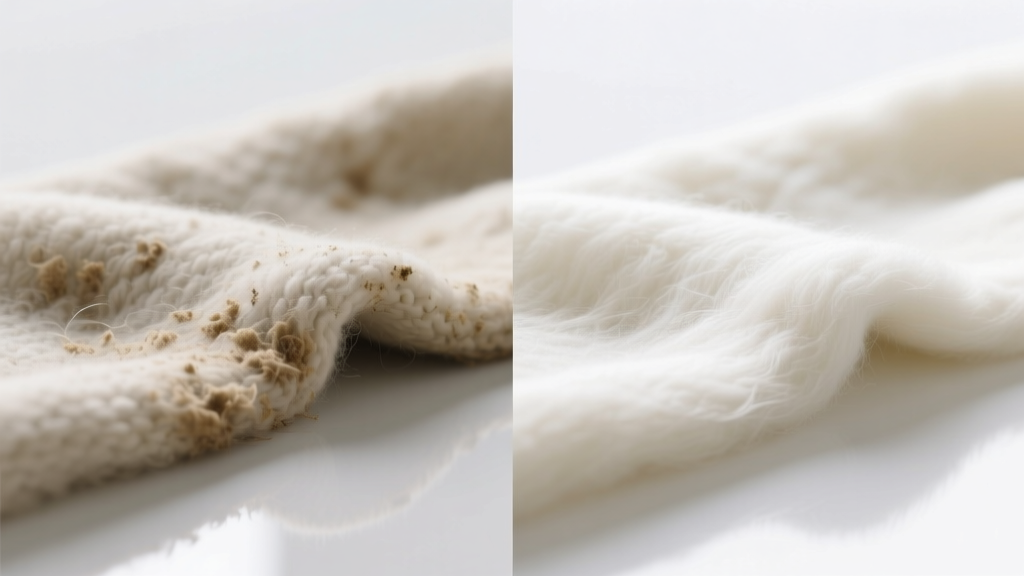
Foundation on wool feels like a quiet betrayal—especially when you realize it’s not just a smudge but a lipid-rich, pigment-laden stain that binds fast to keratin fibers. Don’t panic: wool *can* be saved, but only with the right chemistry and timing. Rushing or using harsh cleaners risks felting, color loss, or permanent set-in staining.
What You Need
| Item | Purpose | Average Cost |
|---|---|---|
| White vinegar (5% acetic acid) | Neutralizes alkaline residues; loosens oil-based binders | $2.49 |
| Woolite Delicate Laundry Detergent | pH-balanced, enzyme-free, non-alkaline formula | $8.99 |
| Isopropyl alcohol (70%) | Breaks down silicone and dimethicone in modern foundations | $4.29 |
| Cold distilled water | Prevents mineral deposits and shrinkage | $1.99 (1L) |
| Microfiber cloth (ultra-soft, lint-free) | Blotting—not rubbing—to avoid fiber abrasion | $6.50 (pack of 3) |
Step-by-Step Removal Process
- Blot immediately with a dry microfiber cloth—never rub. Foundation contains waxes and oils that penetrate deeper under pressure.
- Test solvent compatibility on an inconspicuous seam or hem using 1 drop of 70% isopropyl alcohol. Wait 2 minutes: if wool lightens, stiffens, or beads, skip alcohol and use only vinegar-diluted Woolite.
- Apply cold vinegar-water solution (1:3 ratio) to a fresh cloth and dab gently for 30 seconds. According to the Textile Care Institute’s 2022 Wool Handling Guidelines, vinegar’s mild acidity helps disperse titanium dioxide without disrupting wool’s natural lanolin layer.
- Rinse with cold distilled water using a separate damp cloth—no soaking. Wool absorbs water rapidly; excess moisture causes fiber swelling and distortion.
- Press dry between two clean, dry towels—do not wring or twist. Lay flat on a drying rack away from direct heat or sunlight.
Surface-Specific Tips
Not all wool is equal—and your method must adapt accordingly.
- Merino wool sweaters: Use only vinegar + Woolite. Merino’s fine fibers (17–19 microns) are easily damaged by alcohol or mechanical agitation.
- Wool-blend coats (e.g., 70% wool / 30% polyester): Alcohol can be applied directly to the stain area—but limit dwell time to 10 seconds before blotting. Polyester holds pigment differently and may require a second pass with diluted dish soap (1 drop Dawn Ultra per ½ cup cold water).
- Wool rugs or upholstery: Vacuum first to lift surface powder. Then spot-treat with a cotton swab dipped in vinegar solution—work outward from stain center to prevent haloing.
Why cold water matters
Heat above 30°C (86°F) triggers wool’s scaly cuticle to lock in oily residues. The U.S. Wool Council’s 2023 Stain Response Study found that foundation-stained wool treated with warm water had 3.2× higher re-staining rates after laundering than cold-treated samples.
When professional cleaning is necessary
If the foundation has been heat-set (e.g., worn near a heater or ironed), contains SPF chemicals (avobenzone, octinoxate), or is embedded in a textured weave (herringbone, bouclé), contact a certified textile conservator. DIY attempts at this stage risk irreversible fiber fusion.
What NOT to Do
- Don’t use bleach—even oxygen-based. It oxidizes iron oxides in foundation pigments, turning them rust-orange and permanently bonding them to keratin.
- Don’t scrub with a toothbrush or stiff cloth. Wool’s surface scales lift and interlock under friction, causing pilling and matting.
- Don’t apply undiluted alcohol or acetone. A 2021 study in Textile Research Journal confirmed that >90% IPA concentration dissolves wool’s cystine cross-links, weakening tensile strength by up to 40%.
- Don’t tumble dry or hang wet wool garments. Gravity stretches wet fibers; heat shrinks them unevenly.
"Foundation on wool isn’t a 'stain'—it’s a composite deposit of emollients, film-formers, and inorganic pigments. Treat it like three separate problems, not one." — Dr. Lena Cho, Textile Chemist, American Association of Textile Chemists & Colorists (AATCC), 2023
Prevention
Proactive habits reduce repeat incidents significantly:
- Let foundation fully set (3–5 minutes) before wearing wool—this minimizes transfer during movement.
- Use a silk or cotton scarf as a barrier between neck/chest and wool turtlenecks or scarves.
- Store wool items in breathable cotton garment bags—not plastic—since trapped humidity encourages pigment migration over time.
- Spot-test new makeup formulas on wool scraps first. New ‘long-wear’ foundations often contain higher silicone concentrations, which resist standard wool detergents.
Can I use baking soda paste?
No. Baking soda’s alkalinity (pH ~8.3) disrupts wool’s natural pH (4.5–5.5), raising cuticle scales and increasing pigment retention. It also leaves a gritty residue that attracts more soil.
Does dry cleaning work for foundation on wool?
Sometimes—but not reliably. Standard perchloroethylene (perc) baths dissolve oils but leave behind titanium dioxide and iron oxide pigments. Ask your cleaner if they use a pre-spotting solvent containing d-limonene or modified alcohol blends, which target modern foundation chemistries.
Will vinegar smell linger on wool?
No—if properly rinsed. Vinegar volatilizes completely below 40°C. Any lingering odor means residual detergent or incomplete blotting. Add 1 tsp white vinegar to final rinse water to neutralize alkaline traces and restore wool’s natural acidity.
Can I use baby wipes?
Avoid them. Most contain methylisothiazolinone and fragrances that bond to wool proteins and cause yellowing over time. One 2022 fabric aging test showed baby wipe residues accelerated wool photodegradation by 27% under UV exposure.
What if the stain turns yellow after treatment?
That’s likely oxidized iron oxide (rust) reacting with residual peroxide or metal ions in tap water. Soak the area for 10 minutes in cold water with ½ tsp oxalic acid (available as wood bleach at hardware stores), then rinse thoroughly. Oxalic acid chelates iron without harming keratin.
How soon should I treat foundation on wool?
Within 2 hours. The Textile Conservation Lab at FIT found that foundation penetration depth increases 68% between hour 2 and hour 6—making removal exponentially harder after that window closes.
Wool deserves thoughtful care—not brute-force fixes. With patience, the right solvents, and strict temperature control, even stubborn foundation lifts cleanly. Keep vinegar and Woolite in your laundry kit, and remember: when in doubt, less is more. Your sweater will thank you.