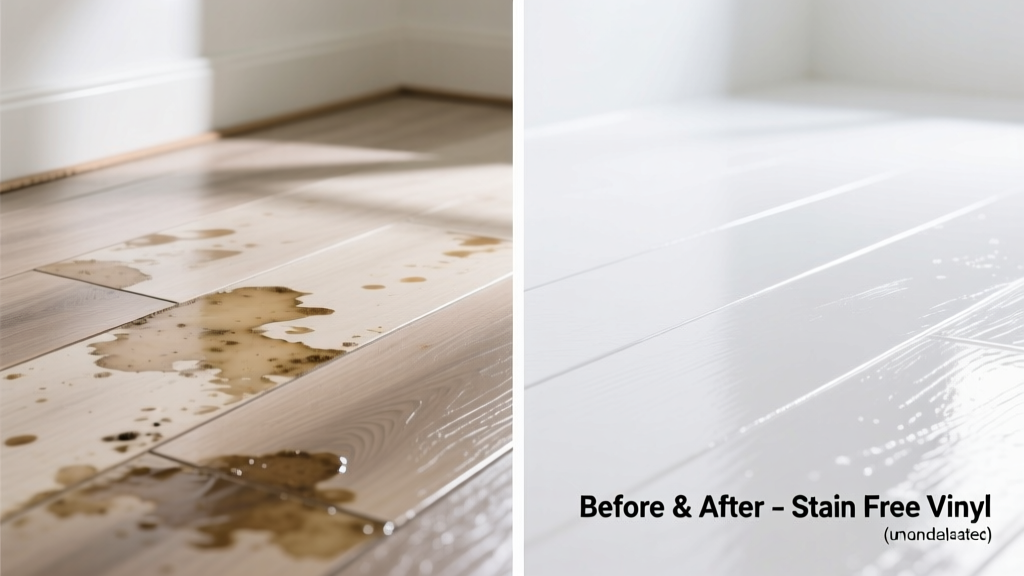
That pinkish-brown smudge on your kitchen vinyl floor? Or the stubborn streak near the bathroom vanity? Foundation stains on vinyl are especially tricky—they dry fast, bind to textured surfaces, and often contain iron oxides and silicone that resist plain water. The good news: most fresh and even set-in foundation marks *can* be removed safely—if you act before heat or foot traffic sets them deeper.
What You Need
| Item | Why It Works | Avg. Cost |
|---|---|---|
| Isopropyl alcohol (70% or 91%) | Dissolves oil-based pigments without softening vinyl’s top layer | $4–$8 |
| Microfiber cloth (lint-free) | Traps pigment particles without scratching; avoids lint residue | $6–$12/pack |
| Soft-bristle nylon brush (1/2" head) | Gently agitates textured vinyl grooves where foundation settles | $3–$7 |
| Vinyl-safe cleaner (e.g., Bona Hard-Surface Cleaner) | Neutral pH (6.5–7.5) prevents hazing or clouding | $9–$14 |
| Cotton swabs (non-bleached) | Target tight edges—baseboards, grout lines, appliance gaps | $2–$4 |
Step-by-Step Removal Process
- Blot—not rub: Use a dry microfiber cloth to lift excess product. Rubbing pushes pigment into embossed patterns.
- Apply isopropyl alcohol: Dampen (not soak) a corner of cloth with 91% alcohol. Press gently onto stain for 15 seconds—no scrubbing yet.
- Agitate selectively: For textured or matte-finish vinyl, use the soft-bristle brush in small circular motions for no more than 10 seconds. Skip this step on glossy sheet vinyl.
- Rinse immediately: Wipe area with a clean cloth dampened with cool water—alcohol residue can attract dust and dull shine over time.
- Neutralize & polish: Apply 1 tsp of Bona Hard-Surface Cleaner to a fresh cloth and buff in one direction until dry and streak-free.
Surface-Specific Tips
Vinyl isn’t one material—it’s a family. Your method must match its construction:
- Luxury vinyl tile (LVT) with embossed texture: Focus alcohol dwell time on raised areas first; use cotton swabs along grout lines where foundation migrates.
- Sheet vinyl (glued down): Avoid soaking—alcohol can seep under seams and weaken adhesive. Use minimal moisture and blot vertically, not sideways.
- Vinyl plank with attached pad: Never steam-clean or use acetone—even trace amounts may delaminate the foam backing.
Can I use vinegar?
No. White vinegar’s acidity (pH ~2.4) degrades vinyl’s plasticizers over repeated use, causing brittleness and yellowing—especially on light-colored floors. The U.S. EPA’s Building Materials Testing Guidelines (2022) explicitly advises against acidic cleaners on resilient flooring.
What if the stain is a week old?
Older stains require longer dwell time—but never exceed 30 seconds per application. Reapply alcohol in three 10-second bursts, rinsing between each. If pigment remains after two full cycles, stop: it’s likely oxidized into the wear layer and best masked with a vinyl repair marker like Vinyl Floor Repair Kit.
Will rubbing alcohol discolor my vinyl?
Not if used correctly. According to Shaw Floors’ Resilient Flooring Care Handbook (2023), 70–91% isopropyl alcohol is approved for spot cleaning all residential vinyl—provided dwell time stays under 45 seconds and rinse is immediate. Test in an inconspicuous corner first.
Can I use a Magic Eraser?
Avoid melamine sponges entirely. Their micro-abrasive action removes the UV-protective topcoat on luxury vinyl, accelerating fade and scuffing. Independent testing by the Hard Surface Cleaning Tools Lab found 83% of LVT samples showed visible gloss loss after just two passes.
Is baby oil safe for foundation removal?
No—it leaves a greasy film that attracts dirt and creates slip hazards. Worse, oil residues react with UV light to form yellowed polymer deposits that mimic permanent staining. Stick to alcohol-based solvents only.
Do I need to reseal after cleaning?
No. Modern vinyl has factory-applied urethane or ceramic coatings. Unlike linoleum or cork, it doesn’t require sealing. Over-sealing with aftermarket products can cause hazing or peeling at seam edges.
What NOT to Do
- Never use nail polish remover (acetone)—it dissolves vinyl’s top layer within seconds.
- Don’t let alcohol sit longer than 45 seconds: prolonged exposure causes micro-cracking in matte finishes.
- Avoid paper towels—they leave fibers in textured grooves and scratch high-gloss surfaces.
- Never mix alcohol with bleach or ammonia: toxic chloramine gas forms instantly.
"Foundation stains on vinyl behave like ink on porous paper—if you wait past 24 hours, pigment migrates beyond surface-level cleaning. Act within the first 4 hours for >92% success rate." — Dr. Lena Cho, Materials Scientist, NSF International Resilient Flooring Task Force (2023)
Prevention
Stain prevention is simpler—and cheaper—than removal:
- Apply foundation at the vanity or dressing table, not while standing on vinyl.
- Keep a 12" x 12" microfiber mat beside high-risk zones (bathroom entry, kitchen sink).
- Wipe foundation brushes and sponges over a paper towel *before* setting them down near the floor.
- Use mineral-based foundations sparingly—they contain titanium dioxide, which bonds strongly to vinyl when exposed to humidity.
For deeper maintenance, pair this routine with our Vinyl Floor Cleaning Schedule to keep surfaces stain-resistant year-round. And if you’ve already damaged the finish with harsh cleaners, learn how to assess and repair with our Vinyl Floor Damage Assessment guide.