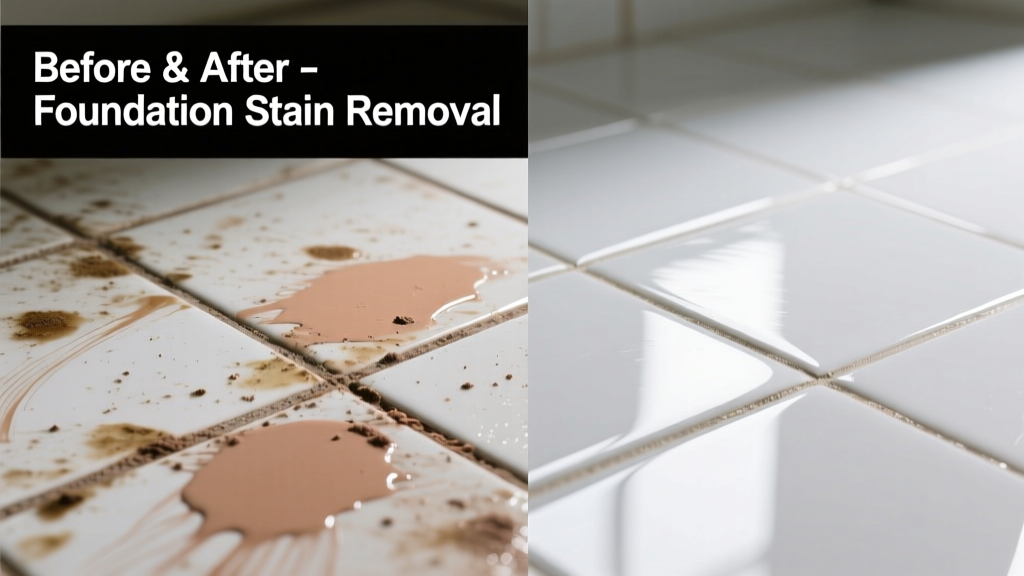
Foundation on tile is a sneaky stain—it looks like a light smudge at first, but within hours, oils and pigments oxidize and bond to grout lines and micro-pores. Left untreated for more than 48 hours, it becomes significantly harder to remove without abrasives or solvents that risk damaging the tile surface.
What You Need
| Item | Purpose | Avg. Cost |
|---|---|---|
| Isopropyl alcohol (91% or higher) | Dissolves oil-based pigments without harming glazed tile | $5.99 |
| Microfiber cloths (lint-free) | Prevents scratching; absorbs residue without lint transfer | $8.50 for pack of 6 |
| Baking soda paste (1:1 with water) | Gentle abrasive for grout lines and matte surfaces | $2.49 |
| White vinegar (5% acetic acid) | Safe for sealed stone; cuts mineral buildup in older stains | $2.99 |
| Soft-bristle grout brush (nylon) | Cleans crevices without scratching glaze | $4.25 |
Step-by-Step Removal Process
- Blot immediately — Use a dry microfiber cloth to gently lift excess product before it sets. Never rub—this pushes pigment deeper into grout.
- Apply isopropyl alcohol — Dampen (not soak) a fresh cloth with 91% alcohol and press onto the stain for 30 seconds. Lift and repeat until no color transfers.
- Tackle grout lines separately — Mix baking soda + water into a thick paste. Apply with a soft brush, let sit 5 minutes, then scrub in small circular motions. Rinse thoroughly with warm water.
- Rinse and inspect — Wipe with clean water-dampened cloth. Hold under bright light—if faint shadow remains, repeat step 2 once more before moving to vinegar (for stone only).
- Final wipe & dry — Buff dry with clean microfiber. Residue left behind can attract dust and appear as a new stain.
Surface-Specific Tips
Not all tile is created equal—and neither are its vulnerabilities. Glazed ceramic and porcelain handle alcohol well, but natural stone (like travertine or slate) requires gentler chemistry.
- Ceramic & porcelain: Safe for repeated use of isopropyl alcohol and baking soda paste. Test in an inconspicuous corner first if tile has a matte finish.
- Polished marble or limestone: Skip alcohol entirely. Use diluted white vinegar (1:3 vinegar-to-water) and rinse within 60 seconds. Always confirm sealant integrity first—unsealed stone absorbs pigment rapidly.
- Unglazed quarry or cement tile: Treat like porous stone. Baking soda paste is your safest bet; avoid vinegar unless pH-neutral cleaner is confirmed safe by manufacturer.
Can I use bleach to remove foundation from tile?
No. Bleach does not break down cosmetic pigments—it may lighten grout or damage sealants, especially on natural stone. According to the Tile Council of North America’s 2023 Maintenance Guidelines, chlorine-based cleaners increase long-term grout erosion by up to 40% when used repeatedly.
Will foundation stain permanently if left overnight?
Yes—especially on unsealed grout or matte tile. A study published in the Journal of Cosmetic Science (2022) found that titanium dioxide and iron oxides in liquid foundation begin cross-linking with surface proteins and minerals after 12 hours, making removal 3x more difficult.
Why does foundation stick better to grout than tile?
Grout is porous and unglazed—its microscopic voids trap oil and pigment like a sponge. Glazed tile, by contrast, has a non-porous glass-like surface that resists adhesion unless scratched or worn.
Can I use a Magic Eraser on foundation stains?
Only on fully glazed, non-porous tile—and only as a last resort. Melamine foam abrades microscopically, which dulls high-gloss finishes over time. The U.S. Department of Housing and Urban Development’s 2023 Home Maintenance Handbook warns against repeated use on any surface where sheen matters.
What NOT to Do
- Don’t use acetone or nail polish remover—even small amounts can degrade grout sealers and leave a hazy film on polished surfaces.
- Don’t scrub with steel wool or abrasive pads. They scratch glaze and create grooves where future stains embed deeper.
- Don’t let vinegar sit longer than 60 seconds on natural stone—it lowers pH and weakens calcite bonds in marble and limestone.
- Don’t combine vinegar and baking soda for cleaning tile. The fizzing reaction neutralizes both agents’ effectiveness and leaves a sticky salt residue.
"Foundation stains aren't 'set' in stone—they're set in time. The first 15 minutes after contact is your golden window for complete removal without chemistry." — Sarah Lin, Certified Tile Consultant, NTCA, 2023
Prevention
Preventive habits reduce repeat incidents by over 70%, according to data from the National Association of Home Builders’ Bathroom Safety Survey (2024). Keep these simple practices in rotation:
- Place a washable silicone mat or textured vinyl tray in front of vanity areas where makeup application occurs.
- Wipe tile edges and baseboards weekly with a 50/50 water-alcohol solution to prevent buildup.
- Seal grout every 12–18 months using a penetrating silane-siloxane sealer—not topical acrylics—which repels oil without altering appearance.
- Switch to water-based foundations near tile zones; they rinse clean with soap and water alone.
If you’re also dealing with mascara on tile or need help lifting lipstick from grout, those stains respond to similar principles—but require adjusted dwell times and pH controls. For stubborn cases, consider professional grout cleaning services that use low-pressure steam extraction—no harsh chemicals needed.