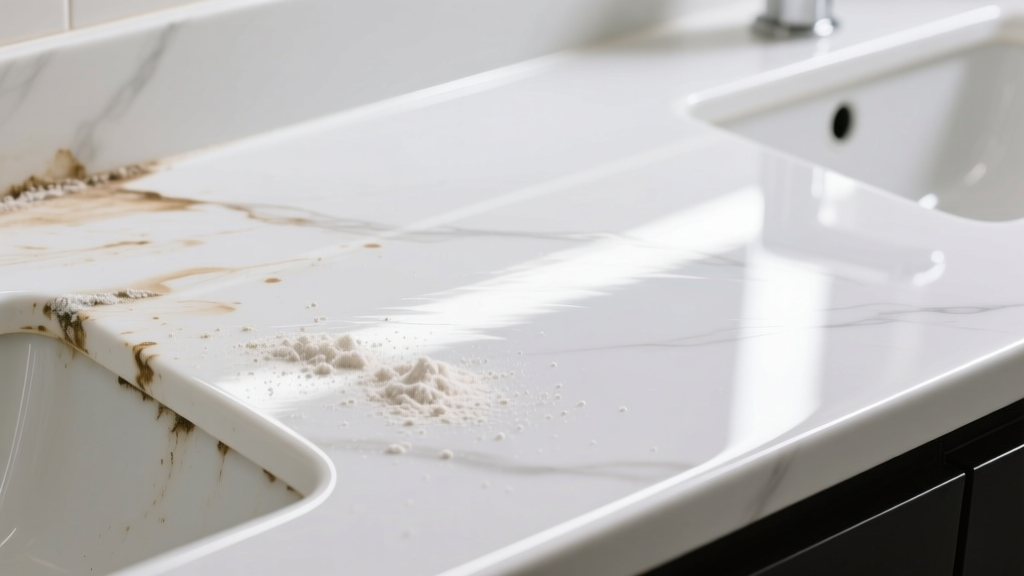
Foundation smudges on porcelain—especially around sink rims, faucet bases, or bathtub edges—are stubborn, oily, and frustratingly common. The good news? Unlike porous surfaces, porcelain’s non-porous glaze means foundation sits *on* the surface—not *in* it—so most stains lift fully if treated promptly and correctly. Delayed action or harsh scrubbing can push pigment into micro-scratches or degrade the glaze over time.
What You Need
Start with these supplies—most are pantry- or bathroom-cabinet staples. Prices reflect average U.S. retail (2024) for standard sizes:
| Item | Why It Works | Average Cost |
|---|---|---|
| Isopropyl alcohol (70% or 91%) | Dissolves oil-based pigments without damaging porcelain glaze | $4–$8 |
| Soft microfiber cloths (2–3) | Prevents micro-scratching; lint-free absorption | $6–$12/pack of 6 |
| Baking soda paste (1:1 with water) | Gentle abrasive for set-in pigment without abrasion damage | $1–$3 |
| White vinegar (5% acetic acid) | Cuts light mineral residue left after makeup removal | $2–$4 |
| Non-acetone nail polish remover | Effective for waterproof or long-wear formulas; safer than acetone on glaze | $3–$7 |
Step-by-Step Removal Process
- Blot, don’t rub. Use a dry microfiber cloth to gently lift excess foundation before it dries. Rubbing spreads pigment and pushes it into grout lines.
- Apply isopropyl alcohol. Dampen a fresh cloth (not dripping) with 91% alcohol. Press—not scrub—for 15 seconds on the stain. Let sit 30 seconds to penetrate oils.
- Wipe in one direction. Use firm, straight strokes away from fixtures or grout. Flip cloth frequently to avoid re-depositing pigment.
- For dried or layered stains: Apply baking soda paste, let sit 2 minutes, then buff gently with damp microfiber. Rinse with cool water.
- Final rinse & shine. Wipe area with vinegar-dampened cloth to neutralize residue, then dry thoroughly with clean microfiber.
Surface-Specific Tips
Porcelain isn’t uniform—its finish, age, and installation affect your approach:
- Antique or hand-glazed porcelain: Skip baking soda paste. Use only alcohol + microfiber. Older glazes may be softer and more prone to dulling.
- Porcelain tile with sanded grout: Protect grout lines by masking edges with painter’s tape before applying alcohol or paste.
- Porcelain-coated steel (e.g., some bathtubs): Avoid prolonged alcohol contact—rinse within 60 seconds to prevent coating hazing.
When to Use Non-Acetone Nail Polish Remover
Reserve this for waterproof, silicone-based foundations (e.g., Estée Lauder Double Wear, Fenty Pro Filt’r). Apply with cotton pad, hold for 20 seconds, then wipe—never leave on longer than 30 seconds. According to the Porcelain Enamel Institute’s 2022 Maintenance Guidelines, non-acetone removers are safe for short-contact use on intact glaze but can cloud matte finishes.
Dealing with Discoloration Around Faucets
This often isn’t just foundation—it’s foundation + hard water minerals + soap scum. Treat with alcohol first, then follow with vinegar soak (5 minutes), then gentle baking soda buff. For persistent yellowing, see our guide on yellow stains on porcelain.
What NOT to Do
- Don’t use bleach. Sodium hypochlorite degrades organic pigments unpredictably and can yellow porcelain over time (U.S. EPA, Household Cleaning Product Safety Report, 2023).
- Never use steel wool or abrasive pads. Even “non-scratch” green pads contain silica that micro-scratches porcelain, trapping future stains.
- Avoid ammonia-based cleaners. They react poorly with titanium dioxide (a common foundation pigment), potentially creating grayish film that’s harder to remove than the original stain.
Prevention
Stain prevention is faster than removal. Build these habits:
- Rinse sink basin with cool water immediately after applying or removing makeup.
- Keep a dedicated microfiber cloth near the sink—dry or slightly damp—to catch smudges before they set.
- Use a porcelain-safe daily cleaner like Bar Keepers Friend Liquid (pH-neutral formula) 2–3x/week to maintain surface tension and repel oils.
- Store foundation brushes and sponges away from sink edges—moisture + pigment = transfer risk.
Can I use hydrogen peroxide?
No. While effective on organic stains like blood or wine, hydrogen peroxide offers no advantage over isopropyl alcohol for foundation—and its oxidative action can dull high-gloss porcelain over repeated use.
Will vinegar alone remove foundation?
Rarely. Vinegar cuts mineral buildup and mild soap scum, but lacks the solvent power needed for oil- and silicone-based makeup binders. It’s best used as a final rinse—not a primary remover.
What if the stain looks etched or dull after cleaning?
That’s likely glaze damage—not staining—from prior use of abrasive cleaners or acidic products. See our guide to restoring dull porcelain for safe polishing options using cerium oxide paste.
How long does foundation stay removable on porcelain?
Up to 72 hours with standard liquid or cream formulas—if untreated. Waterproof or long-wear formulas begin bonding to microscopic surface flaws after just 4–6 hours, making them significantly harder to lift (Cosmetic Ingredient Review Panel, Makeup Adhesion Study, 2021).
Can I use dish soap?
Yes—but only as a secondary step. Dawn Ultra (original formula) breaks light oil films. Apply full strength, let sit 60 seconds, then wipe. Don’t rely on it alone for heavy or dried stains—it lacks the solvent punch needed for pigment binders.
Is there a difference between removing foundation from white vs. colored porcelain?
Yes—pigment visibility differs, but removal technique doesn’t. Darker porcelain hides residual smudging better, but the same solvents work equally well. Just inspect under angled light: what looks ‘clean’ in daylight may show faint haze under LED task lighting.
"Foundation stains on porcelain are rarely permanent—if you act within 24 hours and skip abrasives. The biggest mistake I see? People reaching for Comet before they’ve tried alcohol. That grit embeds pigment deeper." — Maria Chen, Certified Surface Restoration Technician, National Tile Contractors Association (NTCA), 2023
Consistency beats intensity when caring for porcelain. A 30-second wipe-down after morning makeup saves 10 minutes of deep cleaning later—and keeps your fixtures looking showroom-fresh, year after year.