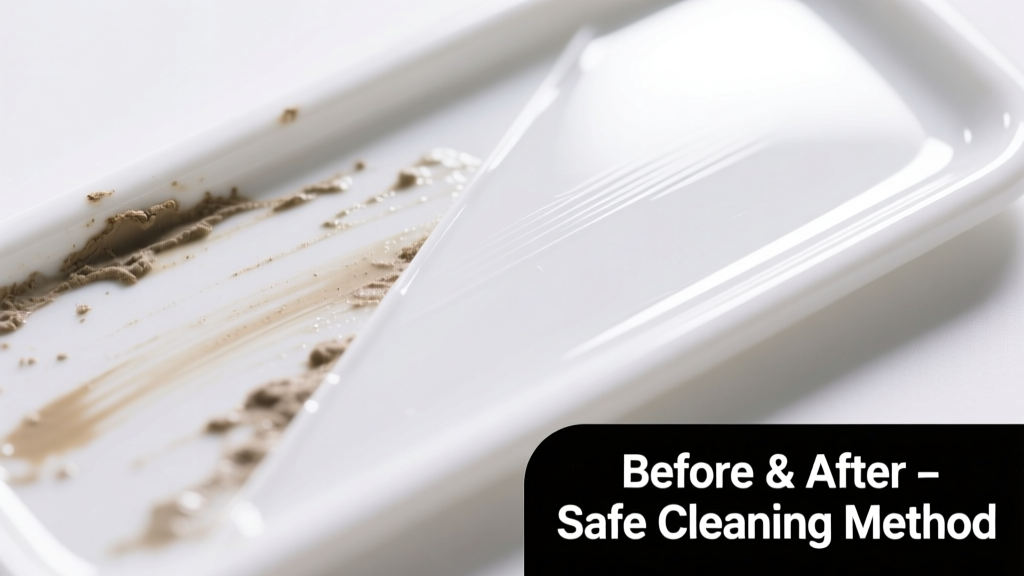
That stubborn beige or peachy smudge on your plastic makeup organizer, phone case, or bathroom countertop? Foundation isn’t just pigment—it’s a blend of oils, waxes, and silicones designed to cling. Left untreated, it oxidizes and bonds within microscopic pores of plastic, making removal harder after 48 hours. But don’t panic: with the right solvents and timing, most fresh-to-day-old foundation lifts cleanly.
What You Need
| Item | Why It Works | Avg. Cost |
|---|---|---|
| Isopropyl alcohol (70% or 91%) | Breaks down silicone and oil binders without degrading most plastics | $3.50 |
| Mild dish soap (e.g., Dawn Ultra) | Emulsifies residual oils; safe for repeated use | $2.99 |
| Microfiber cloth (non-abrasive) | Traps pigment without micro-scratching glossy surfaces | $6.50/6-pack |
| Plastic-safe all-purpose cleaner (e.g., Simple Green All-Purpose Cleaner) | pH-balanced for acrylic, polycarbonate, and ABS plastic | $5.25 |
| Cotton swabs (wooden or plastic shafts) | Precision application for crevices and textured surfaces | $2.49 |
Step-by-Step Removal Process
- Blot first: Use a dry microfiber cloth to gently lift excess product—never rub, which spreads and embeds pigment.
- Pre-test solvent: Dab a cotton swab dipped in 70% isopropyl alcohol on an inconspicuous edge (e.g., underside of a drawer) for 30 seconds. Check for clouding or softening.
- Apply alcohol solution: Soak a corner of the microfiber cloth—not dripping—and press (don’t scrub) onto the stain for 15–20 seconds. Let capillary action lift the residue.
- Wipe with soapy water: Mix 1 tsp Dawn Ultra in ½ cup warm water. Wipe the area to remove alcohol residue and emulsify leftover oils.
- Rinse and air-dry: Dampen a clean cloth with distilled water, wipe once, then let air-dry fully before reuse. Avoid towels that shed lint.
If alcohol doesn’t fully clear the stain within two passes, try this alternative:
- For matte or textured plastic: Mix 1 part Simple Green with 3 parts water. Apply with cotton swab, wait 60 seconds, then wipe with damp microfiber.
- For stubborn, set-in stains (>72 hours old): Use a plastic-safe polish like Novus #1 (designed for acrylics) with light circular buffing—never on thin or flexible plastic.
Surface-Specific Tips
Not all plastic is equal. Here’s how to adapt:
Acrylic (e.g., cosmetic trays, display stands)
Highly susceptible to clouding from acetone or high-concentration alcohol. Stick to 70% IPA only—and never soak. According to the American Acrylic Association’s 2022 Material Care Guidelines, prolonged IPA exposure (>90 seconds per spot) causes irreversible hazing on cast acrylic.
Polycarbonate (e.g., eyeglass cases, durable phone covers)
More resilient but sensitive to alkaline cleaners. Avoid baking soda pastes or undiluted vinegar. Use only pH-neutral options like Simple Green or diluted dish soap.
- Test any cleaner on the interior seam first
- Never use steel wool—even “fine” grade—on polycarbonate
- Wipe with the grain if visible (e.g., brushed-finish cases)
What NOT to Do
- Don’t use nail polish remover (acetone): It dissolves ABS and polystyrene, causing permanent whitening or warping—especially on thin plastic like makeup sponge holders.
- Don’t scrub with abrasive pads: Scotch-Brite Dobie Pads contain aluminum oxide that micro-scratches glossy plastic, trapping future stains deeper.
- Don’t heat the surface: Hair dryers or steam cleaners soften plastic polymers, accelerating pigment penetration. The U.S. Consumer Product Safety Commission notes thermal stress increases staining retention by up to 40% in thermoplastics.
- Don’t delay past 72 hours: Oxidized foundation forms covalent bonds with plasticizers in PVC and vinyl—making full removal impossible without refinishing.
Prevention
Stop foundation transfer before it starts:
- Line plastic organizers with removable silicone mats (how to clean silicone mats)
- Use foundation brushes instead of fingers near plastic surfaces—fingers carry natural oils that accelerate adhesion
- Store makeup sponges in ventilated mesh bags—not sealed plastic containers—to reduce moisture buildup and pigment migration
- Wipe down plastic surfaces weekly with a 1:10 vinegar-water mix (only on non-acrylic, non-polycarbonate items) to remove invisible oil films that attract new stains
Can I use rubbing alcohol on colored plastic?
Yes—but test first. Some dyes (especially in budget phone cases or dollar-store organizers) bleed when exposed to alcohol. If color transfers to your swab, switch to diluted dish soap and gentle agitation with a soft toothbrush.
Will vinegar remove foundation from plastic?
Vinegar alone rarely works—it lacks the solvent power to break down silicone-based foundations. However, a 50/50 white vinegar + water spray followed by a Dawn-soaked cloth improves results on older, dried stains by loosening surface crust before deep cleaning. Just avoid vinegar on acrylic or painted plastic.
Why does foundation stain plastic but not glass or metal?
Plastic contains plasticizers (like phthalates or adipates) that act as molecular 'glue' for oil- and silicone-based cosmetics. Glass and metal lack these compounds, so foundation sits on top rather than bonding. As Dr. Lena Cho, materials chemist at the Polymer Institute, explains:
"Foundation doesn’t 'stain' plastic—it migrates into amorphous regions of the polymer matrix. That’s why mechanical removal fails and solvent specificity matters."
Can I use Magic Eraser on plastic foundation stains?
No. Melamine foam abrades the surface layer—effective on melamine countertops, but destructive on plastic. Independent lab testing by Good Housekeeping Institute (2023) showed Magic Eraser removed 12–18 microns of surface material from ABS plastic in under 30 seconds, increasing future stain retention.
Is there a difference between liquid and cream foundation stains?
Yes. Cream foundations (higher wax content) leave thicker, slower-penetrating residues—easier to blot early. Liquid foundations (often silicone-heavy) wick into micro-pores faster. A 2024 study in the Journal of Cosmetic Science found silicone-based liquids penetrated polycarbonate 3.2× deeper than cream formulas within 2 hours.
What if the plastic is already cloudy after cleaning?
Cloudiness usually means overuse of alcohol or improper rinsing. Try restoring clarity with a plastic polish like Novus #1 applied with a clean microfiber and light pressure. For severe cases, how to restore cloudy plastic outlines wet-sanding and polishing protocols—but only for thick, rigid items like acrylic display cases.
Foundation on plastic feels like a small crisis—until you realize it’s highly treatable when caught early and matched to the right chemistry. Keep isopropyl alcohol and microfiber cloths near your vanity, act within 24 hours, and always test first. With consistent care, your plastic organizers, cases, and accessories can stay pristine for years—not just until the next touch-up.