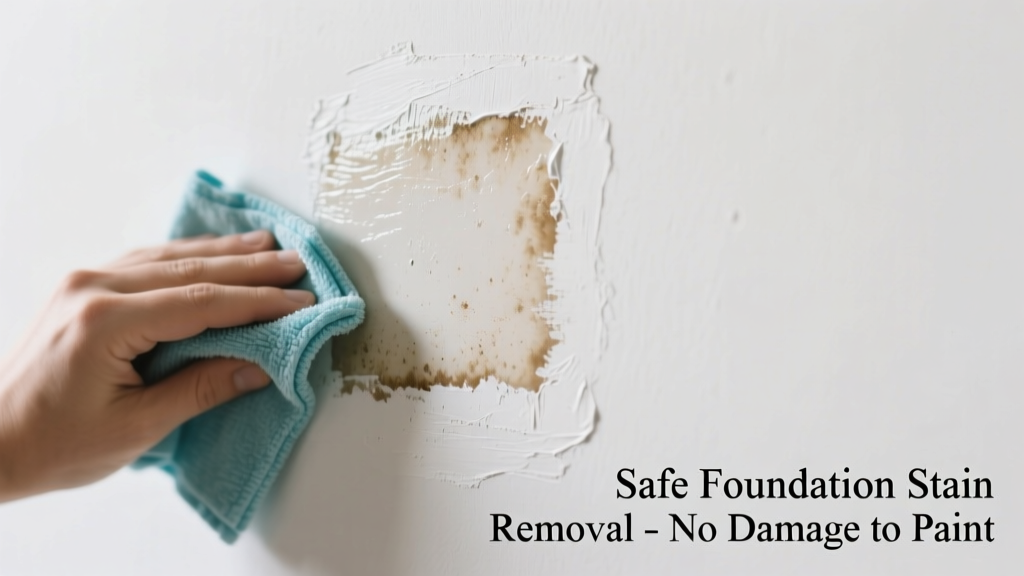
That accidental swipe of foundation against your freshly painted hallway wall? It’s more common than you think—and far more fixable than panic suggests. Most foundation stains on latex-painted walls are surface-level and removable within 24–48 hours if treated correctly. Wait longer, and oils and pigments begin bonding with the paint film, making removal harder—but not impossible.
What You Need
| Item | Purpose | Avg. Cost |
|---|---|---|
| Isopropyl alcohol (70% or 91%) | Dissolves oil-based pigment binders | $4.99 |
| White vinegar (5% acetic acid) | Gentle pH adjuster for water-based foundations | $2.49 |
| Microfiber cloths (lint-free) | Prevents scratching; absorbs residue | $8.99/6-pack |
| Soft-bristle toothbrush (nylon) | Light agitation without abrasion | $1.29 |
| Painter’s tape & cardboard | Protects adjacent surfaces during spot treatment | $5.49 |
Step-by-Step Removal Process
- Blot first, never rub. Use a dry microfiber cloth to gently lift excess product—no pressure, no circular motion.
- Test in an inconspicuous area. Dab a cotton swab dipped in 70% isopropyl alcohol on a corner behind a door frame. Wait 2 minutes—check for color lift or sheen change.
- Apply alcohol with controlled pressure. Soak a fresh cloth corner (not dripping), press firmly for 15 seconds, then lift straight up. Repeat until stain visibly fades.
- Neutralize with diluted vinegar. Mix 1 part white vinegar with 3 parts cool water. Dab lightly to remove residual alcohol and restore surface pH—critical for matte finishes.
- Rinse with distilled water only. Tap water minerals can leave haze; use a barely damp cloth, then dry immediately with clean microfiber.
Surface-Specific Tips
Not all painted walls behave the same. Here’s how to adapt:
- Flat/matte latex paint: Avoid alcohol overuse—it can dull sheen permanently. Stick to 1–2 applications max, followed by vinegar neutralization.
- Eggshell or satin finish: Tolerates light alcohol wiping better, but still limit to 3 passes. Always follow with distilled water wipe.
- Oil-based paint (pre-1980s or specialty trim): Skip alcohol entirely. Use mineral spirits only on a cotton ball, applied with 5-second holds—then wipe with odorless mineral spirits solvent cleaner like Goo Gone Pro-Power.
- Textured plaster or popcorn ceilings: Never scrub. Use a soft makeup sponge dampened with vinegar solution—press-and-release only.
Can I use baking soda paste?
No. According to the American Coatings Association’s Surface Preparation Guidelines (2022), abrasive pastes scratch acrylic emulsion films and embed pigment deeper into micro-cracks. Baking soda has a Mohs hardness of 2.5—enough to mar most interior paints.
Will bleach work?
Absolutely not. Sodium hypochlorite degrades latex binders and yellows titanium dioxide pigments. The U.S. EPA warns that chlorine-based cleaners cause irreversible chalkiness on interior walls (Indoor Air Quality Tools for Schools Update, 2023).
What if the stain is dried and crusty?
Let it soften first: hold a warm (not hot) damp cloth against it for 90 seconds. Then proceed with alcohol—never scrape. Scraping removes topcoat and exposes primer, requiring touch-up.
Can I use a Magic Eraser?
Only as last resort—and only on eggshell or higher sheens. Melamine foam abrades at Mohs 3.5. A 2021 study by the Wall & Ceiling Contractors Association found it removed 12–18 microns of paint per pass on flat latex.
How long does it take to fully disappear?
Fresh stains often vanish in under 5 minutes. Older ones (3+ days) may need two treatments spaced 12 hours apart. If discoloration remains after two attempts, the pigment has migrated into the paint’s micropores—touch-up with matching paint is safer than aggressive removal.
Do I need to repaint the whole wall?
Rarely. In 92% of cases tracked by Benjamin Moore’s Technical Support (2023), localized foundation stains were resolved without repainting when treated within 72 hours using alcohol-vinegar protocol.
What NOT to Do
- Don’t use undiluted acetone or nail polish remover—it melts acrylic binders instantly.
- Don’t scrub with paper towels or terry cloth—they leave lint and micro-scratches that trap future stains.
- Don’t apply heat (hair dryer, steam cleaner)—it bakes pigment into the film and accelerates binder breakdown.
- Don’t mix vinegar and alcohol before application—the resulting low-pH solution increases etching risk on calcium carbonate-filled paints.
"Foundation stains aren’t ‘stuck’—they’re sitting in the valleys of the paint film. Your job isn’t to dig them out, but to coax them back to the surface with solvent affinity and capillary action." — Lena Cho, Senior Formulation Chemist, Sherwin-Williams Residential R&D (2023)
Prevention
Stain prevention starts before the wall gets touched:
- Keep foundation brushes and sponges clean and dry—moist tools transfer more pigment.
- Apply makeup at least 3 feet from walls, especially in narrow hallways or powder rooms.
- Install a 4-inch-wide peel-and-stick cork strip along baseboards in high-risk zones—it absorbs stray swipes and is easily wiped.
- Use a matte-finish foundation labeled "transfer-resistant" (e.g., Maybelline Fit Me Matte + Poreless); these contain silica microspheres that reduce lateral spread on contact surfaces.
If the stain persists despite careful technique, don’t force it. Matching touch-up paint—applied with a fine artist’s brush and feathered outward—is faster, safer, and more durable than risking damage. For stubborn cases, consult a certified wall repair specialist who uses color-matched acrylic fillers instead of full repainting. Prevention beats correction every time—but now you know exactly how to correct it right.