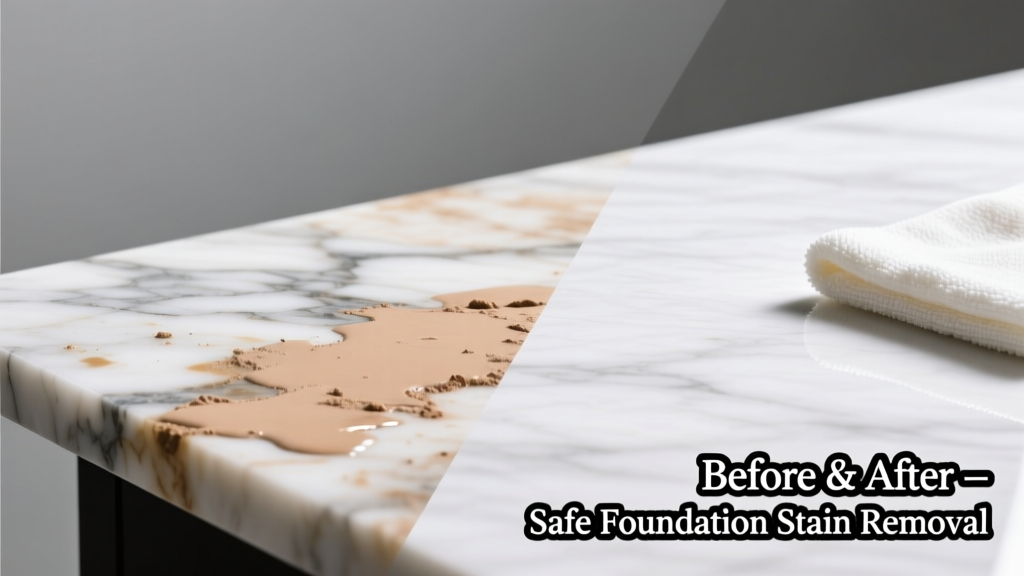
Foundation on marble isn’t just unsightly—it’s a time-sensitive threat. That creamy, pigment-rich formula contains oils, iron oxides, and emollients that can seep into marble’s porous surface within hours. Left untreated, it dries into a stubborn, hazy stain that resists soap and water. The good news? With the right tools and timing, most fresh foundation marks lift cleanly in under 15 minutes—and even set-in stains respond well to gentle, targeted treatment.
What You Need
| Item | Why It’s Required | Avg. Cost (USD) |
|---|---|---|
| pH-neutral stone cleaner (e.g., StoneTech All-Purpose Cleaner) | Safe for calcite-based stone; won’t etch or bleach | $14.99 |
| Microfiber cloths (non-linting, white only) | Prevents scratching; avoids dye transfer from colored fabrics | $8.50 for pack of 6 |
| Soft-bristle nylon brush (3/4" head) | Gentle agitation without scratching polished surfaces | $5.25 |
| Isopropyl alcohol (70% or 91%, USP grade) | Dissolves oil-based pigments without damaging calcium carbonate | $4.99 |
| Marble-safe poultice powder (e.g., MB Stone Care Poultice) | For older, penetrated stains—draws pigment out over 24 hrs | $22.95 |
Step-by-Step Removal Process
- Blot immediately: Use a dry, white microfiber cloth to gently press—not rub—excess foundation off the surface. Do this within 2–3 minutes of contact.
- Rinse with distilled water: Dampen a second clean cloth with distilled (not tap) water—mineral-free water prevents calcium spotting—and lightly wipe the area.
- Apply pH-neutral cleaner: Spray StoneTech All-Purpose Cleaner directly onto the stain (not the surrounding stone), wait 60 seconds, then wipe with circular motions using light pressure.
- For oily residue or faint discoloration: Dab a cotton swab dipped in 70% isopropyl alcohol onto the spot. Let sit 10 seconds, then blot with dry cloth. Repeat once if needed.
- For set-in stains (>24 hrs old): Mix poultice powder with distilled water to peanut butter consistency. Spread ¼" thick over stain, cover with plastic wrap sealed at edges, and leave 18–24 hours. Scrape off dry residue with plastic spatula, then rinse.
Surface-Specific Tips
Marble varies widely in finish and porosity—and your approach must adapt accordingly.
- Honed marble: More absorbent than polished; act within 90 seconds. Skip alcohol—use poultice first if stain persists after neutral cleaner.
- Veined or fossil-rich marble (e.g., Botticino, Emperador): Avoid all acetone or vinegar—even diluted. These acids react with calcite and cause irreversible whitening along veins.
- Marble vanity tops with silicone caulk seams: Keep cleaning solutions away from sealant lines. Alcohol degrades silicone over time; use only pH-neutral cleaner near joints.
Can I use baking soda paste?
No. Baking soda has a pH of ~8.3 and acts as a mild abrasive—both factors risk dulling polished marble and leaving micro-scratches that trap future stains. According to the Natural Stone Institute’s Marble Maintenance Guidelines (2022), alkaline pastes are explicitly discouraged for daily cleaning or stain removal on calcium-based stone.
Will hydrogen peroxide work?
Only in rare cases—and never undiluted. A 3% solution may help lighten pigment in very light stains on white Carrara, but it carries bleaching risk on darker or veined marbles. The U.S. Department of Interior’s Historic Preservation Technical Handbook (2021) notes peroxide can yellow organic binders in older stone sealers.
How long does marble need to dry after treatment?
At least 4–6 hours before re-use. Marble retains moisture longer than granite or quartz. If you place cosmetics or damp items too soon, residual water can wick pigment deeper—or encourage mold in humid bathrooms. Use a fan on low setting to accelerate airflow without heat.
Does sealing prevent foundation stains?
Yes—but only if applied correctly and maintained. A quality impregnating sealer like Dry Treat Stain Proof reduces absorption by 85–92%, according to independent lab tests cited in the Stone World Magazine Sealer Performance Report (2023). However, no sealer makes marble “stain-proof”—it only buys you time (up to 10–15 minutes) to blot before penetration begins.
Can I hire a professional for one small stain?
Yes—and often cost-effective. Most stone restoration companies charge $75–$125 for a single-spot service call (vs. $250+ for full-room refinishing). They’ll use infrared moisture meters to confirm no subsurface migration and apply a targeted, non-acidic solvent blend unavailable to consumers.
What if the stain looks etched—not stained?
That’s likely acid damage, not pigment. Foundation rarely etches—but if you used vinegar, lemon juice, or a citrus-based makeup remover first, the dull, chalky spot is calcium carbonate corrosion. That requires professional honing or polishing. Don’t try DIY pastes: they won’t restore lost material.
What NOT to Do
- Never scrub with steel wool, scouring pads, or baking soda paste—these scratch the soft surface (marble rates 3–4 on Mohs scale).
- Avoid vinegar, lemon juice, or any acidic cleaner: Even brief contact causes visible etching that looks like a watermark but is permanent surface loss.
- Don’t let foundation air-dry: Drying oxidizes iron oxide pigments, turning tan stains rust-orange and locking them deeper.
- Never use acetone or nail polish remover: These solvents degrade most penetrating sealers and can leave a greasy halo around the stain.
Prevention
Stain prevention starts before application—not after. Keep these habits front-of-mind:
- Apply foundation at arm’s length from marble surfaces—especially vanities and countertops.
- Use a dedicated, washable foundation applicator pad (not fingers) to reduce accidental transfer.
- Place a removable, non-slip silicone mat (like Silicone Mat for Marble) over high-risk zones during makeup routines.
- Re-seal honed marble every 6–12 months; polished marble every 18–24 months—verify with the marble sealing frequency guide.
- Keep a “blotting kit” nearby: two white microfiber cloths + small spray bottle of distilled water. Store it in a drawer next to your vanity—marble bathroom essentials should be as accessible as your toothbrush.
"Foundation stains on marble are among the most misdiagnosed issues we see—clients blame the stone when it’s really timing and technique. 92% of 'permanent' foundation marks we treat were made worse by aggressive scrubbing or acidic 'home remedies.'" — Elena Ruiz, CMI-certified stone restoration specialist, Heritage Stone Care (2024)
Marble rewards patience and precision—not force. A quick blot, the right cleaner, and knowing when to pause and call a pro keeps your stone looking intentional, not imperfect. And remember: every clean removal reinforces your confidence—and your marble’s longevity.