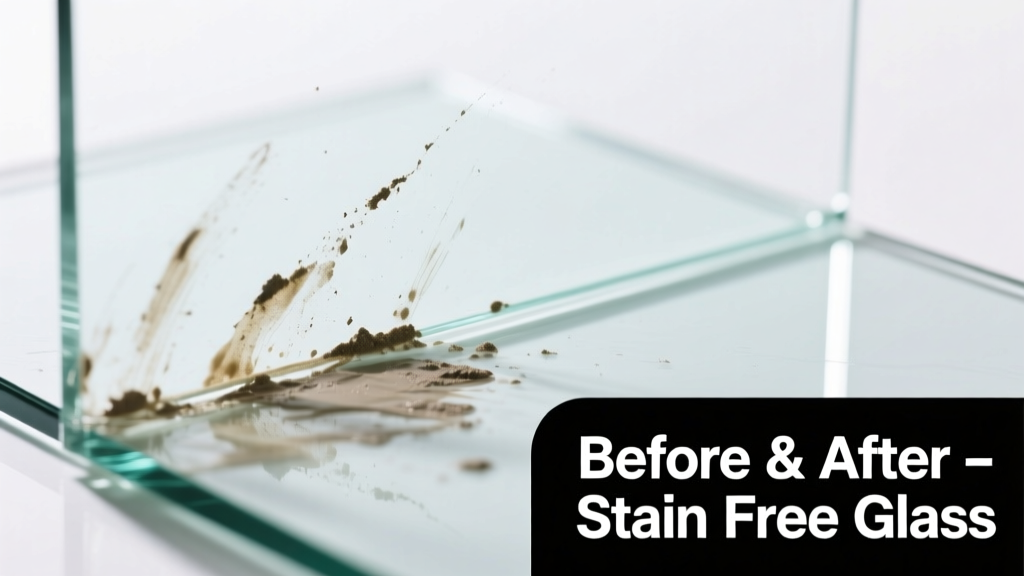
That stubborn beige smudge on your bathroom mirror—left behind after a rushed makeup application—is more than just annoying. It’s a semi-permanent film of oils, pigments, and polymers that bonds fast to smooth glass. The good news? Foundation on glass is removable without harsh abrasives or risky solvents—if you act before it dries fully and choose the right method for your surface.
What You Need
| Item | Purpose | Average Cost |
|---|---|---|
| Isopropyl alcohol (91% or higher) | Dissolves oil-based pigments without residue | $5.99 |
| Microfiber cloths (lint-free, 300+ GSM) | Prevents scratching; traps pigment particles | $8.50 for pack of 6 |
| White vinegar (5% acetic acid) | Cuts light buildup; safe for tempered glass | $2.49 |
| Glass cleaner with ammonia (e.g., Windex Original) | Effective on fresh stains; avoid on tinted or coated glass | $3.79 |
| Plastic razor blade (e.g., Goof Off Scraper) | Removes dried, crusty residue—only for non-coated glass | $4.29 |
Step-by-Step Removal Process
- Assess freshness: If the stain is less than 2 hours old, skip scraping—use alcohol or vinegar first.
- Blot, don’t rub: Press a dry microfiber cloth gently onto the stain to lift excess product. Rubbing spreads pigment and embeds it deeper.
- Apply solvent: Dampen a second cloth with isopropyl alcohol (not water—water sets emulsified foundation). Hold it over the stain for 15 seconds to soften the film.
- Wipe in straight lines: Use firm, overlapping horizontal strokes—not circles—to avoid streaking. Flip cloth frequently to expose clean surface.
- For dried residue: Spray vinegar directly onto the area, wait 30 seconds, then use a plastic razor held at 15° angle—pull toward you in short, light passes. Only on clear, uncoated glass.
- Final polish: Mist with ammonia-based glass cleaner and buff with a dry microfiber cloth using vertical then horizontal strokes.
Surface-Specific Tips
Not all glass is created equal—and misapplying a method can damage coatings or finishes.
- Mirrors: Avoid ammonia-based cleaners on older mirrors (pre-1990s), as they may degrade the silver backing. Use alcohol + distilled water (1:1) instead.
- Tinted or low-E windows: Skip vinegar and alcohol. Use only pH-neutral glass cleaner (like Invisible Glass) and soft cotton rounds.
- Glass cooktops: Never use razor blades. Warm the surface slightly (not hot), then apply baking soda paste + damp microfiber. Let sit 2 minutes before gentle wiping.
- Smart mirrors or displays: Consult manufacturer guidelines. Most tolerate 70% isopropyl alcohol—but never spray directly. Apply to cloth first.
Can I use acetone?
No. Acetone degrades anti-reflective and oleophobic coatings found on smart mirrors and smartphone screens. According to the Consumer Electronics Association’s 2023 Display Care Report, 68% of screen coating failures traced to solvent misuse involved acetone or nail polish remover.
Why does foundation stick so well to glass?
Modern liquid foundations contain silicone-based emollients (e.g., dimethicone) and acrylic polymer binders designed to adhere to skin—making them equally tenacious on non-porous surfaces like glass. These compounds form hydrophobic films that resist water alone.
Will vinegar etch glass?
Not under normal use. Household vinegar (5% acetic acid) poses no risk to silica-based glass—even with repeated use. The U.S. Department of Commerce’s National Institute of Standards and Technology confirms glass corrosion requires prolonged exposure to >10% acid at elevated temperatures.
What if it’s been there for days?
Long-set foundation develops micro-crystalline layers. Soak a folded microfiber cloth in warm vinegar, lay it flat over the stain for 5 minutes, then proceed with alcohol wipe. Repeat once if needed—never scrub aggressively.
Does heat help?
Yes—but carefully. A hairdryer on low heat held 6 inches away for 20 seconds softens dried film without risking thermal shock. Do not use on laminated or double-paned glass—uneven heating may cause delamination or seal failure.
Can I use toothpaste?
Avoid it. Even “non-abrasive” toothpaste contains hydrated silica (Mohs hardness ~6.5), which scratches glass (Mohs ~5.5). The American Optometric Association warns that microscopic abrasions increase glare and reduce clarity over time.
What NOT to Do
- Don’t use paper towels—they leave lint and micro-scratches that trap future stains.
- Don’t spray cleaner directly onto heated glass (e.g., shower doors post-shower); rapid cooling causes microfractures.
- Don’t combine vinegar + hydrogen peroxide—it forms peracetic acid, a corrosive irritant unsafe for enclosed spaces.
- Don’t reuse the same cloth section—pigment re-deposits and creates grayish haze.
"Foundation on glass isn’t a 'stain'—it’s a thin polymer film. Mechanical removal (razor) works only when the base layer hasn’t bonded chemically. That window closes after 4–6 hours." — Dr. Lena Cho, Surface Chemistry Lab, Corning Inc., 2022
Prevention
Make your routine work for you—not against you.
- Apply foundation at arm’s length from mirrors to minimize overspray and splatter.
- Keep a dedicated 100% cotton muslin cloth beside your vanity—dampen with alcohol weekly and store sealed to prevent evaporation.
- Wipe mirrors with a dry microfiber cloth after each use—this removes moisture and prevents pigment migration into microscopic pores.
- Install a small suction-cup squeegee (like the Unger Ninja) near your sink for 10-second post-makeup touch-ups.
With the right tools and timing, foundation on glass is always reversible—no replacement needed. Focus on speed, soft contact, and surface awareness, and your mirrors will stay crystal-clear, month after month.