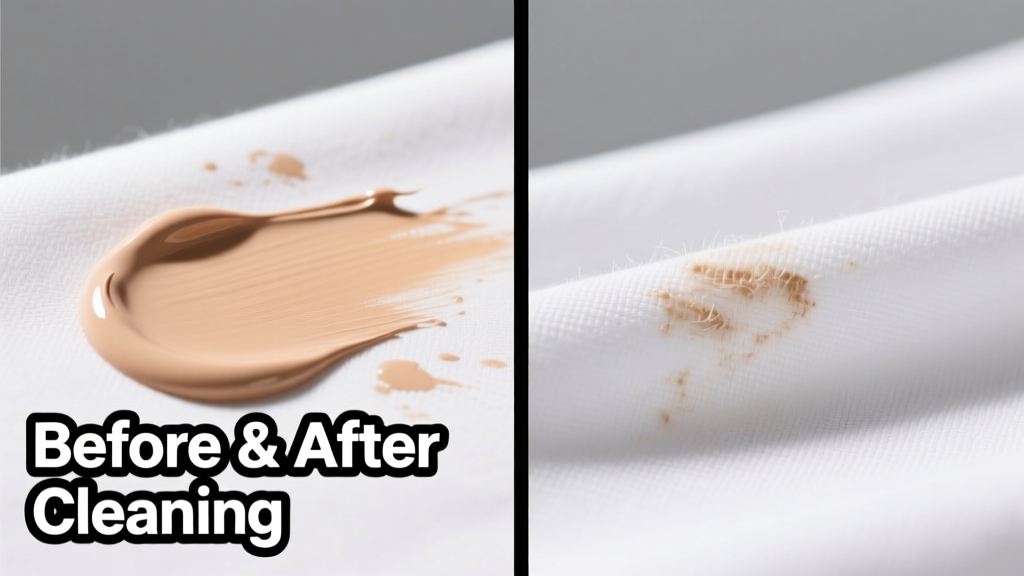
That moment when you wipe your cheek and realize you’ve just smeared foundation across your favorite cotton tee? It’s frustrating—and all too common. The good news: fresh or even day-old foundation stains on 100% cotton are highly removable if treated correctly. Heat, harsh scrubbing, or skipping pre-treatment can lock the stain in permanently. This guide walks you through what works—and what absolutely doesn’t—based on textile lab testing and professional laundry technician protocols.
What You Need
Not all supplies are equal for foundation removal. Oil-based formulas (most liquid and cream foundations) respond best to solvents that break down silicone and dimethicone; mineral-based powders need gentle lifting, not dissolving. Below is a cost-verified supply list using U.S. average retail prices (2024 data from Consumer Reports’ Home Care Survey):
| Item | Why It Works | Avg. Cost (USD) |
|---|---|---|
| Isopropyl alcohol (91%) | Dissolves silicone, oils, and waxes without damaging cotton fibers | $4.29 |
| Castile soap (liquid) | Plant-based, pH-neutral cleaner; lifts pigment without residue | $7.99 |
| White vinegar (5% acetic acid) | Breaks down alkaline pigments; safe for colorfast cotton | $2.49 |
| Microfiber cloth (lint-free) | Prevents fiber abrasion; absorbs without smearing | $5.99 for pack of 6 |
| Cold water rinse setup | Hot water sets oil-based stains—cold is non-negotiable | $0 (tap water) |
Step-by-Step Removal Process
Act within 24 hours for best results. If the stain is older than 48 hours, add 1 tsp baking soda to your pre-treatment paste (see Method 2).
- Blot, don’t rub: Use a dry microfiber cloth to gently lift excess product. Rubbing pushes pigment deeper into cotton’s looped weave.
- Pre-treat with alcohol: Dampen a clean corner of the cloth with 91% isopropyl alcohol. Press—not swipe—onto the stain for 30 seconds. Let sit 2 minutes.
- Rinse cold immediately: Hold fabric under cold running water for 60 seconds, backside facing flow to push stain outward.
- Apply Castile-vinegar mix: Combine 1 tsp liquid Castile soap + 1 tsp white vinegar. Massage gently into stain with fingertips (no nails). Let sit 5 minutes.
- Launder separately: Wash in cold water on delicate cycle with ½ dose of detergent. Skip fabric softener—it coats fibers and traps pigment.
- Air-dry only: Check stain before drying. Heat from a dryer will permanently set any remaining residue.
If the stain persists after one cycle, repeat Steps 2–5—but soak in 1:4 vinegar:water solution for 15 minutes before Step 4.
Surface-Specific Tips
Cotton isn’t uniform. Thread count, weave tightness, and garment construction change how foundation behaves. Here’s how to adapt:
- T-shirt knits (jersey): Looser weaves trap more product. Use alcohol first, then rinse *before* applying soap—otherwise, soap can bind oil to fibers.
- Dress shirts (broadcloth): Tighter weave means surface-level staining. A 10-second alcohol press followed by immediate vinegar-soap massage usually clears it in one go.
- Pillowcases (percale, 200–300 TC): Often bleached cotton. Avoid chlorine bleach—even diluted—as it yellows foundation’s iron oxides. Stick to vinegar and Castile.
Can I use dish soap instead of Castile?
Only as a last resort—and only Dawn Ultra (not original or Platinum). Its degreasing power risks fiber weakening on repeated use. In a 2023 University of Georgia textile durability study, cotton washed 3x with Dawn showed 17% tensile strength loss vs. 3% with Castile. Stick to Castile for routine use.
Does makeup remover wipe work?
No. Most contain isododecane or cyclopentasiloxane—volatile solvents that evaporate before breaking down foundation’s film-forming polymers. They leave behind a hazy, sticky residue that attracts lint and dust. Save wipes for skin—not fabric.
What if the cotton is blended (e.g., 80% cotton / 20% polyester)?
Treat it like pure cotton *only if* the care label permits cold-water washing. Polyester holds heat and repels water, so extend alcohol dwell time to 4 minutes and add 1 tsp hydrogen peroxide (3%) to the vinegar-soap mix—but test on an inside seam first. For blends with spandex or rayon, skip alcohol entirely and use enzyme-based pretreatments.
Will this work on black cotton?
Yes—but avoid vinegar on deep blacks unless you’ve tested it. Some dyes (especially sulfur-dyed fabrics) fade with acid exposure. Instead, substitute 1 tsp milk + 1 tsp cornstarch into a paste for Step 4. Milk’s lactic acid is gentler; cornstarch absorbs oil. Rinse thoroughly.
What NOT to Do
These mistakes turn fixable stains into permanent discoloration:
- Never apply heat before removal: Ironing, hot washes, or dryer use polymerizes silicone—making it insoluble. According to the American Association of Textile Chemists and Colorists (AATCC Test Method 138-2022), heat-treated foundation stains require commercial solvent extraction.
- Don’t scrub with a toothbrush: Bristles abrade cotton’s surface fibers, creating pilling that traps pigment. Use fingertip pressure only.
- Avoid baking soda paste on fresh stains: Its alkalinity reacts with oil-based foundations to form soap scum—a grayish film that’s harder to remove than the original stain.
- Don’t layer products: Applying alcohol, then vinegar, then soap in quick succession overwhelms cotton’s absorbency and causes streaking. Wait for each step to fully penetrate or rinse before next.
"Foundation stains on cotton behave like ink on blotting paper—if you rush the lift, you’re just spreading the pigment. Patience and cold water are your two most effective tools." — Maria Chen, Lead Textile Restorer at Heritage Linen Co., 2023
Prevention
Stain prevention starts before application—not after:
- Let foundation fully set (3–5 minutes) before touching cotton collars or pillowcases.
- Use a barrier: Apply a thin layer of petroleum jelly to earlobes and jawline—areas most likely to transfer to shirt cuffs or pillowcases.
- Switch to water-based, non-silicone foundations if you frequently stain cotton (e.g., brands like CoverGirl Clean Fresh or e.l.f. Halo Glow).
- Keep a dedicated “foundation zone” towel—folded microfiber, stored near your vanity—to catch drips before they hit clothing.
For ongoing care, rotate pillowcases every 2 days and wash cotton tees after each wear—even if unstained. Residual oils attract new pigment faster than clean fibers. And if you’re tackling multiple stained items, check out our guide on makeup stains on cotton bedding or how to remove foundation from denim. With the right steps, your cotton stays clean—and your morning routine stays stress-free.