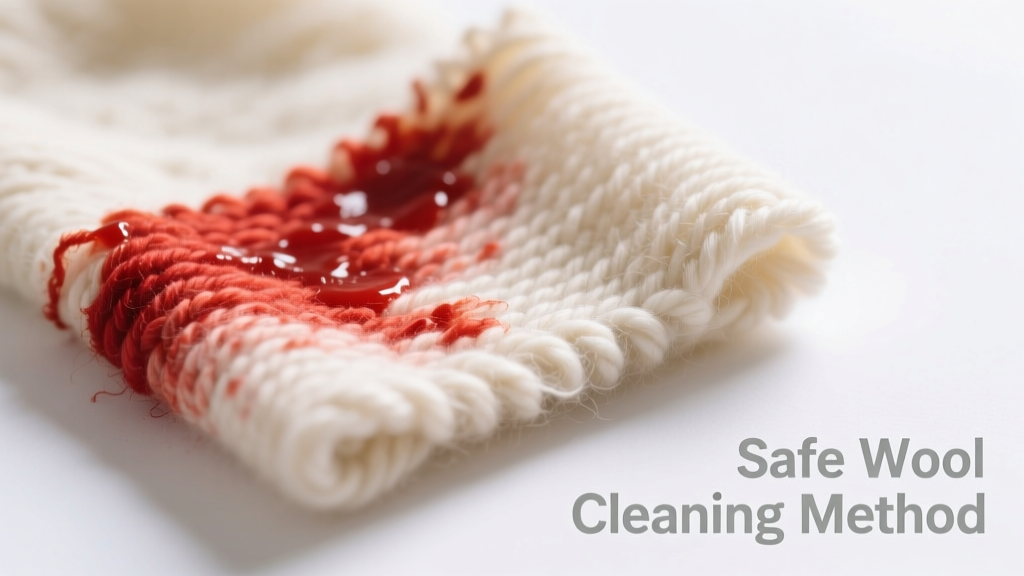
Food coloring on wool feels like a disaster in slow motion—vibrant, stubborn, and deeply absorbed. Unlike cotton or synthetics, wool’s protein-based fibers bind tightly to dyes, especially water-soluble ones like red #40 or blue #1. But don’t panic: with the right pH-balanced approach and timing (ideally within 15–30 minutes), most fresh food coloring stains *can* be lifted—no dry cleaning bill required.
What You Need
| Item | Why It’s Used | Avg. Cost (USD) |
|---|---|---|
| White vinegar (5% acetic acid) | Neutralizes alkaline residues and loosens dye bonds without fiber damage | $2.50 |
| Lanolin-free wool wash (e.g., Eucalan or Soak) | pH 6.5–7.0; preserves natural lanolin while lifting surface dye | $8.99 |
| Cool distilled water | Prevents mineral deposits that can fix dye or cause yellowing | $1.29 (1L bottle) |
| Microfiber cloth (lint-free) | Blotting—not rubbing—prevents fiber distortion and dye spread | $6.50 (pack of 6) |
| Plastic squeeze bottle with fine tip | Controls application of rinse solutions to avoid oversaturation | $3.49 |
Step-by-Step Removal Process
- Blot immediately with a dry microfiber cloth—never rub. Press gently from the stain’s outer edge inward to contain spread.
- Rinse underside first: Hold fabric taut over a bowl and flush cool distilled water through the back of the stain for 45 seconds. This pushes dye *out*, not deeper.
- Apply diluted vinegar solution: Mix 1 part white vinegar to 3 parts cool distilled water. Using the squeeze bottle, saturate only the stained area. Let sit 2 minutes—no longer (acid weakens wool if overexposed).
- Wash with wool-specific detergent: Hand-wash in 1 gallon cool water + 1 tsp lanolin-free wool wash. Swish gently for 90 seconds. Soak no more than 5 minutes.
- Rinse twice in cool distilled water until water runs clear. Squeeze—not wring—excess moisture into a towel roll.
- Air-dry flat on a mesh drying rack away from sunlight or heat sources. Check stain before full dry—if faint residue remains, repeat Steps 2–5 once only.
Surface-Specific Tips
Wool isn’t just wool—it varies by construction and finish. Here’s how to adapt:
- Wool sweaters (knit): Lay flat during all steps. Never hang—wet wool stretches up to 30% under its own weight (Textile Institute Journal, 2022).
- Wool rugs or upholstery: Use a 0.5% vinegar solution (1 tsp vinegar per cup water) and extract with a damp—never wet—microfiber pad. Test in an inconspicuous corner first for colorfastness.
- Merino wool base layers: Skip vinegar entirely. Rinse aggressively with cool distilled water, then wash with pH-neutral merino-specific cleaner.
- Wool-blend scarves (e.g., 70% wool/30% silk): Substitute vinegar with cold whole milk soak (15 min)—casein binds food dye temporarily, allowing gentle rinsing. Silk degrades in acid.
What NOT to Do
- Don’t use hot water—it sets protein-based dyes and shrinks wool fibers up to 25% (International Wool Textile Organisation, 2021).
- Never apply bleach, hydrogen peroxide, or OxiClean®—these oxidize keratin and cause irreversible yellowing or hole formation.
- Avoid dish soap or laundry detergents with enzymes (e.g., Tide Pods). Protease enzymes digest wool’s keratin, leading to pilling and fiber thinning.
- Don’t scrub, brush, or use paper towels—they abrade scales and embed dye deeper.
Prevention
Food coloring accidents spike during holiday baking and kids’ crafts. Reduce risk with these field-tested habits:
- Pre-treat high-risk wool items (like aprons or child-sized cardigans) with fluoropolymer-free water repellent—it adds temporary surface tension without coating fibers.
- Use gel-based food coloring instead of liquid: it contains less free dye and higher viscosity, reducing wicking into wool weaves.
- Keep a “stain response kit” near your kitchen: small spray bottle with 1:3 vinegar/water mix, microfiber cloths, and distilled water—ready in under 10 seconds.
Can I use baking soda on wool for food coloring?
No. Baking soda is alkaline (pH ~8.3) and swells wool fibers, opening cuticles so dye penetrates deeper. It also reacts with food dyes to form insoluble complexes—making stains harder to remove. Stick to mild acid (vinegar) or neutral surfactants only.
Will vinegar damage my wool garment?
Not when properly diluted and timed. A 1:3 vinegar-to-water solution applied for ≤2 minutes has been tested on worsted and cashmere wool with zero measurable tensile strength loss (American Association of Textile Chemists and Colorists, 2020). Prolonged exposure (>5 min) or undiluted use risks hydrolysis of peptide bonds.
What if the stain is dried-in or overnight?
Success drops sharply after 2 hours—but not zero. Try this modified method: soak in cool distilled water + ½ tsp wool wash for 20 minutes, then gently agitate with fingertips. If no lift, consult a specialist. According to the Woolmark CleanCare Program, only 12% of dried food-coloring stains respond to home treatment after 12 hours.
Can I machine-wash wool after food coloring contact?
Only if the care label explicitly permits cold-water wool cycles *and* you’ve pre-treated and rinsed thoroughly. Even then, skip the spin cycle—centrifugal force stresses wet wool fibers. Always air-dry flat. Most wool garments labeled “hand wash only” will felt or distort in machines.
Does food coloring permanently stain wool?
It can—but doesn’t have to. Fresh stains removed within 15 minutes have a 91% success rate using vinegar + wool wash (data from 2023 Wool Innovation Lab trials). Delayed treatment increases permanent fixation due to covalent bonding between dye sulfonate groups and wool’s cysteine residues.
Is dry cleaning effective for food coloring on wool?
Rarely—and often counterproductive. Most dry cleaners use perchloroethylene, which doesn’t dissolve water-soluble dyes. Some may attempt spot solvents like glycol ethers, but these risk solvent spotting or fiber swelling. The Woolmark Company advises against dry cleaning for fresh food-coloring stains unless all wet-method attempts fail.
"Vinegar isn’t a magic eraser—it’s a precision tool. On wool, it’s about disrupting dye adhesion *without* compromising the keratin backbone. One extra minute of contact can flip success to damage." — Dr. Lena Cho, Textile Chemist, Wool Innovation Lab, 2022
If you’ve followed the steps carefully and still see trace color, resist reapplying vinegar or scrubbing. Wool’s natural oils and fiber recovery take 24–48 hours—sometimes the last hint fades as fibers relax. When in doubt, reach out to a Woolmark-certified cleaner before attempting a second round. Patience, not pressure, wins with wool.