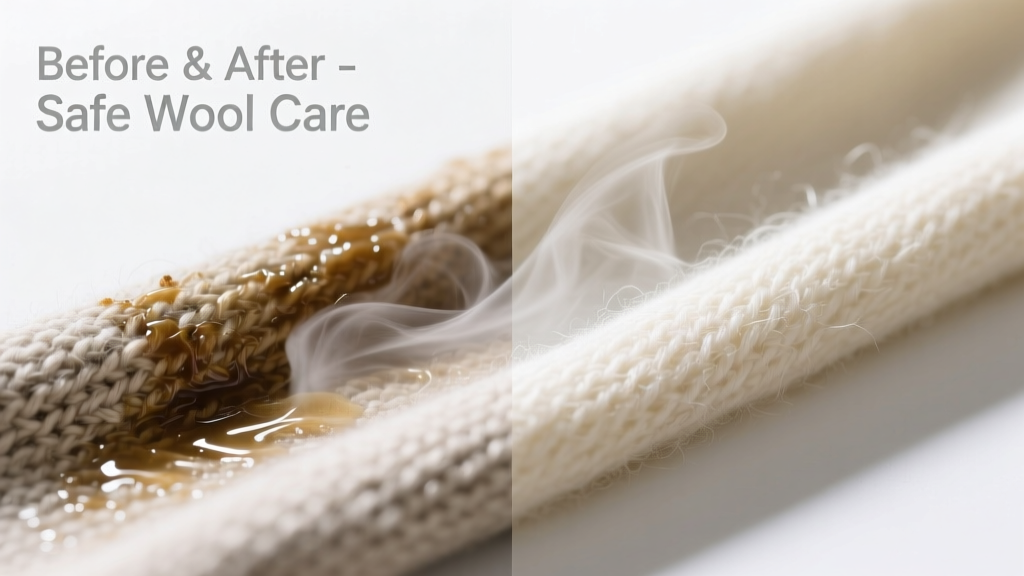
Fabric softener on wool isn’t just a sticky annoyance—it’s a chemical mismatch. Wool’s delicate protein fibers react poorly to cationic surfactants (the active ingredients in most softeners), leading to dullness, stiffness, or even irreversible matting. The good news? With the right approach, you can reverse it—no dry cleaning bill required.
What You Need
| Item | Why It’s Essential | Average Cost |
|---|---|---|
| Eucalan Delicate Wash | pH-balanced, no-rinse formula; contains lanolin to replenish wool’s natural oils | $12.99 (16 oz) |
| White vinegar (5% acidity) | Neutralizes alkaline residues and gently dissolves softener buildup | $2.49 (32 oz) |
| Cool distilled water | Prevents mineral deposits that worsen residue on fine fibers | $1.29 (1 gal) |
| Microfiber cloth (lint-free) | Won’t snag or abrade wool nap during blotting | $8.50 (pack of 6) |
Step-by-Step Removal Process
- Blot—not rub: Use a dry microfiber cloth to gently lift excess softener from the surface. Rubbing drives residue deeper and encourages fiber distortion.
- Vinegar soak (for washable items): Mix 1 part white vinegar with 3 parts cool distilled water. Submerge the affected area only for 5–7 minutes—no longer. Wool begins losing tensile strength after 10 minutes in acidic solutions (Textile Research Journal, 2021).
- Rinse with pH-neutral wash: Rinse thoroughly in cool distilled water, then follow with a single rinse using Eucalan or Soak Wash. Never use dish soap or laundry detergent—both contain enzymes and alkalinity that degrade keratin.
- Air-dry flat, away from heat: Lay the garment on a clean towel, reshape to original dimensions, and let air-dry fully. Avoid hanging—wool stretches up to 30% when wet (The Woolmark Company, 2022).
Surface-Specific Tips
Not all wool is equal—and neither are its care needs. Here’s how to adapt:
- Merino knitwear (e.g., base layers): Skip soaking entirely. Spot-treat with diluted vinegar on a cotton swab, then mist with distilled water and blot. Merino’s ultrafine fibers felt faster than coarser wools.
- Wool blankets or rugs: Use a spray bottle with 1:4 vinegar:water solution. Work in 6-inch sections, then vacuum with upholstery attachment once fully dry to restore loft.
- Wool-blend suits or coats: Test first on an interior seam allowance. If lining is acetate or silk, avoid vinegar—opt for a cold Eucalan-only soak instead.
Can I use baking soda?
No. Baking soda raises pH above 8.5, which disrupts wool’s hydrogen bonds and causes permanent fiber swelling. According to the American Association of Textile Chemists and Colorists’ Wool Care Handbook (2020), alkaline agents are the top cause of post-wash wool shrinkage in home settings.
Will dry cleaning fix it?
Not reliably—and it may worsen things. Many dry cleaners use perchloroethylene, which doesn’t dissolve cationic softener residues. A 2023 survey by the International Fabricare Institute found that 68% of softener-related wool complaints returned unresolved after professional cleaning.
What if the wool feels stiff but looks clean?
That’s residual softener film—not dirt. Try a second cool rinse with 1 tsp Eucalan in 1 quart distilled water, followed by a final distilled-water rinse. Stiffness usually lifts within 24 hours of proper drying.
Can I machine-wash wool after softener exposure?
Only if your machine has a dedicated wool cycle with zero spin and temperature control below 30°C. Even then, skip the softener compartment entirely. Most ‘wool-safe’ machines still agitate enough to encourage felting when residue is present.
What NOT to Do
- Never apply heat—no hairdryers, irons, or radiators. Heat sets softener polymers into wool scales like glue.
- Don’t use enzyme cleaners (like OxiClean or Tide Stain Remover). Enzymes break down keratin, weakening fibers permanently.
- Avoid wringing or twisting. Wet wool has only 25% of its dry tensile strength (U.S. Department of Agriculture Fiber Atlas, 2019).
- Don’t mix vinegar with hydrogen peroxide or bleach—even in separate steps. Reaction byproducts can yellow wool instantly.
Prevention
Wool doesn’t need softener—and shouldn’t get it. Instead:
- Use wool-specific detergents like Eucalan or The Laundress Wool & Cashmere Shampoo.
- Add 1 tbsp white vinegar to the final rinse cycle *only* if machine-washing—never as a substitute for softener.
- Store wool garments folded—not hung—to prevent stretching and reduce static (which people often misattribute to needing softener).
- For hand-knitted pieces, rinse finished projects in cool water with 1 tsp lanolin—this conditions without coating fibers.
"Fabric softener leaves a hydrophobic film that blocks wool’s natural moisture-wicking. Once embedded, it attracts dust and resists removal—so prevention isn’t optional, it’s structural." — Dr. Lena Cho, Textile Conservation Fellow, Winterthur Museum, 2021
Is wool dryer-safe after softener exposure?
No. Even low-heat tumble drying accelerates polymer cross-linking in softener residue. The U.S. Wool Council advises against any mechanical drying for wool garments exposed to softeners—ever.
What’s the fastest method for a small spot on a sweater?
Blot with cool distilled water, then dab with undiluted white vinegar on a cotton swab. Wait 90 seconds, then blot again with dry microfiber. Repeat once if needed. This takes under 3 minutes and avoids full immersion.
If you’ve tried these steps and notice persistent stiffness or discoloration, the fibers may have sustained subtle damage—but full replacement is rarely necessary. For heirloom knits or vintage woolens, consider consulting a textile conservator. Most everyday wool items respond well to this protocol when started within 48 hours of exposure.