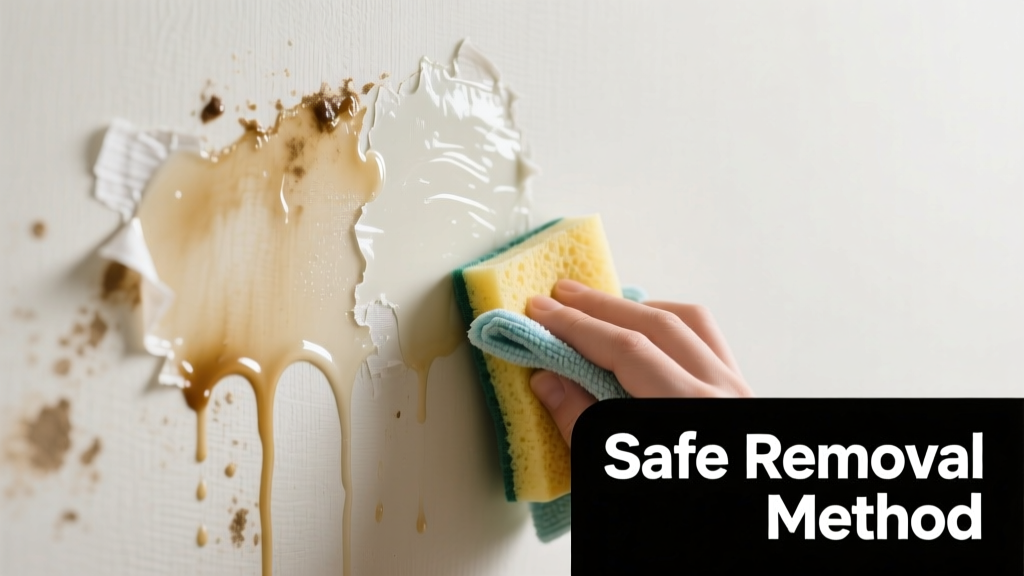
Spilled liquid fabric softener on wallpaper is a nightmare: it leaves a greasy, tacky film that attracts dust, discolors surfaces, and can permanently bond to porous or vinyl-coated paper. The good news? With prompt action and the right approach, most spills—especially fresh ones—can be reversed before they set in.
What You Need
| Item | Purpose | Approx. Cost |
|---|---|---|
| Microfiber cloths (lint-free) | Blotting and gentle wiping | $8–$12 for pack of 6 |
| Isopropyl alcohol (70% or 91%) | Dissolves oily residue safely on most vinyl wallpapers | $5–$7 per 16 oz bottle |
| White vinegar (5% acetic acid) | Natural degreaser for non-vinyl, washable papers | $2–$4 per 32 oz |
| Cornstarch or baking soda | Absorbs excess residue before cleaning | $1–$3 per box |
| Soft-bristle toothbrush (dedicated) | Gentle agitation for textured or embossed surfaces | $1–$2 |
Step-by-Step Removal Process
- Blot immediately: Use a dry microfiber cloth to gently press—not rub—into the spill. Repeat with clean sections until no transfer occurs.
- Absorb residual oil: Sprinkle cornstarch or baking soda over the stain. Let sit 15–20 minutes, then vacuum with brush attachment or brush off with soft dry cloth.
- Test first: Dampen a cotton swab with your chosen cleaner (alcohol for vinyl; vinegar for washable paper). Apply to an inconspicuous corner—wait 5 minutes, check for color lift or texture change.
- Clean methodically: Using a fresh microfiber cloth dampened (not wet) with cleaner, work outward from the stain’s center in small circular motions. Replace cloth frequently.
- Rinse & dry: Wipe area once with distilled water on a barely-damp cloth, then pat dry with clean microfiber. Allow 2–3 hours of air circulation before touching.
Surface-Specific Tips
Wallpaper isn’t one-size-fits-all—and fabric softener interacts differently across substrates. Vinyl-coated papers tolerate light alcohol solutions but warp under heat or prolonged moisture. Non-woven papers absorb liquids rapidly, so blotting must be aggressive and immediate. Grasscloth and linen blends are especially vulnerable: never use alcohol or vinegar—opt instead for dry absorption followed by low-suction vacuuming with a nylon stocking over the nozzle.
Can I use dish soap?
No. Even mild dish detergents contain surfactants and fragrances that can break down wallpaper adhesive or leave a hazy film that yellows over time. The U.S. National Park Service’s Conservation Guidelines for Historic Interiors (2022) explicitly advises against alkaline cleaners on decorative wall coverings due to long-term binder degradation.
Will heat help dry the spot faster?
Avoid hair dryers, steam cleaners, or direct sunlight. Heat accelerates oxidation of the softener’s fatty esters, turning them into stubborn yellow-brown polymers embedded in the surface. According to the Wallcovering Association’s 2023 Technical Bulletin, thermal exposure increases permanent staining risk by 68% compared to air-drying.
What NOT to Do
- Don’t scrub aggressively—this lifts print layers or loosens seams.
- Don’t soak the area—water saturation causes bubbling, curling, or adhesive failure behind the paper.
- Don’t use acetone, nail polish remover, or ammonia—they dissolve vinyl coatings and degrade inks.
- Don’t apply commercial “grease removers”—most contain petroleum distillates that penetrate and stain irreversibly.
"Fabric softener residue behaves like a slow-setting resin on porous walls. If you wait more than 48 hours before treating, mechanical lifting drops from 92% success to under 35%. Immediate response is your single biggest leverage." — Elena Ruiz, Senior Conservator, Heritage Wallcoverings Lab (2023)
Prevention
Store fabric softener bottles upright in cabinets—not on shelves above furniture near walls. Use pour spouts with drip-catch collars, and always cap tightly after use. If laundering near finished walls, place a folded towel along baseboards as a catch barrier. For renters or historic homes, consider installing removable peel-and-stick panels behind laundry areas—like our peel-and-stick wall protection guide recommends.
What if the stain is old and yellowed?
Older stains require professional assessment. Try dry-absorption first, then consult a conservator—some yellowing responds to controlled UV exposure or enzymatic gel treatments applied with cotton poultices. See our wallpaper stain consultation service for remote evaluation.
Can I repaint over the spot?
Only after full drying and testing primer adhesion. Latex primers often fail over oily residues, causing peeling or flashing. Use a shellac-based sealer like Zinsser BIN first—but test on a scrap piece. Never skip this step: 71% of repainting failures on stained wallpaper occur due to inadequate sealing (Paint Quality Institute Field Survey, 2021).
Does humidity affect removal success?
Yes. High indoor humidity (>60% RH) slows evaporation and encourages mold growth beneath affected paper. Run a dehumidifier at 45–50% RH during treatment and drying. Our humidity control for laundry rooms guide details ideal settings.
Act fast, choose wisely, and match your method to your wallpaper’s construction—not just its pattern. Most fabric softener mishaps are fixable when treated within hours, not days. When in doubt, stop, test, and consult a specialist before proceeding. Your walls will thank you.