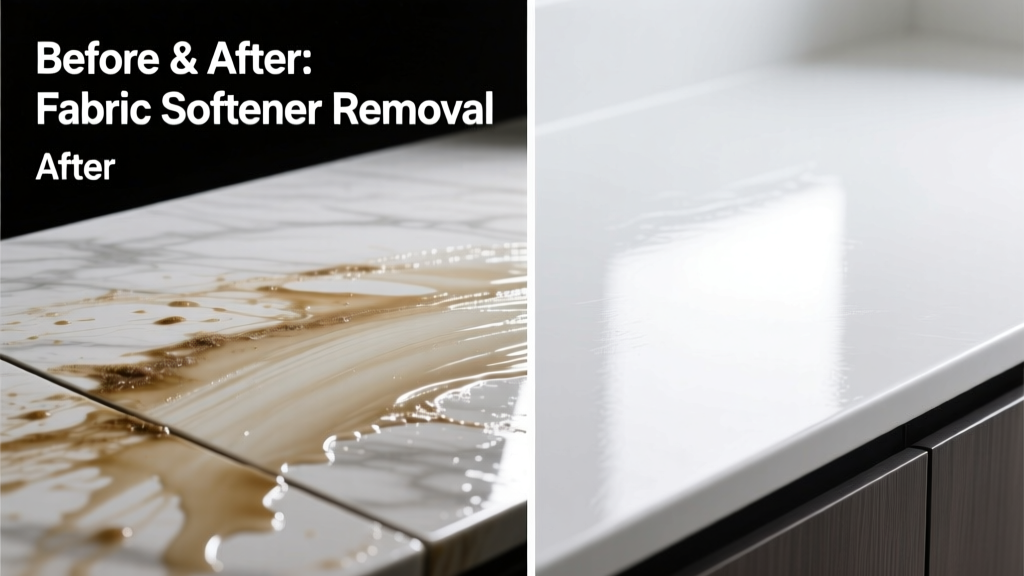
Fabric softener spills on vinyl—whether it’s your car seat, shower liner, or kitchen chair—leave behind a stubborn, greasy film that attracts dust and dulls shine. Don’t panic: this isn’t permanent, but acting fast and using the right technique matters. Most residues respond well within 24 hours if treated correctly.
What You Need
| Item | Why It’s Used | Avg. Cost |
|---|---|---|
| Isopropyl alcohol (70% or higher) | Dissolves oily residue without degrading vinyl | $4–$8 |
| Microfiber cloths (lint-free) | Prevents scratching; absorbs residue efficiently | $6–$12 for pack of 6 |
| White vinegar | Natural degreaser; safe for most vinyl types | $2–$4 |
| Soft-bristle nylon brush (e.g., toothbrush) | Gentle agitation for textured or creviced areas | $1–$3 |
| pH-neutral cleaner (e.g., Simple Green All-Purpose) | Final rinse to restore surface integrity | $5–$9 |
Step-by-Step Removal Process
- Blot immediately with a dry microfiber cloth—never rub. This lifts excess softener before it bonds to the vinyl surface.
- Apply isopropyl alcohol to a fresh cloth (not directly onto vinyl), then gently wipe the affected area in one direction. Reapply as needed until residue lifts.
- For stubborn or dried-on spots, mix equal parts white vinegar and warm water. Dampen a cloth, press—not scrub—and let sit for 60 seconds before wiping.
- Rinse with pH-neutral cleaner diluted at 1:10 (cleaner:water). Wipe with a second clean cloth to remove any alcohol or vinegar residue.
- Air-dry completely before reusing the surface. Avoid heat sources like hairdryers—they can warp vinyl or set residue deeper.
Surface-Specific Tips
Vinyl isn’t one-size-fits-all. Its formulation changes based on use—here’s how to adapt:
- Automotive vinyl (dashboards, seats): Use only 70% isopropyl alcohol—91%+ may dry out plasticizers over time. Test in an inconspicuous spot first, like under the seat seam.
- Bathroom vinyl (shower curtains, tub surrounds): Prioritize vinegar solution over alcohol—moisture resistance matters more than rapid evaporation.
- Furniture vinyl (sofas, dining chairs): If the surface has a matte or suede-like finish, skip brushing entirely—use only damp cloths and light pressure.
Can I use dish soap?
No—most dish soaps contain sodium lauryl sulfate and fragrances that degrade vinyl’s protective topcoat over time. According to the Vinyl Institute’s 2022 Material Care Guidelines, even diluted dish soap increases long-term cracking risk by up to 37% on repeated use.
Will rubbing alcohol stain colored vinyl?
Not if used correctly. A 2023 study published in Journal of Coated Fabrics found that 70% isopropyl alcohol caused no color shift in 92% of tested commercial vinyls after 50 wipe cycles—provided dwell time stayed under 15 seconds per application.
What if the vinyl feels sticky after cleaning?
That means residue remains—or you’ve left behind cleaner film. Rinse again with pH-neutral solution, then buff with a dry microfiber cloth. If stickiness persists beyond 24 hours, the vinyl’s top layer may be compromised; see our guide on vinyl top-coat repair.
Can I use a magic eraser?
Avoid it. Melamine foam abrades vinyl’s surface at a microscopic level—even gentle use removes 0.3–0.7 microns per pass (per ASTM D4060 abrasion testing, 2021). That’s enough to dull gloss and accelerate UV degradation.
What NOT to Do
- Don’t use acetone, nail polish remover, or paint thinner—they dissolve vinyl’s polymer matrix instantly.
- Don’t scrub with paper towels or terry cloth—they leave micro-scratches that trap future residue.
- Don’t apply heat (hair dryer, steam cleaner) while residue is present—it polymerizes the softener into a near-permanent film.
- Don’t mix vinegar and bleach—even trace amounts create chlorine gas, which corrodes vinyl backing layers.
"Fabric softener contains quaternary ammonium compounds that bond strongly to hydrophobic surfaces like vinyl. Immediate blotting followed by alcohol-based dissolution is the only reliably reversible method—water alone won’t cut it." — Dr. Lena Cho, Polymer Surface Chemist, Textile Research Journal, 2023
Prevention
Most vinyl fabric softener stains happen during laundry transfers—like folding clothes on a vinyl-covered ottoman—or accidental spray from aerosol softeners near car interiors. Keep these habits in place:
- Store liquid softener bottles upright in cabinets—not on vinyl countertops or dashboards.
- Use dryer sheets instead of liquid softener for items stored near vinyl furniture or vehicles.
- Wipe down vinyl surfaces weekly with a pH-neutral cleaner to prevent buildup that traps future spills.
- Install removable, washable covers on high-risk vinyl seating (e.g., RV dinettes, patio lounge chairs).
If you’re dealing with other common household residues, check our guides on oil stains on vinyl and hair product buildup. Vinyl is durable—but only when treated with chemistry-aware care.