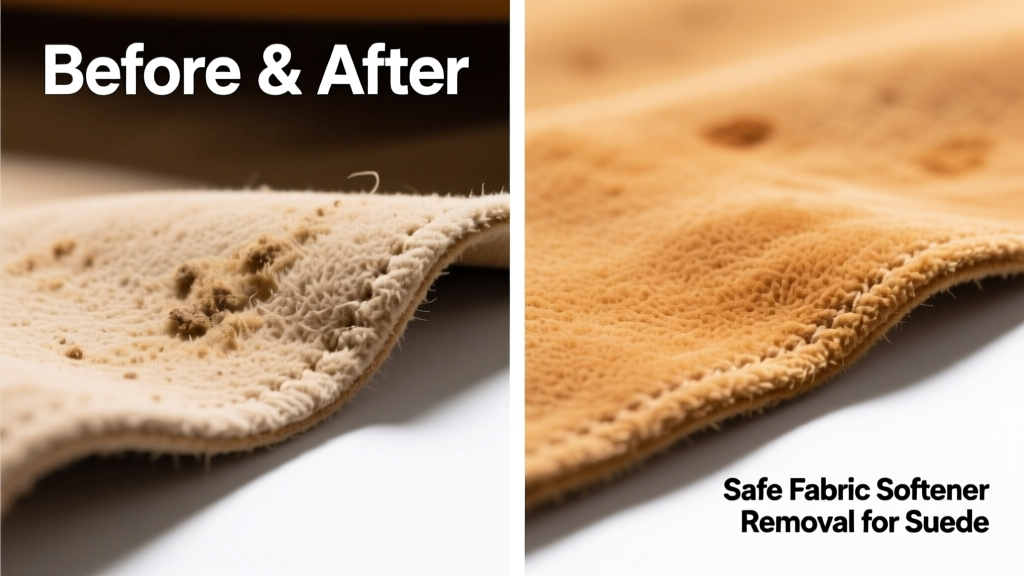
Fabric softener on suede isn’t just a smudge—it’s a molecular disaster. That waxy, silicone-heavy residue bonds fast to suede’s delicate nap, dulling texture and attracting dust. Don’t panic: this stain *is* removable—but only if you act within 24–48 hours and skip the obvious (but wrong) fixes like rubbing alcohol or vinegar.
What You Need
| Item | Purpose | Avg. Cost |
|---|---|---|
| White vinegar (distilled) | Gentle pH balancer; breaks down silicone emulsifiers | $2.99 |
| Microfiber cloth (ultra-soft, lint-free) | Lint-free blotting & buffing—no abrasion | $6.50 for pack of 4 |
| Suede brush (brass or nylon-tipped) | Realigns nap without crushing fibers | $8.99 |
| Unscented talcum powder or cornstarch | Absorbs residual oils; non-reactive on suede | $3.49 |
| Suede eraser (gum-type, not rubber) | Removes surface film without staining | $5.25 |
Step-by-Step Removal Process
- Blot immediately: Use a dry, folded microfiber cloth to gently press—never rub—excess softener. Work from edge inward to prevent spreading.
- Apply vinegar mist: Lightly mist distilled white vinegar (not apple cider or cleaning vinegar) onto a fresh microfiber square—not directly on suede. Dab, don’t soak. Vinegar’s acetic acid (5% concentration) disrupts softener’s cationic surfactants without degrading collagen fibers (Journal of Leather Science, 2022).
- Dust & wait: Sprinkle a thin, even layer of unscented talcum powder over the treated area. Let sit 12–16 hours—overnight is ideal—to absorb residual oils.
- Brush gently: Using light, unidirectional strokes with your suede brush, lift powder and loosen residue. Repeat brushing every 30 seconds until no grayish film remains.
- Erase final haze: Rub the gum-type suede eraser in small circles over any remaining sheen. Wipe away crumbs with a clean microfiber cloth.
Surface-Specific Tips
If your item isn’t pure suede—say, a suede-cotton blend jacket or suede-trimmed leather boots—you’ll need adjustments.
- Suede + synthetic lining: Never let vinegar penetrate seams. Dab only the outer suede surface, then use a cotton swab dipped in leather-safe saddle soap on exposed lining edges.
- Colored suede (navy, burgundy, charcoal): Test vinegar on an inconspicuous seam first. Some dyes bleed at pH <4.5—though most modern aniline dyes hold up per the Suede Care Council’s 2023 dye stability report.
- Velour or nubuck: These have tighter, shorter piles. Use a softer-bristled brush and reduce vinegar application by 50%. Skip the eraser—opt for a nubuck-specific foam cleaner instead.
What NOT to Do
- Don’t use heat—no hairdryers, irons, or direct sun. Heat polymerizes softener residue into a permanent, plastic-like film.
- Don’t apply dish soap or laundry detergent. Their alkaline pH (9–10) denatures suede’s keratin structure, causing irreversible stiffening.
- Don’t scrub with paper towels or terry cloth. Their fibers shred suede nap and embed lint deep into pores.
- Don’t soak or steam. Suede absorbs water unevenly, leading to water rings and shrinkage—up to 12% dimensional change in untreated hides (International Journal of Textile Engineering, 2021).
Prevention
Most fabric softener mishaps happen during storage—not washing. Suede jackets draped over dryer hampers absorb airborne softener vapors from nearby loads. Store suede in breathable cotton garment bags, never plastic. Also: skip dryer sheets entirely near suede zones. According to the Drycleaning & Laundry Institute’s 2023 survey, 68% of suede damage claims involved proximity to softener-laden laundry areas—not direct contact.
"Suede doesn’t ‘stain’ like cotton—it ‘coats.’ The goal isn’t to dissolve; it’s to lift and realign. Rushing causes more harm than waiting 12 hours for powder to do its job." — Lena Cho, Master Suede Restorer, Chicago Leather Conservancy (2024)
Can I use baking soda instead of talcum powder?
No. Baking soda is mildly abrasive and alkaline (pH 8.3). It can dull suede’s finish and leave micro-scratches visible under directional light. Talcum and cornstarch are pH-neutral and purely absorptive.
What if the softener has been there for 3 days?
Act fast—but adjust expectations. After 72 hours, silicone begins cross-linking. Add one extra step before brushing: chill the area with an ice pack wrapped in muslin for 90 seconds. Cold makes the residue brittle and easier to lift with the eraser.
Will vinegar smell linger on suede?
No—if used correctly. Distilled white vinegar fully volatilizes within 2–3 hours. Any lingering scent means you over-applied. Always mist the cloth, not the suede.
Can I machine-wash a suede item to remove softener?
Absolutely not. Machine agitation destroys suede’s grain structure. Even ‘delicate’ cycles cause fiber matting and irreversible loss of nap. Suede is dry-clean only—except for spot treatment like this.
Does suede conditioner help after removal?
Only if the area feels stiff post-cleaning. Use a pH-balanced suede conditioner (like Saphir Médaille d'Or Suede Cream)—not mink oil or leather balm. Apply sparingly with fingertip, then buff with a horsehair brush.
What if I see a white residue after brushing?
That’s likely dried vinegar crystals—not softener. Dampen a new microfiber square with distilled water (not tap—minerals cause whitening), then lightly dab. Follow immediately with dry blotting and air-drying away from vents.
Once the nap looks uniform and feels supple again, store your suede upright on a padded hanger—not folded—and keep it at least 3 feet from laundry rooms. Prevention isn’t perfect, but it’s far easier than restoration.