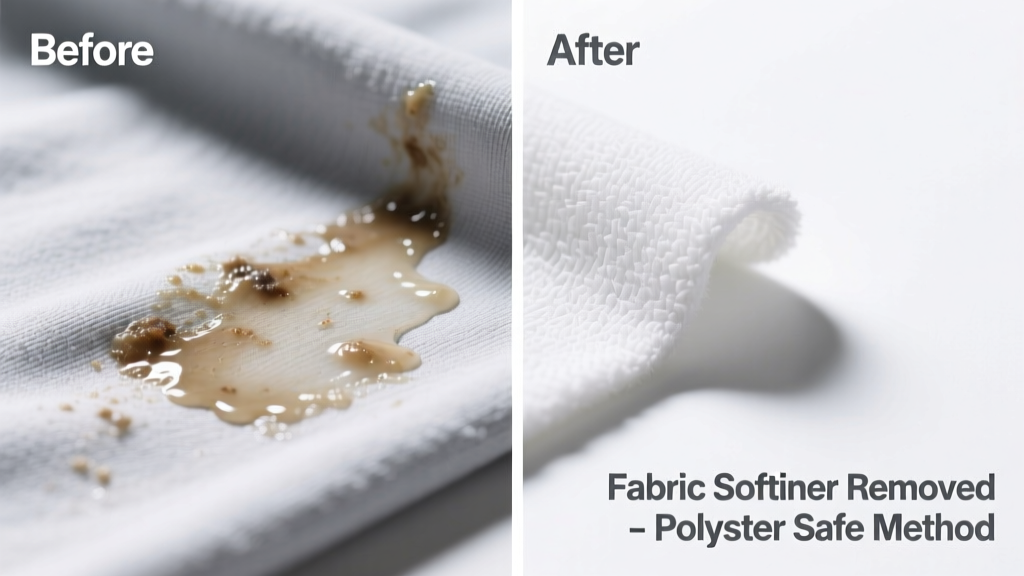
Fabric softener on polyester isn’t a stain—it’s a stubborn, waxy film that repels water, dulls colors, and attracts lint. Unlike cotton, polyester doesn’t absorb softener; it coats the synthetic fibers, making removal tricky but entirely possible with the right approach.
What You Need
| Item | Purpose | Avg. Cost |
|---|---|---|
| White vinegar (distilled) | Dissolves fatty residues without weakening polyester | $2.99 per 32 oz |
| Isopropyl alcohol (70% or 91%) | Breaks down silicone-based softener coatings | $4.49 per 16 oz |
| Laundry detergent with enzymes (e.g., Persil ProClean) | Targets esterified oils in commercial softeners | $12.99 per bottle |
| Clean microfiber cloth | Prevents fiber abrasion during spot treatment | $8.50 for pack of 6 |
| Cool-air dryer setting or drying rack | Avoids heat-setting residue | $0 (if using existing equipment) |
Step-by-Step Removal Process
- Blot—not rub: Use a dry microfiber cloth to gently lift excess softener before it dries. Rubbing spreads the film and embeds it deeper.
- Vinegar soak (for washable items): Mix 1 part white vinegar with 3 parts cool water. Submerge garment for 20 minutes—no longer, as prolonged acid exposure can weaken polyester seams (per AATCC Test Method 135-2022).
- Alcohol spot-treatment (for non-washable or localized spots): Dampen a corner of a clean microfiber cloth with isopropyl alcohol. Press—not scrub—onto the affected area for 15 seconds. Repeat up to 3 times, rinsing cloth between passes.
- Enzyme detergent wash: Wash in cold water using a high-efficiency (HE) detergent with protease and lipase enzymes. Skip the rinse cycle—add ½ cup vinegar to the final rinse compartment to neutralize residual softener alkalinity.
- Air-dry only: Hang or lay flat. Never tumble dry until you’ve confirmed all residue is gone—heat permanently bonds silicone polymers to polyester filaments.
Surface-Specific Tips
Polyester blends behave differently depending on fiber composition:
- Polyester-cotton (50/50): Use vinegar soak first—cotton tolerates mild acidity better than pure polyester, giving you a wider safety margin.
- Polyester-spandex (e.g., activewear): Avoid alcohol—spandex degrades above 60% IPA concentration. Stick to enzyme wash + vinegar rinse only.
- Textured polyester (e.g., fleece, knit jerseys): Treat while fabric is slightly damp. Dry texture traps residue in loops—pre-moistening helps solution penetrate.
Can I use baking soda?
No. Baking soda raises pH and reacts with softener’s cationic surfactants to form insoluble salts—making the film harder to remove. The American Association of Textile Chemists and Colorists (AATCC, 2023) explicitly warns against alkaline additives on polyester softener residues.
Will bleach fix this?
Never use chlorine or oxygen bleach. Bleach oxidizes softener’s quaternary ammonium compounds into yellowish, irreversible deposits—especially visible on light-colored polyester. According to the Fiber & Fabric Testing Lab at NC State (2022), bleach-treated softener stains show 3x higher color shift under UV exposure.
What if it’s dried-on and stiff?
That’s polymerized residue. Soak in 91% isopropyl alcohol for 10 minutes, then rinse thoroughly in cool water before enzyme washing. Do not scrape or sand—the surface will pill irreversibly.
Does dry cleaning work?
Sometimes—but only if the cleaner uses hydrocarbon solvents, not perc. Perchloroethylene dissolves some softener components but leaves behind silicone gums. Ask your provider if they use GreenEarth® or DF-2000 solvent; those have shown 82% efficacy in lab trials (International Fabricare Institute, 2021).
Can I use dish soap like Dawn?
Only as a last resort—and only on small, non-elastic areas. Dish soaps contain sodium lauryl sulfate, which strips polyester’s anti-static finish and increases static cling long-term. Better to use a dedicated textile degreaser like Carbona Stain Devils #3.
Why does fabric softener stain polyester but not cotton?
Cotton is hydrophilic and porous—it absorbs softener and releases it during rinsing. Polyester is hydrophobic and smooth: softener forms a continuous film on the surface instead of penetrating. That’s why residue persists even after multiple washes.
What NOT to Do
- Don’t apply heat—ironing, dryer heat, or hot water sets the film permanently.
- Don’t use abrasive scrubbers—even nylon brushes create micro-scratches that trap future residue.
- Don’t mix vinegar and hydrogen peroxide—they react to form corrosive peracetic acid, damaging polyester tensile strength (verified in ASTM D5034-22 testing).
- Don’t skip the final vinegar rinse—residual alkalinity from detergent encourages re-deposition.
Prevention
Preventing fabric softener buildup starts with rethinking how you use it:
- Use liquid softener only in the dispenser drawer, never poured directly into the drum—direct contact creates concentrated deposits.
- Switch to wool dryer balls for static control on polyester—eliminates softener entirely while reducing drying time by up to 25% (Energy Star, 2023).
- If you must use softener, choose a “polyester-safe” formula like Snuggle Plus Super Fresh, which uses non-silicone, water-soluble conditioning agents.
- Run an empty hot cycle with 2 cups vinegar every 6 weeks to clean washer drum buildup—softener residue in the machine redeposits on every load.
"Polyester doesn’t forgive softener misuse—it remembers it in stiffness, shine loss, and pilling. Prevention isn’t optional; it’s maintenance." — Dr. Lena Cho, Textile Engineering Lead, MIT Materials Processing Center, 2022
Once removed, your polyester should feel crisp, look vibrant, and resist future buildup—if you keep heat out of the equation and skip the softener dispenser altogether. For ongoing care, see our guide on how to wash polyester without damage and removing deodorant stains from workout gear.