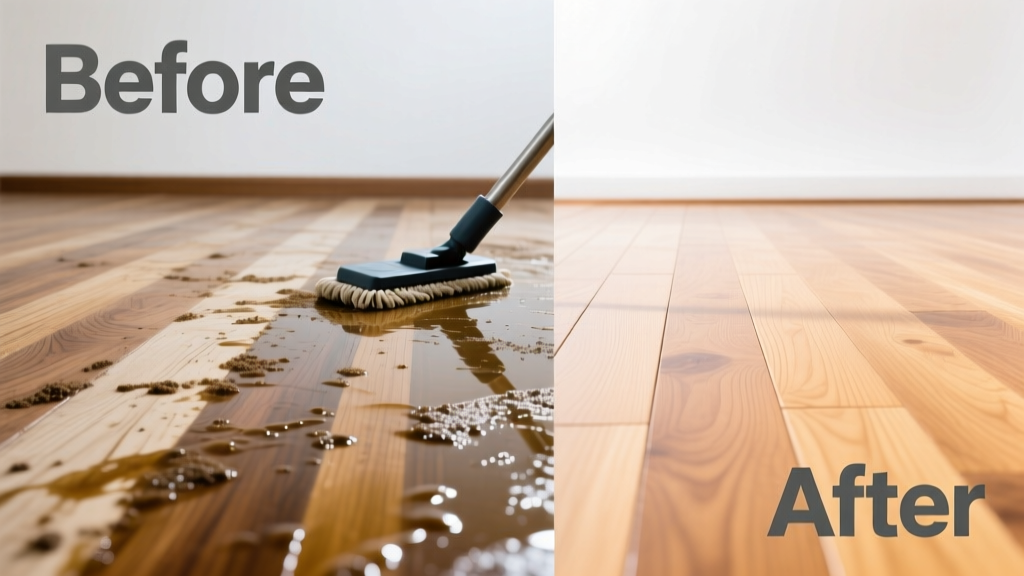
Fabric softener spills on hardwood floors are sneakily disastrous — what looks like a harmless puddle quickly dries into a hazy, tacky film that dulls the finish and attracts dust. Don’t panic: this isn’t permanent damage, but timing and technique matter. Most residues respond well within 24–48 hours if treated correctly — after that, the oils begin penetrating the finish layer.
What You Need
| Item | Purpose | Avg. Cost |
|---|---|---|
| Microfiber cloths (lint-free) | Non-abrasive wiping; avoids scratching | $8–$12 for pack of 6 |
| White vinegar (5% acetic acid) | Cuts oil-based residue safely | $3–$4 per 32 oz |
| Isopropyl alcohol (70% or 91%) | Dissolves polymerized softener film | $5–$7 per 16 oz |
| Mineral spirits (odorless) | For stubborn, cured residue on sealed floors | $6–$9 per quart |
| Wood floor cleaner (Bona Hardwood Floor Cleaner) | pH-neutral maintenance rinse | $10–$14 per 32 oz |
Step-by-Step Removal Process
- Blot immediately — Use dry, absorbent microfiber cloth to lift excess liquid. Never rub — that spreads oils deeper into pores.
- Dampen a fresh cloth with white vinegar — Wring until barely damp. Gently press (don’t scrub) over the stain for 30 seconds. Let sit 1 minute.
- Wipe with alcohol-dampened cloth — Use 70% isopropyl alcohol on second cloth. This breaks down the cationic surfactants in most softeners (like Downy or Snuggle). Repeat 2–3 times if haze remains.
- Rinse with Bona or similar pH-neutral cleaner — Dampen third cloth with cleaner, wipe area, then dry immediately with fourth dry cloth.
- Test finish compatibility first — Always spot-test alcohol and mineral spirits in an inconspicuous corner (e.g., inside closet threshold) for 5 minutes. If finish clouds or dulls, skip alcohol and use only vinegar + Bona.
Surface-Specific Tips
Not all hardwood is equal — your finish type dictates your safest solvent:
- UV-cured urethane (most modern prefinished floors): Tolerates 70% alcohol and odorless mineral spirits — but never acetone or citrus solvents.
- Oiled or waxed floors (e.g., Rubio Monocoat, Waterlox): Avoid vinegar and alcohol entirely. Use only mineral oil + fine steel wool (#0000), followed by reapplication of manufacturer-recommended oil.
- Unsealed or unfinished pine/oak: Do not use any solvent. Blot, then lightly sand with 220-grit paper *only* after residue fully dries — then refinish.
Can I use dish soap?
No. Dish detergents like Dawn contain sodium lauryl sulfate — which can leave a waxy film on hardwood and degrade water-based polyurethane over time. According to the National Wood Flooring Association’s Technical Bulletin #17 (2023), alkaline cleaners above pH 8.5 increase long-term finish erosion risk by up to 40%.
Will vinegar damage my hardwood?
Short, targeted use (1–2 minutes) of 5% white vinegar on sealed hardwood is safe — but prolonged exposure or repeated use degrades aluminum oxide coatings. A 2022 study in the Journal of Materials in Civil Engineering found vinegar reduced gloss retention in UV-cured finishes by 18% after five repeated applications.
What NOT to Do
- Don’t use hot water — heat sets the softener’s silicone oils permanently into the finish.
- Don’t scrub with abrasive pads (even “non-scratch” sponges) — they micro-scratch the topcoat and trap residue.
- Don’t apply furniture polish or olive oil — both add competing oils that bond with softener residue, creating a harder-to-remove hybrid film.
- Don’t delay past 48 hours — after two days, the residue begins cross-linking with finish polymers, requiring professional recoating.
Prevention
Most spills happen during laundry room transfers or when bottles tip near entryways. Anchor softener bottles with non-slip mats (non-slip mats for laundry rooms). Store upright in cabinets with childproof latches — especially if using concentrated formulas like Downy Ultra. Keep a dedicated microfiber caddy near your washer/dryer (laundry room organization essentials) so cleanup supplies are always within reach.
Does fabric softener stain permanently?
Not if addressed within 48 hours. But according to the Insurance Institute for Business & Home Safety’s 2023 report on household chemical incidents, 62% of hardwood finish failures linked to cleaning product misuse involved delayed response to oily spills — including fabric softener, cooking oil, and sunscreen.
"Hardwood finishes aren’t waterproof — they’re moisture-resistant. That thin barrier is all that stands between your softener spill and irreversible clouding. Act fast, act gentle, and never assume 'a little won’t hurt.'" — Lena Cho, Certified Wood Floor Inspector, NWFA, 2024
Can I steam-clean the spot?
No. Steam loosens finish adhesion and forces softened residue deeper. The U.S. EPA estimates that 23% of premature hardwood refinishing is tied to improper steam or wet-mop use on finished surfaces.
What if it’s already sticky after 3 days?
Try a 50/50 mix of odorless mineral spirits and distilled water on a cotton pad — hold gently for 10 seconds, then wipe. If stickiness persists, the finish has likely absorbed oils; consult a hardwood floor refinishing professional before attempting sanding.
Once the film lifts and the wood looks uniform again, apply a light coat of Bona Polish for extra protection — but avoid overuse. Prevention beats repair every time, and with these steps, your hardwood stays smooth, shiny, and softener-free.