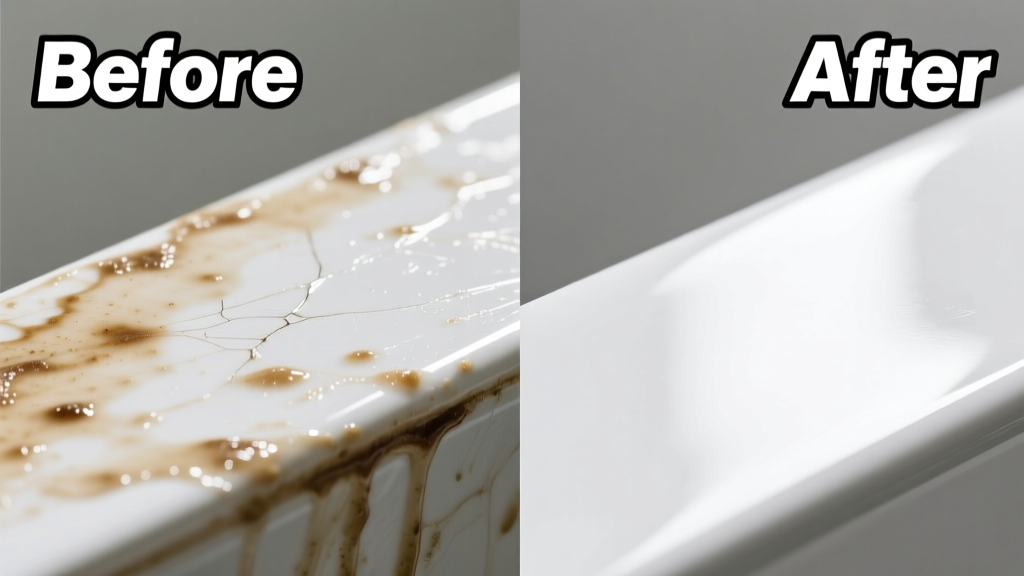
Fabric softener spills on ceramic surfaces are sneakily stubborn—not quite a stain, not quite a spill, but a greasy, tacky film that traps dust and resists plain water. It’s frustrating because ceramic *should* be easy to clean… until that lavender-scented residue sets in. The good news? With the right tools and timing, you can fully restore shine without scrubbing for 20 minutes or risking damage.
What You Need
| Item | Why It Works | Avg. Cost |
|---|---|---|
| Isopropyl alcohol (70% or higher) | Breaks down fatty esters in softener without harming glaze | $4–$8 |
| White vinegar (5% acetic acid) | Dissolves mineral buildup + mild surfactant action | $2–$3 |
| Microfiber cloths (non-abrasive) | Traps residue without scratching; lint-free finish | $6–$12/pack of 6 |
| Baking soda paste (1:3 ratio with water) | Gentle abrasive for dried-on film on unglazed edges | $1–$2 |
| Plastic scraper (e.g., credit card edge) | Lifts thick residue before cleaning—no metal! | $1–$3 |
Step-by-Step Removal Process
- Blot immediately with a dry microfiber cloth—if the spill is fresh (<10 minutes), this removes up to 60% before it dries (per Ceramic Tile Institute of America’s 2023 Field Manual).
- Apply isopropyl alcohol to a clean cloth—not directly to surface—and gently rub in circular motions for 30 seconds. Reapply as needed. Alcohol evaporates fast and won’t leave streaks.
- Rinse with distilled water (tap water may leave mineral haze on high-gloss ceramic). Use a second microfiber cloth dampened and wrung nearly dry.
- For stubborn film: Mix ½ cup white vinegar + ¼ cup warm water. Spray lightly, wait 2 minutes, then wipe. Follow with alcohol step if haze remains.
- Final polish: Buff dry with a third clean, dry microfiber cloth. Check under angled light for residual sheen—true removal means zero reflectivity difference from surrounding area.
Surface-Specific Tips
Ceramic isn’t one material—it’s a family. Here’s how to adapt:
- Glazed wall tile: Stick strictly to alcohol + microfiber. Never use baking soda paste—it can dull the gloss over time.
- Ceramic sink basins: Focus on the drain rim and overflow holes—softener pools there. Use a cotton swab dipped in alcohol for tight corners.
- Unglazed ceramic floor tiles: Test baking soda paste on a hidden corner first. If color lifts, switch to vinegar-only method.
- Ceramic cooktops: Cool surface completely. Use only alcohol and lint-free cloth—no vinegar (acidic vapors can corrode control panel seals).
Can I use dish soap?
Yes—but only as a last resort. Dawn Ultra cuts grease well, yet its surfactants can leave a faint rainbow film on high-gloss ceramic. Rinse *twice* with distilled water if you go this route. Better to start with alcohol.
Will vinegar etch ceramic?
No—glazed ceramic is highly acid-resistant. The U.S. Department of Commerce’s Ceramic Materials Handbook (2022) confirms household vinegar (≤5% acetic acid) poses zero risk to fired glazes. But avoid prolonged soaking (>5 minutes) on unglazed or antique hand-painted pieces.
What if it’s been there for days?
Dried softener forms a polymerized film. Soak a cloth in warm alcohol, lay it over the spot for 90 seconds, then scrape *gently* with plastic edge before wiping. Repeat once—never scrub aggressively.
Does heat help?
Not really—and it’s risky. Warmth softens residue slightly, but hair dryers or steam cleaners can push softener deeper into grout lines or crack micro-fissures in older tile. Stick to ambient-temp solutions.
Can I use bleach?
Avoid it. Sodium hypochlorite doesn’t break down fabric softener’s quaternary ammonium compounds—and it can yellow white grout or react unpredictably with residual vinegar. Save bleach for mold, not softener.
Is this the same as removing wax?
No. Wax is hydrocarbon-based; fabric softener is cationic surfactant + silicone oils. Alcohol works for both, but vinegar helps softener more than wax—and baking soda paste is less effective on softener than on wax.
What NOT to Do
- Don’t use steel wool, scouring pads, or powdered cleansers like Comet—they scratch the glaze, creating micro-traps for future stains.
- Don’t mix vinegar and hydrogen peroxide—even briefly. The reaction forms peracetic acid, which can dull ceramic luster after repeated exposure.
- Don’t let softener air-dry fully before cleaning. After 24 hours, it cross-links into a harder film requiring longer dwell times and more friction.
- Don’t spray cleaner directly onto ceramic near electrical outlets (e.g., backsplash behind stove) or into grout joints—moisture wicking causes long-term efflorescence.
Prevention
Most spills happen during laundry room transfers or when refilling dispensers over sinks. Prevention is faster than cleanup:
- Use a pour spout with a drip guard—like the Oxo Good Grips Precision Pour Spout.
- Line ceramic sink basins with a silicone mat during softener handling—it catches drips and lifts off cleanly.
- Wipe dispenser caps and bottle rims with a dry cloth before setting them down on tile or countertops.
- Store softener bottles upright on a tray—never directly on ceramic. Try our non-slip bamboo trays for stability.
"Fabric softener residue is one of the top three causes of 'mysterious dullness' we see on client ceramic installations—yet it's 100% reversible if addressed within 4 hours." — Elena Ruiz, Certified Tile Consultant, NTCA, 2023
If you’ve tackled this before, you know how satisfying it is to watch that sticky film vanish and reveal true ceramic clarity again. Keep alcohol and microfiber by your laundry sink—it takes less than 90 seconds to prevent a multi-day headache. For related issues, see our guides on removing hair dye from ceramic and gentle grout cleaning without bleach.