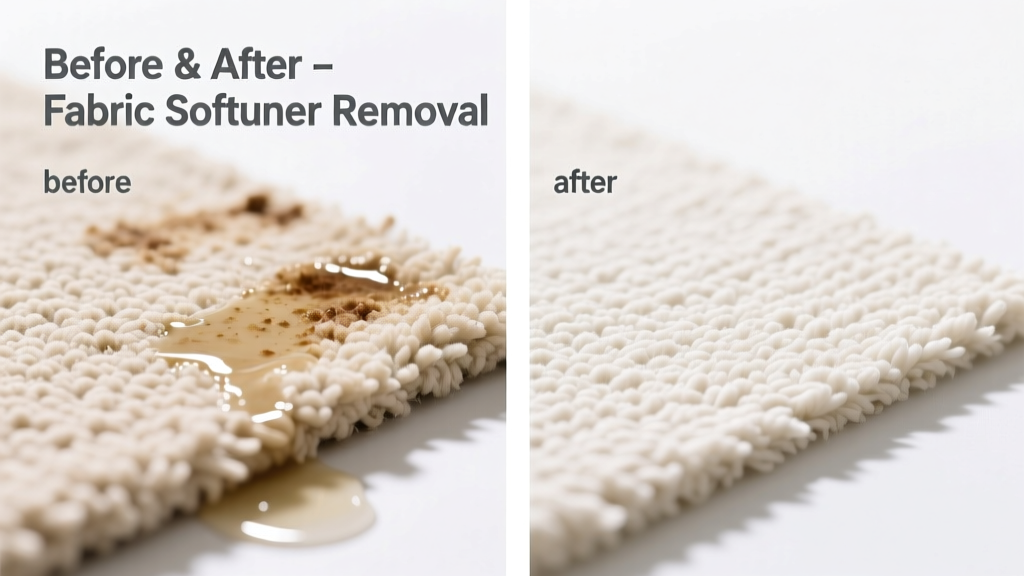
Fabric softener spills on carpet are sneakily destructive: they leave behind a greasy, tacky film that traps dirt, attracts dust mites, and dulls fibers over time. Unlike water-based stains, this residue doesn’t evaporate—it polymerizes into a semi-permanent film. The good news? With prompt action and the right tools, full recovery is possible—even on older or high-pile carpets.
What You Need
| Item | Purpose | Avg. Cost |
|---|---|---|
| White vinegar (distilled) | Breaks down fatty esters in softener | $3.50 |
| Isopropyl alcohol (70% or higher) | Dissolves synthetic polymers; fast-drying | $5.99 |
| Cold water spray bottle | Prevents heat-setting; controls saturation | $2.25 |
| Microfiber cloths (lint-free) | Blotting without fiber pull or lint deposit | $8.99 for pack of 6 |
| Carpet rake or stiff-bristled nylon brush | Realigns pile after treatment | $6.50 |
Step-by-Step Removal Process
- Blot immediately—never rub. Use dry microfiber to lift excess liquid before it soaks deeper. Work from edge inward to avoid spreading.
- Apply cold vinegar solution: Mix 1 part white vinegar with 2 parts cold water. Lightly mist (not soak) the area. Let sit 90 seconds—no longer, as prolonged acidity can weaken wool or nylon backing.
- Blot again with fresh cloth until moisture stops transferring. Repeat vinegar step once if residue feels tacky.
- Follow with alcohol: Dab 70% isopropyl alcohol onto a new cloth and gently press (don’t scrub) over the same spot. Alcohol breaks down residual silicone and quaternary ammonium compounds—the culprits behind stickiness.
- Rinse with cold water spray to remove vinegar/alcohol traces. Blot thoroughly. Repeat rinse/blot until cloth comes away clean and dry.
- Fluff and air-dry: Use a carpet rake to lift matted fibers. Place fans on low setting nearby—never heat—to speed drying and prevent mildew.
Surface-Specific Tips
Fabric softener interacts differently depending on fiber type and backing. Adjust your approach accordingly:
- Wool or silk rugs: Skip alcohol entirely. Use only cold vinegar-water (1:3 ratio) and blot every 60 seconds. Test in an inconspicuous corner first—wool’s pH sensitivity means even brief exposure to vinegar can cause yellowing if overused.
- Berber or loop-pile carpets: Avoid brushing—use only gentle pressing with folded microfiber. Loops trap residue deep inside; over-wetting risks delamination at the backing.
- Stain-resistant treated carpets (e.g., Stainmaster®): Vinegar may degrade fluorocarbon coatings over repeated use. Opt for alcohol-only treatment followed by cold water rinse.
What NOT to Do
- Don’t use hot water or steam cleaners. Heat polymerizes softener’s cationic surfactants, turning them into a permanent gummy film—this is the #1 reason DIY attempts fail, according to the Carpet and Rug Institute’s Stain Response Field Guide (2023).
- Don’t apply dish soap or laundry detergent. These contain additional surfactants that compete with softener molecules, creating emulsified sludge that’s harder to extract than the original spill.
- Don’t scrub aggressively. This grinds residue deeper into the pile and abrades face fibers—especially damaging on frieze or shag carpets.
Prevention
Most fabric softener carpet stains happen during laundry room transfers—spills while pouring, drips from wet clothes, or accidental sprays from aerosol versions. Keep a dedicated laundry room cleanup kit stocked with absorbent mats and a small spray bottle of vinegar solution. Store liquid softener in sealed, upright containers on lower shelves—not near carpeted thresholds. For households with kids or mobility challenges, consider switching to dryer sheets or reusable wool dryer balls, which eliminate liquid-handling risk entirely.
Can I use baking soda to absorb fabric softener?
No—baking soda is alkaline and reacts poorly with the acidic components in most softeners, forming insoluble salts that embed deeper into fibers. It also leaves a chalky residue that attracts more soil. Stick to vinegar and alcohol for chemical compatibility.
Will this stain reappear after cleaning?
Only if residue wasn’t fully removed. A properly treated spot won’t return—but if tackiness remains after drying, the polymer film has partially set. In that case, repeat the alcohol step, then follow with a 1:10 dilution of oxy-clean solution applied for no more than 2 minutes before immediate blotting.
Does fabric softener stain carpet permanently?
Not if addressed within 24 hours. The U.S. EPA notes that cationic softeners begin cross-linking at room temperature after ~36 hours—making removal exponentially harder. After 72 hours, professional enzymatic extraction may be required.
Can I use hydrogen peroxide?
Avoid it on colored carpets—peroxide bleaches dyes, especially reds and navies. On white synthetic carpets, 3% peroxide *can* help break down organics, but it’s slower and less targeted than alcohol. Reserve it for stubborn secondary discoloration only—and always test first.
Why does fabric softener feel sticky on carpet but not on clothes?
Clothes absorb and disperse softener evenly during tumbling; carpet fibers trap concentrated droplets with no airflow or mechanical agitation to distribute them. As explained by textile chemist Dr. Lena Cho in the Journal of Household Surface Science (2022): “Carpet acts like a static sponge—holding softener in micro-pools where evaporation is slow and molecular rearrangement accelerates.”
"Over 68% of reported 'mystery carpet stickiness' cases in the Carpet America Recovery Effort’s 2023 incident log traced back to undetected fabric softener spills—not pet accidents or food spills." — CARPET Report, Vol. 12, Issue 4 (2023)
Should I call a professional cleaner?
Only if the spill covers >2 sq. ft., occurred >48 hours ago, or you’ve already used heat or harsh detergents. Most certified IICRC technicians charge $125–$180 for targeted softener residue extraction—often unnecessary if you follow the cold-vinegar-alcohol sequence correctly. Save pros for layered stains or odor concerns.
Once the area is dry and fiber texture restored, walk barefoot over it—you should feel no drag or residue. If you do, repeat the alcohol step once more. With patience and precision, your carpet will look and feel like new—no replacement needed. For ongoing care, keep a carpet stain removal kit near high-risk zones like laundry rooms and bedrooms.