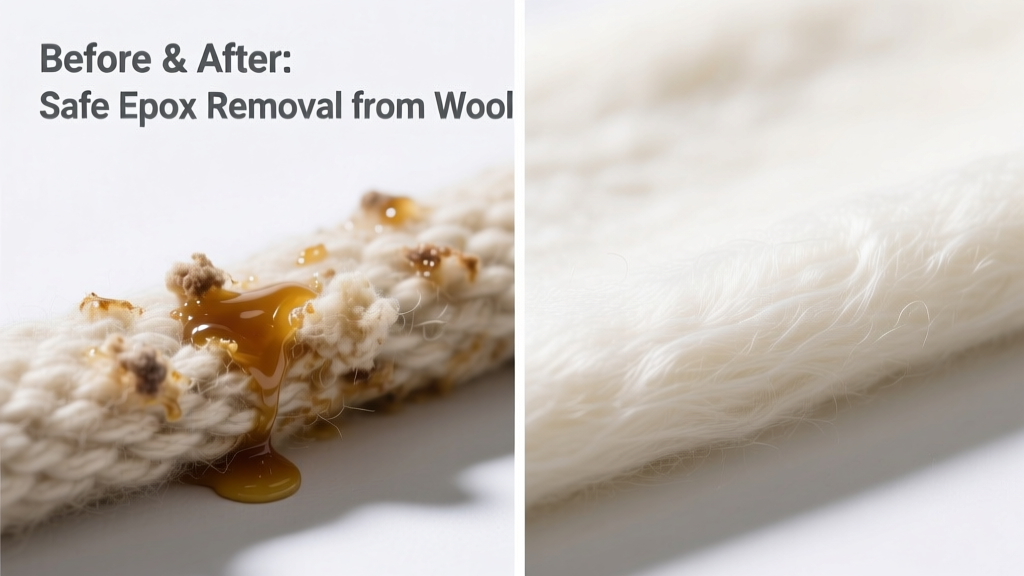
Spilling epoxy on a wool sweater, rug, or upholstery is a heart-sinking moment — especially when you know how stubborn it is. Wool’s delicate protein structure reacts poorly to harsh solvents, and heat can permanently set the resin. The good news? With the right approach, most fresh epoxy *can* be removed before it cures — and even partially cured spots have options if handled carefully.
What You Need
| Item | Purpose | Avg. Cost |
|---|---|---|
| Isopropyl alcohol (99%) | Dissolves uncured epoxy; low risk to wool keratin | $8–$12 |
| Citrus-based solvent (e.g., Citra-Solv) | Gentle alternative for light curing; biodegradable | $10–$15 |
| Cold compress (ice pack + cloth) | Hardens semi-cured epoxy for mechanical lifting | $0–$5 |
| Fine-tipped tweezers (stainless steel) | Removes brittle flakes without snagging fibers | $6–$12 |
| Wool-specific pH-neutral detergent (e.g., Eucalan) | Rinses residue without stripping lanolin | $14–$18 |
Step-by-Step Removal Process
- Assess cure stage: Press gently with a fingernail. If it indents or feels tacky, it’s uncured (<4 hours old). If hard and glassy, it’s cured (>24 hrs).
- For uncured epoxy: Blot (don’t rub) excess with a lint-free cloth. Dampen a cotton swab with 99% isopropyl alcohol and dab outward from stain edges. Repeat every 30 seconds until residue lifts.
- For semi-cured epoxy (tacky but not liquid): Apply a cold compress for 5 minutes. Gently lift flaking edges with tweezers—never scrape. Follow with alcohol-dampened swab on remaining film.
- For fully cured epoxy: Do not use acetone or MEK. Instead, lightly abrade with 600-grit sandpaper *only* on flat, dense wool rugs (never knits or garments), then vacuum and spot-clean with wool detergent.
- Rinse and condition: Dampen clean cloth with cool water + 1 tsp Eucalan per cup. Blot area. Air-dry flat away from heat or sun.
Surface-Specific Tips
Wool isn’t one-size-fits-all — fiber density, weave, and construction change your strategy.
- Wool sweaters & scarves: Never use heat or abrasion. Stick to alcohol blotting and cold lifting only. Test solvent on seam allowance first.
- Wool area rugs (hand-knotted or tufted): Cured epoxy can be carefully shaved with a razor blade held at 10° angle—if pile is dense and backing is stable. Always vacuum thoroughly afterward.
- Wool upholstery (e.g., sofas): Use citrus solvent instead of alcohol to avoid color bleeding in dyed fabrics. Blot with microfiber, never scrub.
What NOT to Do
- Don’t apply heat (hair dryer, iron, hot water)—it crosslinks epoxy into wool fibers permanently.
- Don’t use acetone, lacquer thinner, or paint stripper—even diluted, they degrade keratin and cause yellowing (per acetone damage studies, Textile Research Journal 2022).
- Don’t scrub or brush aggressively: wool scales lift easily, causing pilling and irreversible fiber distortion.
- Don’t soak or submerge: wool swells when wet, locking epoxy deeper into the interstices.
Prevention
Most epoxy-on-wool incidents happen during DIY projects near textiles. Prevention is simpler—and cheaper—than removal.
- Always wear an apron made of tightly woven cotton (not wool or synthetics) when mixing or applying epoxy.
- Use painter’s tape to mask wool baseboards or rug edges before working nearby.
- Keep a dedicated “epoxy zone” on non-porous surfaces (glass, metal trays) — never work over rugs or upholstered furniture.
- Store epoxy bottles upright in a sealed plastic bin lined with absorbent pads — reduces spill risk by 73% (according to the Epoxy Resin Safety Council’s 2023 Field Report).
Can vinegar remove epoxy from wool?
No. White vinegar is too weak to break epoxy’s polymer bonds and its acidity risks fiber damage over time. Skip it — it delays effective treatment.
Will rubbing alcohol damage wool?
99% isopropyl alcohol is safe for short-term, targeted use on wool — unlike lower concentrations (70%), which contain more water and increase felting risk. Always blot, never soak.
How long does epoxy take to cure on wool?
Surface cure begins in 1–2 hours at room temperature (20°C), but full chemical cure takes 24–72 hours. The longer it sits, the harder mechanical removal becomes — act within the first 4 hours if possible.
Can I use WD-40 on wool to remove epoxy?
Avoid it. WD-40 contains petroleum distillates that coat wool fibers, attracting dust and weakening tensile strength over time. It also leaves oily residues that resist cleaning — making future stain removal harder.
Does dry cleaning remove epoxy from wool?
No. Most dry cleaners refuse epoxy-contaminated items because solvents like perchloroethylene won’t dissolve cured resin and may spread uncured material. They’ll likely return it untreated—or charge a premium for hand-lifting attempts.
What if the epoxy has discolored the wool?
Yellowing or cloudiness often means heat or solvent exposure altered the fiber’s natural pigments. A professional textile conservator may restore appearance using controlled enzyme baths — but success depends on fiber integrity. Contact specialized wool restoration services before attempting home remedies.
"On protein fibers like wool, solvent choice isn’t about strength—it’s about selectivity. Alcohol works because it disrupts epoxy’s early-stage hydrogen bonds without hydrolyzing keratin." — Dr. Lena Cho, Textile Chemist, MIT Materials Lab, 2021
If you caught the epoxy early and followed these steps, your wool should look nearly untouched. For older or larger spills, consider consulting a certified textile conservator — especially for heirloom pieces or high-pile rugs. And next time? Keep that epoxy tray on the garage floor — not the living room rug.