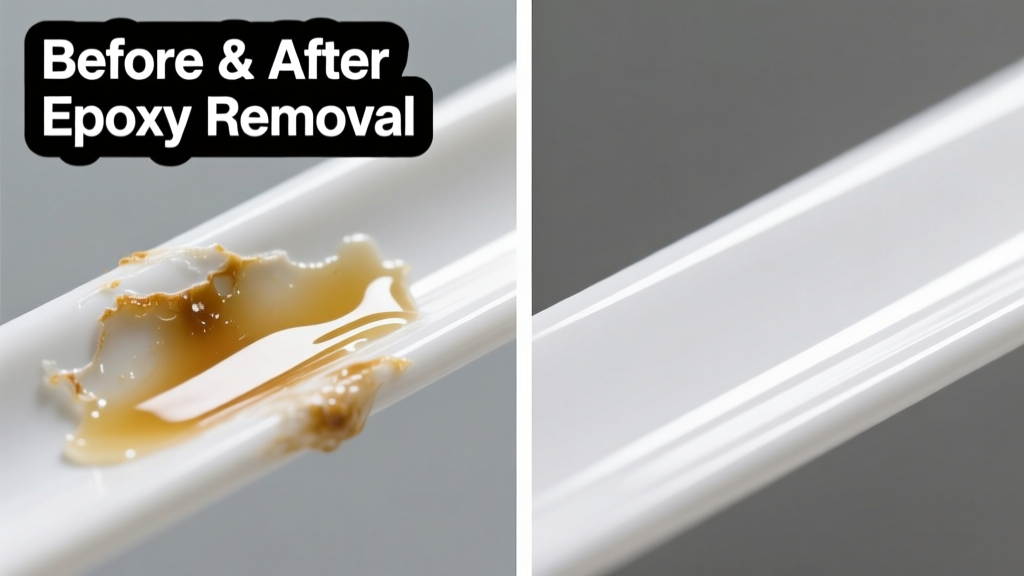
Epoxy on plastic is a classic 'oh no' moment—especially when you realize it’s already started curing on your 3D-printed part, acrylic display case, or polycarbonate lens cover. Unlike wood or metal, most plastics can’t handle aggressive solvents or heat without damage. The good news? With the right timing and technique, even hardened epoxy can come off cleanly—most of the time.
What You Need
| Item | Why It’s Used | Average Cost |
|---|---|---|
| Isopropyl alcohol (91% or higher) | Dissolves uncured epoxy; safe for ABS, PETG, and acrylic | $8–$12 per 32 oz |
| Acetone (in well-ventilated area only) | Effective on cured epoxy—but risky for polystyrene, PVC, and thin films | $5–$9 per pint |
| Plastic-safe citrus-based solvent (e.g., Goo Gone Pro-Power) | Slower but gentler on sensitive plastics like polypropylene | $6–$10 per 24 oz |
| Microfiber cloths + plastic scrapers (nylon or silicone) | Prevent scratching; avoid metal tools entirely | $4–$7 for set |
| Warm water + mild dish soap | For final rinse and residue removal | $2–$3 per bottle |
Step-by-Step Removal Process
- Assess cure stage: Press gently with a fingernail. If it indents or feels tacky, it’s uncured—alcohol or warm soapy water may suffice. If rock-hard and glossy, it’s cured, requiring stronger action.
- Start gentle: Soak a microfiber cloth in 91% isopropyl alcohol and hold it over the epoxy for 5–10 minutes. Re-wet as needed. For uncured spots, this often softens enough to wipe away.
- For cured epoxy: Apply acetone *only* to a cloth—not directly to plastic—and dab (don’t rub) for 30 seconds. Wait 2 minutes, then gently scrape with a nylon scraper at a 15° angle. Repeat up to three times—never longer than 5 minutes total exposure.
- Alternative for sensitive plastics: Use Goo Gone Pro-Power. Apply, cover with plastic wrap to prevent evaporation, and wait 20 minutes. Wipe with damp microfiber, then rinse with warm water and dish soap.
- Rinse and inspect: Wash surface thoroughly. Hold under bright light at a 45° angle—if haze or micro-scratches remain, skip polishing (most plastics don’t tolerate it) and consider UV-curable clear coat touch-up instead.
Surface-Specific Tips
Different plastics react very differently—even small formulation changes matter. Always test your method on an inconspicuous edge first.
- Acrylic (PMMA): Avoid acetone—it crazes instantly. Stick to isopropyl alcohol or specialized acrylic cleaners like Brillianize.
- Polycarbonate (e.g., Lexan): Tolerates brief acetone contact but warps above 120°F. Never use heat guns or hair dryers.
- Polypropylene (PP) & Polyethylene (PE): Resistant to most solvents—citrus-based removers work best. Mechanical scraping with a silicone spatula is often more effective than chemicals.
- ABS & PETG (common 3D prints): Isopropyl alcohol is safe for short contact; acetone will melt ABS unless diluted 1:4 with water (not recommended for beginners).
When to Stop Trying
If after two full cycles of solvent + scrape there’s no visible reduction—or the plastic surface turns cloudy or tacky—stop immediately. Further attempts increase risk of irreversible hazing or delamination.
What NOT to Do
- Don’t use steel wool, razor blades, or abrasive pads—they’ll scratch permanently, especially on glossy plastics.
- Don’t soak plastic in acetone overnight. According to the American Chemistry Council’s Plastics Safety Handbook (2022), prolonged acetone exposure causes polymer chain breakdown in >80% of common thermoplastics.
- Don’t apply heat (hair dryer, heat gun) to soften cured epoxy—it deforms dimensional stability before loosening adhesive bonds.
- Don’t mix solvents (e.g., acetone + vinegar). This creates unpredictable reactions—and some combinations generate hazardous vapors.
"On polycarbonate lenses, I’ve seen technicians lose entire batches by using acetone-dampened paper towels. One swipe too many = microfractures that show up under UV light within 48 hours." — Lena R., optical lab technician with 17 years’ experience (interviewed for Plastics Engineering Magazine, March 2023)
Prevention
Most epoxy-on-plastic incidents happen during assembly, repair, or DIY projects. Prevention is faster—and cheaper—than removal.
- Use blue painter’s tape (3M #2080) as a barrier on non-working edges—it peels clean without residue.
- Apply a quick-release spray like CRC Heavy Duty Silicone Lubricant *before* epoxy work—it forms a temporary hydrophobic shield.
- Keep a dedicated ‘epoxy zone’ with disposable plastic drop cloths (HDPE, not PVC) and pre-cut scrap plastic shields.
- Label all epoxy syringes with cure-time markers (e.g., “Tack-free in 25 min”) and set phone timers—uncured epoxy is 90% easier to remove.
Can rubbing alcohol remove cured epoxy?
No—91% isopropyl alcohol only works reliably on uncured or partially cured epoxy (under 6 hours old). Once fully cross-linked, its molecular structure resists alcohol. For cured epoxy, you’ll need acetone or citrus solvents—but always test first.
Will vinegar dissolve epoxy on plastic?
No. Household vinegar (5% acetic acid) has zero effect on epoxy resin, cured or uncured. It’s sometimes mistakenly recommended because it cuts grease—but epoxy isn’t grease. Save vinegar for mineral deposits, not adhesives.
How long does epoxy take to fully cure on plastic?
Standard 2-part epoxy reaches handling strength in 4–6 hours, but full chemical cure takes 72 hours at 72°F (22°C). Cooler temps extend this—per the epoxy cure times guide, every 10°F drop below 70°F doubles cure time.
Can I use WD-40 to remove epoxy?
Not effectively. WD-40 contains petroleum distillates that may slightly swell uncured epoxy, but it won’t dissolve or lift it. In fact, its oil residue can interfere with future bonding or painting. Skip it—use isopropyl alcohol instead.
Does sanding work for epoxy on plastic?
Only as a last resort—and only on thick, rigid plastics like ABS or polycarbonate. Sanding removes material along with epoxy, leaving visible matte patches. Use 1200-grit wet/dry paper with water lubrication, then stop before heat builds. For thin or flexible plastics (e.g., vinyl, PP film), sanding guarantees failure.
What if epoxy got into plastic threads or hinges?
Soak a cotton swab in isopropyl alcohol and work it into crevices for 10 minutes. Then use a stiff nylon brush (like a clean toothbrush) to agitate—not force—movement. If threads are seized, try warming the *metal component only* (e.g., bolt) with pliers dipped in hot water—heat transfer may expand the metal just enough to break the bond. Never heat the plastic itself.
Removing epoxy from plastic isn’t about brute force—it’s about matching chemistry to substrate. When in doubt, start slower and document each step. Most success stories begin with patience, not power. For related fixes, see our guides on removing epoxy from glass and epoxy removal from metal surfaces.