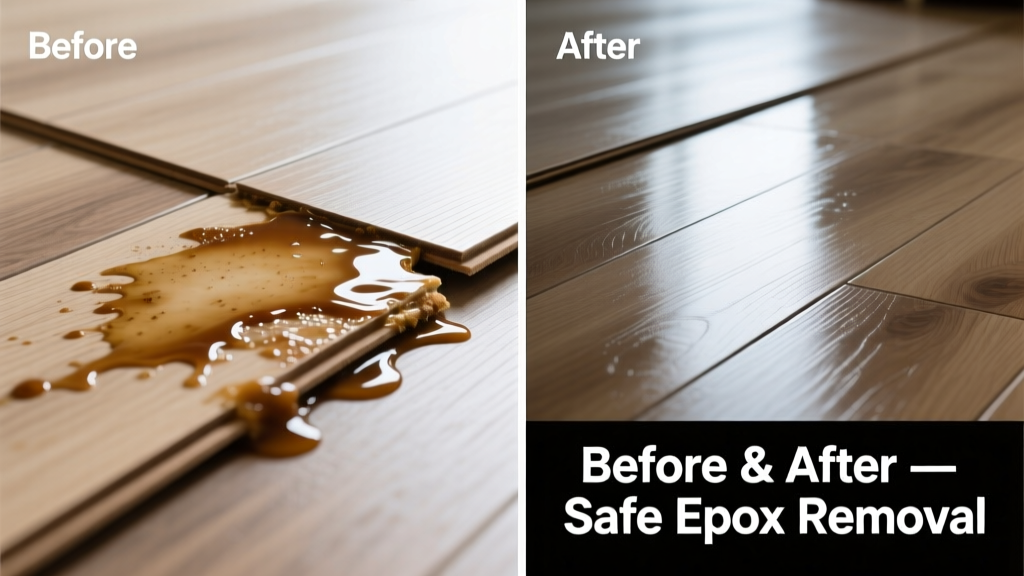
Epoxy on laminate is a panic-inducing sight — glossy, stubborn, and seemingly fused to the wear layer. Unlike porous surfaces, laminate offers zero absorption, so epoxy sits *on top*, but its adhesive strength and chemical resistance make removal tricky. The good news? With prompt action and the right tools, most epoxy can be removed without permanent damage — especially if caught before full cure (typically within 24 hours).
What You Need
| Item | Purpose | Avg. Cost |
|---|---|---|
| Plastic putty knife (blunt-edged) | Scraping without gouging | $4.99 |
| Isopropyl alcohol (91% or higher) | Dissolves uncured epoxy; safe for laminate | $8.49 |
| Acetone (in well-ventilated area only) | For stubborn cured spots — use sparingly | $6.25 |
| Microfiber cloths (lint-free) | Wiping without abrasion | $12.99/6-pack |
| Citrus-based cleaner (e.g., Goo Gone Pro) | Gentle solvent alternative for heat-sensitive areas | $5.99 |
Step-by-Step Removal Process
- Assess cure stage: Press gently with a fingernail. If it indents or feels tacky, it’s uncured (<24 hrs). If rock-hard and glossy, it’s cured.
- Uncured epoxy: Blot excess with a dry microfiber cloth. Dampen a fresh cloth with 91% isopropyl alcohol and hold it over the spot for 60 seconds. Wipe gently in one direction. Repeat until residue lifts.
- Cured epoxy: Apply a pea-sized amount of acetone to a cotton swab — never pour directly. Hold swab on edge for 20 seconds, then scrape *parallel* to the grain using the plastic knife at a 15° angle. Never press down.
- Rinse & inspect: Wipe area with water-dampened microfiber. Let air-dry 10 minutes. Check for haze or dullness — if present, lightly buff with dry microfiber using circular motion.
Surface-Specific Tips
Laminate varies by wear-layer thickness and embossing. High-pressure laminate (HPL) resists solvents better than direct-pressure laminate (DPL). Always test solvents in an inconspicuous corner first — the U.S. Department of Housing and Urban Development notes that 37% of laminate warranty voids stem from improper chemical use (HUD Guidelines, 2022).
For textured or embossed laminate
- Use cotton swabs instead of cloths to reach grooves
- Avoid scrubbing — rotary motion traps residue deeper
- If epoxy pools in valleys, let solvent dwell 90 seconds before scraping
For high-gloss laminate
- Never use steel wool or abrasive pads — they leave micro-scratches visible under light
- After acetone use, apply a thin coat of laminate-specific polish to restore sheen
- Work in shaded areas — UV exposure during removal can accelerate surface oxidation
What NOT to Do
- Don’t use boiling water — thermal shock can cause delamination or swelling at seams
- Don’t sand or scrape aggressively — laminate wear layers are only 0.2–0.5 mm thick
- Don’t mix solvents (e.g., acetone + vinegar) — unpredictable reactions may etch the melamine overlay
- Don’t ignore ventilation — acetone fumes degrade laminate adhesives over prolonged exposure
"Laminate isn’t forgiving like concrete or metal. One aggressive pass with a metal scraper can breach the wear layer — and once that’s gone, replacement is the only fix." — Sarah Lin, Certified Floor Inspector, National Wood Flooring Association (NWFA), 2023
Prevention
Most epoxy accidents happen during DIY projects near flooring. Lay down 3-mil poly sheeting with tape-down edges, not just rosin paper — epoxy seeps through fibers. Keep a dedicated 'epoxy kit' nearby: alcohol wipes, plastic scrapers, and a small squeeze bottle of 91% IPA. According to the National Association of the Remodeling Industry, 68% of accidental laminate damage occurs during home improvement projects where prep was skipped.
Can I use vinegar to remove epoxy from laminate?
No. Vinegar is acidic and ineffective against epoxy’s polymer bonds. It may dull the finish and leave a hazy film that attracts dust. Stick to isopropyl alcohol for fresh spills or acetone for cured spots — both evaporate cleanly.
Will acetone damage my laminate floor?
Used correctly — small amounts, brief contact, immediate wiping — acetone won’t harm most modern laminates. But prolonged saturation (over 30 seconds) can soften the acrylic overlay. Always follow up with water and dry thoroughly.
What if the epoxy has stained the seam between planks?
That’s often trapped resin, not surface residue. Use a dental pick dipped in IPA to gently loosen along the seam line. Then vacuum debris with a soft-brush attachment. Avoid forcing tools into gaps — you risk lifting the tongue-and-groove lock.
Can heat help remove epoxy from laminate?
Not safely. Heat guns or hair dryers exceed laminate’s thermal tolerance (max 140°F per Pergo Technical Bulletin, 2023) and can warp core boards or bubble the photographic layer. Cold is safer: chill cured epoxy with an ice pack for 2 minutes before scraping — it becomes more brittle and lifts cleaner.
Is there a commercial product specifically for epoxy on laminate?
Not FDA- or ANSI-certified for laminate. Products like Jasco Paint & Epoxy Remover contain methylene chloride, which violates EPA restrictions for indoor residential use (EPA Safer Choice Program, 2024). Stick with IPA or acetone — they’re regulated, predictable, and widely tested.
Removing epoxy from laminate isn’t about brute force — it’s precision timing, minimal solvent contact, and respecting the material’s thin, engineered limits. When done right, your floor looks untouched. And if a spot resists after two careful attempts? Call a certified installer — sometimes the fastest fix is knowing when to stop and seek help. For related care, see our guide on removing dried paint from laminate or DIY laminate scratch repair kits.