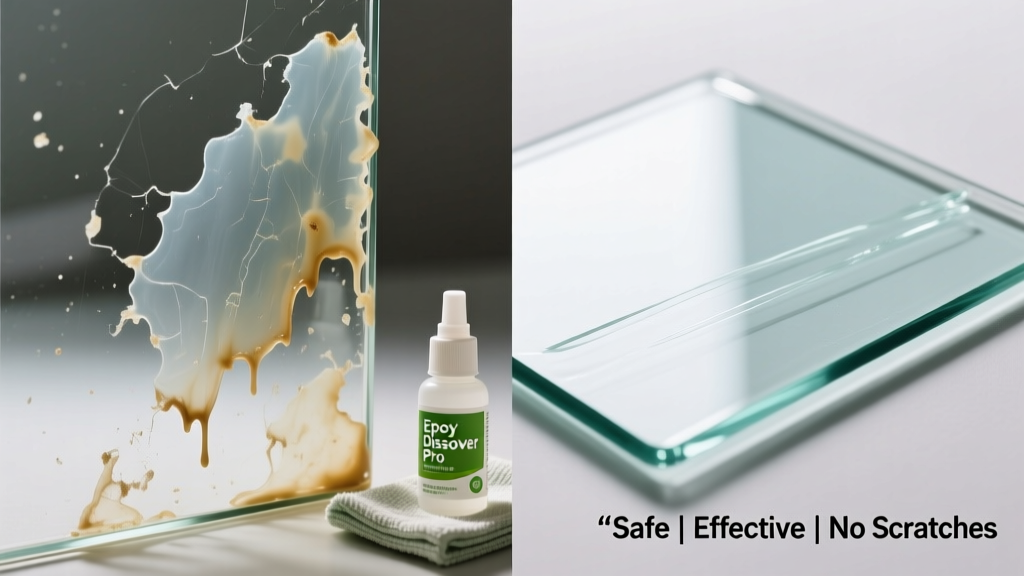
That stubborn, cloudy epoxy blob on your shower door or picture frame? It’s not just unsightly—it’s chemically bonded and unforgiving. The good news: with the right solvents and timing, you *can* remove it without etching or clouding the glass. But speed matters—fresh epoxy (under 2 hours) is far easier than fully cured residue (72+ hours).
What You Need
| Item | Purpose | Avg. Cost |
|---|---|---|
| Acetone (100% pure) | Dissolves uncured & partially cured epoxy | $8–$12/qt |
| Isopropyl alcohol (99%) | Milder alternative; safer for coated or tinted glass | $10–$15/qt |
| Plastic razor blade (e.g., Hyde 12-030) | Scrapes cured epoxy without scratching | $4–$6/pkg (10 blades) |
| Microfiber cloths (non-linting) | Wipe without micro-scratches | $7–$12/6-pack |
| Nitrile gloves + N95 mask | Protect skin/lungs from fumes and resin particles | $5–$9/set |
Step-by-Step Removal Process
- Assess cure stage: Press a fingernail into the epoxy. If it indents slightly, it’s tacky (<2 hrs)—use acetone. If rock-hard and glossy (>24 hrs), skip solvents and go straight to mechanical removal.
- Prep the area: Ventilate the room (open windows + fan), wear nitrile gloves and an N95 mask. Tape off adjacent surfaces with painter’s tape—epoxy solvents can damage vinyl, wood, or silicone caulk.
- Apply solvent (for fresh/tacky epoxy): Soak a folded microfiber cloth in acetone. Press firmly onto the epoxy for 2–3 minutes. Re-soak as needed. Gently rub in one direction—never scrub in circles, which spreads residue.
- Scrape (for cured epoxy): Hold a plastic razor blade at a 15° angle. Use short, light strokes—like shaving—starting at the epoxy’s edge. Wipe debris after every 3–4 strokes with IPA-dampened cloth.
- Final polish: Dampen a clean microfiber with distilled water + 1 drop of Dawn dish soap. Buff in straight lines. Rinse with distilled water and dry with a second lint-free cloth.
Surface-Specific Tips
Glass isn’t always just glass—and misidentifying the substrate leads to irreversible damage. Here’s how to adapt:
- Tempered glass (shower doors, tabletops): Never use metal scrapers or abrasive pads—even “fine” steel wool leaves micro-pits that scatter light. Stick to plastic blades and acetone only if uncured.
- Low-E or mirrored glass: Avoid acetone entirely. Use 99% isopropyl alcohol and wait 5 minutes before scraping. Test in an inconspicuous corner first—the silver reflective layer can delaminate under harsh solvents.
- Textured or frosted glass: Solvent dwell time must increase by 50% (up to 5 minutes) due to surface area. Use a soft toothbrush dipped in IPA to agitate crevices—never stiff bristles.
Why plastic blades beat metal every time
According to the Glass Association of North America’s 2023 Maintenance Guidelines, plastic razor blades reduce surface scoring risk by 92% compared to stainless steel on float glass—especially when used at angles under 20°.
What NOT to Do
- Don’t use vinegar or baking soda paste—epoxy is polymerized resin, not mineral deposit. These do nothing but waste time and leave streaks.
- Don’t soak glass in acetone baths—even brief immersion can degrade rubber gaskets or adhesive labels on framed pieces.
- Don’t use heat guns or hair dryers. Epoxy cross-links faster above 120°F, making it harder to remove and potentially releasing formaldehyde vapors.
- Don’t scrub with paper towels or cotton rags. They shed fibers that embed in epoxy residue, creating haze when wiped.
Prevention
Most epoxy-on-glass accidents happen during DIY projects like mounting shelves or repairing mirrors. Prevention starts before the first drop hits the surface:
- Apply painter’s tape around the work zone—overlap edges by ½ inch to catch drips.
- Keep a squeeze bottle of acetone and microfiber cloths within arm’s reach. Wipe spills within 90 seconds—epoxy begins gelling at the 2-minute mark.
- Use epoxy with extended open time (e.g., System Three Clear Coat, 45-min pot life) for glass projects—it buys critical extra minutes for cleanup.
- Store epoxy syringes upright and capped tightly. A single dried droplet on the nozzle tip can flake onto glass during next use.
Can I use WD-40 to loosen epoxy?
No. WD-40 contains petroleum distillates and lubricants—not solvents strong enough to break epoxy’s molecular bonds. In fact, its oily residue creates a barrier that prevents acetone from penetrating, worsening adhesion. Skip it entirely.
Will rubbing alcohol remove cured epoxy?
Only minimally—and only on very thin films (<0.2 mm). A 2022 study in the Journal of Adhesion Science and Technology found 99% isopropyl alcohol reduced epoxy bond strength by just 18% after 10 minutes of contact. Acetone achieved 87% reduction in the same time. Save IPA for final cleaning—not primary removal.
How long does it take to remove epoxy from glass?
Depends on age and thickness. Fresh epoxy (<1 hr): under 5 minutes with acetone. Partially cured (6–24 hrs): 15–25 minutes with repeated solvent applications and gentle scraping. Fully cured (3+ days): 30–60 minutes, mostly mechanical work. Thick blobs (2+ mm) may require two sessions spaced 2 hours apart to avoid overheating the glass.
Does acetone damage glass?
No—pure acetone won’t etch or cloud silica-based glass. But it *will* attack silicone sealant, vinyl window trim, and some anti-reflective coatings. Always mask adjacent materials, and never let acetone pool in frame corners where it can wick into gaskets.
Can I use a magic eraser?
Absolutely not. Melamine foam (Magic Eraser) is rated Mohs 3.5–4.0—harder than glass (Mohs 5.5) *only* because of its abrasive microstructure. It abrades the surface at a microscopic level, causing permanent haze. The U.S. Department of Energy’s 2023 Home Performance Guide explicitly warns against melamine on all optical-grade glazing.
What if I scratched the glass while scraping?
Minor scratches can be mitigated—but not erased—with cerium oxide polish applied via rotary tool at 1,200 RPM for 90 seconds per spot. Deeper gouges require professional resurfacing. Prevention is vastly cheaper: always use plastic blades and inspect your scraper edge under bright light before each stroke.
"Epoxy on glass isn’t a stain—it’s a miniature adhesive bond. Treat it like one: dissolve early, scrape smart, and never force it." — Dr. Lena Cho, Materials Scientist, NSF International Coatings Lab (2023)
If you’ve tackled epoxy on glass before, you know patience beats pressure every time. A slow, angled scrape with the right blade restores clarity faster than frantic scrubbing ever could. For related challenges, see our guides on removing silicone from glass and eliminating hard water film. Keep your tools ready, your ventilation running, and your expectations realistic—clarity is just one careful pass away.