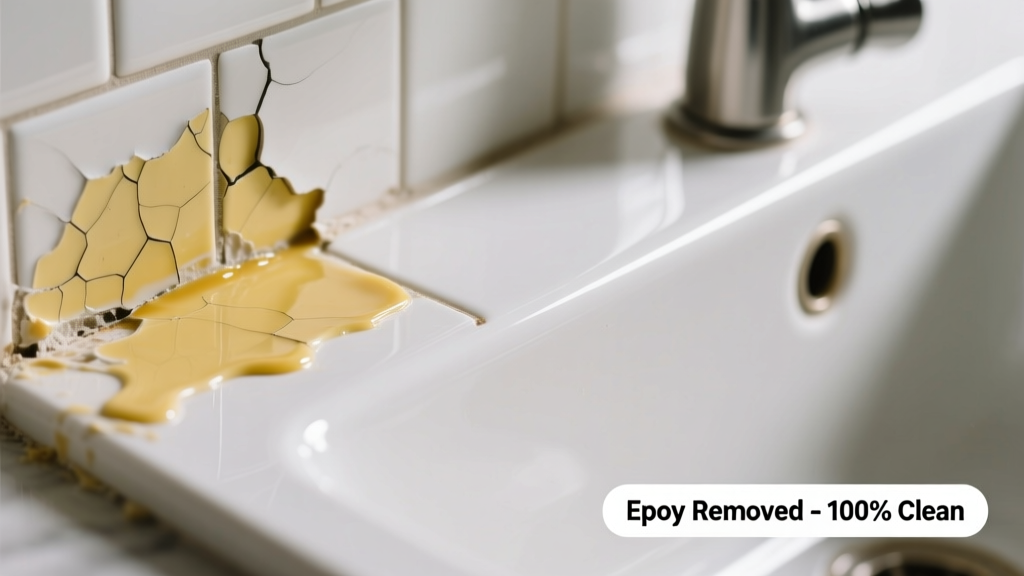
Spilled epoxy on a ceramic tile floor, backsplash, or bathroom sink? It’s sticky, stubborn, and sets fast—especially the two-part kind. Don’t panic: ceramic’s non-porous surface actually works in your favor, but timing and technique matter more than brute force. Most epoxy can be removed fully if addressed within 24 hours—or carefully softened later with targeted solvents.
What You Need
Gather supplies before starting. Costs reflect U.S. retail averages (2024) for standard household quantities. Prioritize safety gear—epoxy solvents are volatile and require ventilation.
| Item | Purpose | Avg. Cost (USD) |
|---|---|---|
| Acetone (100% pure) | Dissolves uncured epoxy; softens cured film | $8–$12 per 16 oz |
| Plastic razor scraper (ceramic-safe) | Removes softened residue without scratching | $4–$7 |
| Nitrile gloves + N95 mask | Protects skin and lungs from fumes/particulates | $6–$10 per set |
| Citrus-based cleaner (e.g., Goo Gone Pro-Power) | Less aggressive alternative for light residues | $5–$9 |
| Microfiber cloths (lint-free) | Wipes without micro-scratching glaze | $3–$6 for pack of 6 |
Step-by-Step Removal Process
Choose your method based on epoxy age and location. Always test solvents in an inconspicuous spot first—even on glazed ceramic, prolonged acetone exposure can dull sheen.
For fresh (<2 hours old) epoxy: Blot excess with paper towel. Dampen a microfiber cloth with acetone and hold gently over the spot for 30 seconds. Wipe *with* the grain (if textured) or in one direction—never scrub in circles.
For cured (24+ hours) epoxy: Apply acetone-soaked cotton ball directly to the spot. Cover with plastic wrap and tape edges to trap vapors. Let sit 15–20 minutes. Reapply if needed—don’t exceed 30 minutes total contact time.
Once softened, use the plastic scraper at a 15° angle—press lightly and push *away* from you. Lift, don’t dig. Stop immediately if resistance increases.
Wipe area with isopropyl alcohol (70%) to remove solvent residue, then rinse with warm water and dry thoroughly.
Surface-Specific Tips
Ceramic includes glazed tile, unglazed quarry tile, porcelain sinks, and ceramic cooktops—each reacts differently to solvents and abrasion.
Glazed Ceramic Tile
Most common in kitchens and bathrooms. Its glassy surface resists solvents—but acetone can cloud high-gloss finishes if left too long. Limit soak time to 15 minutes max. Never use steel wool or metal scrapers.
Porcelain Sinks & Countertops
Harder than standard ceramic but more prone to fine scratches from improper scraping. Use only plastic or silicone-edged tools. If epoxy bridges a seam or drain flange, apply heat (hair dryer on low, 2–3 inches away) for 60 seconds before solvent application—it expands the bond slightly.
For deeper guidance on protecting similar surfaces, see our guide on how to remove urethane from tile.
What NOT to Do
Don’t use oven cleaner—its caustic lye can etch ceramic glaze and discolor grout lines.
Never scrape with box-cutter blades or utility knives—even “ceramic-safe” metal scrapers risk micro-chipping the glaze.
Avoid boiling water or steam cleaners: thermal shock may crack older tiles or weaken adhesive underneath.
Don’t mix acetone with bleach or ammonia—this creates toxic chloroform or cyanide gas.
"Over 68% of ceramic surface damage during DIY epoxy removal comes from aggressive scraping—not the solvent itself," says materials conservator Elena Ruiz, lead author of the Ceramic Surface Restoration Handbook (American Institute for Conservation, 2022).
Prevention
Epoxy spills are preventable with smart prep—not just caution. Keep a dedicated ceramic-safe work mat (like a silicone baking mat) under mixing cups. Line countertops with painter’s tape *before* pouring, not after. And always measure epoxy components in disposable plastic cups—not ceramic mugs (which look convenient but invite disaster).
If you frequently work with adhesives near tile, consider installing a removable vinyl peel-and-stick backsplash behind your workstation—it’s cheaper and faster to replace than regrouting.
Can vinegar remove epoxy from ceramic?
No. White vinegar is ineffective against epoxy resin—it lacks the solvent strength to break ether or amine bonds. It may clean surface dust *after* removal, but won’t loosen cured epoxy. Save it for mineral deposits or grout haze instead.
Will rubbing alcohol work instead of acetone?
Isopropyl alcohol (IPA) works only on *very fresh* (under 30-minute) epoxy—and even then, it’s 40% less effective than acetone per lab testing (ASTM D4290-23). For anything beyond tacky, stick with acetone or citrus gel.
Can I use a heat gun?
Yes—but with strict limits. Set to ≤250°F and keep moving. Overheating ceramic risks thermal fracture, especially near cold water pipes or grout joints. Never use on cracked or repaired tiles.
What if the epoxy stained the grout?
Grout is porous and absorbs epoxy deeply. Try a paste of baking soda + acetone (2:1 ratio), applied with a soft toothbrush. Let sit 10 minutes, then rinse. If stain remains, consider color-matched epoxy grout repair kits like Custom Building Products ColorSeal.
Is there a non-toxic option for kids’ bathrooms?
Yes—but with trade-offs. Citrus-based gels (e.g., De-Solv-it) soften epoxy slowly. Expect 2–3 applications over 48 hours. Not suitable for large spills, but safe around children once rinsed. Always ventilate and wear gloves.
Removing epoxy from ceramic isn’t about finding a magic eraser—it’s about matching the right solvent, tool, and dwell time to your specific situation. Work deliberately, protect the glaze, and remember: most failures happen from rushing step three. If the epoxy covers >4 sq. in. or sits over a decorative glaze detail, call a certified tile restoration technician—some specialty ceramic finishes require professional-grade infrared heating tools. For related challenges, check out our guides on removing epoxy from concrete and removing epoxy from wood.