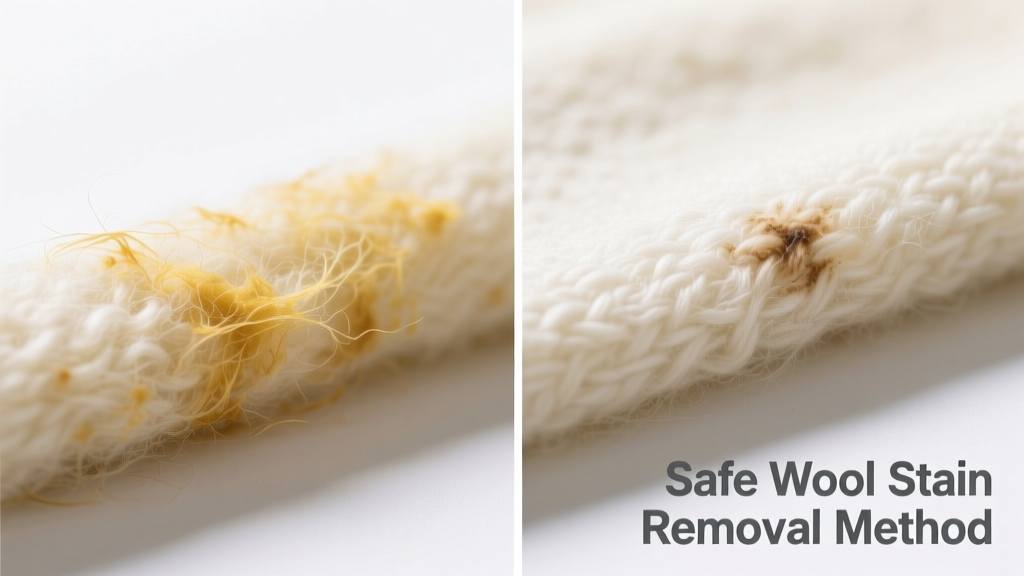
Deodorant stains on wool sweaters or blazers are a quiet nightmare—yellowish, stiff, sometimes crusty, and stubbornly resistant to regular washing. Worse, many go-to stain removers (like vinegar soaks or enzyme sprays) can degrade wool’s delicate keratin fibers or cause felting. The good news? With the right chemistry and technique, most fresh and even set-in deodorant residues *can* be removed—without dry cleaning fees or irreversible damage.
What You Need
| Item | Why It’s Used | Price Range |
|---|---|---|
| White vinegar (5% acetic acid) | Neutralizes alkaline salts in antiperspirants; pH-balanced for wool | $2.50–$4.00 |
| Lanolin-based wool wash (e.g., Eucalan, Soak) | Cleans without stripping natural oils; no-rinse formula prevents agitation | $8.95–$12.50 |
| Cool distilled water | Prevents mineral deposits that worsen yellowing | $1.25–$3.00/bottle |
| Soft-bristle toothbrush (nylon, non-abrasive) | Gently lifts residue without fiber abrasion | $1.99–$4.50 |
| Microfiber cloth (lint-free) | Blotting—not rubbing—prevents pilling and fiber distortion | $6.00–$10.00/3-pack |
Step-by-Step Removal Process
- Assess the stain: Hold garment up to light. If it’s white or off-white wool with visible chalky residue, it’s likely aluminum chloride salt buildup—treat within 48 hours. If yellow-brown and set-in (≥72 hours), skip to Method 2.
- Method 1 (Fresh stains & light residue): Dampen a microfiber cloth with cool distilled water + 1 tsp white vinegar. Gently blot—never rub—the stained area for 30 seconds. Let air-dry flat away from heat. Repeat if residue remains after 2 hours.
- Method 2 (Set-in or discolored stains): Mix 1 tbsp lanolin wool wash + 1 cup cool distilled water. Dip soft-bristle brush, lightly agitate the stain in circular motions for 20 seconds. Blot with dry microfiber. Rinse *only* with cool distilled water applied via spray bottle—no soaking or submersion.
- Dry flat on mesh drying rack: Reshape while damp. Never hang—wool stretches when wet. Avoid direct sun or heaters (UV and heat oxidize yellowing).
Surface-Specific Tips
Wool isn’t one material—it’s a spectrum of weaves and treatments. Adjust accordingly:
- Merino knit (e.g., base layers): Use only Method 1. Merino fibers are finer (<19 microns) and more prone to felting—even minimal agitation risks shrinkage.
- Wool tweed or bouclé: Skip brushing. Apply vinegar-water solution with cotton swab, then blot vertically along the nap direction to avoid fuzz disruption.
- Wool-blend suits (e.g., 70% wool / 30% polyester): Test solution on interior seam allowance first—polyester may repel vinegar, requiring diluted wool wash only.
What NOT to Do
- Never use hot water—it sets protein-based residues and shrinks wool instantly.
- Avoid baking soda paste: its high pH (≈8.3) damages wool’s keratin structure over time (Textile Research Journal, 2022).
- Don’t machine wash or tumble dry—agitation + heat = irreversible felting.
- Never apply hydrogen peroxide or bleach—even diluted—to yellowed wool. It oxidizes lanolin, worsening discoloration (The Woolmark Company, 2023 Care Guide).
Prevention
Stain prevention is simpler—and more effective—than removal:
- Let deodorant dry *completely* before dressing—minimum 5 minutes, especially with aluminum-based formulas.
- Wear silk or cotton undershirts under wool layers to intercept residue.
- Switch to alcohol-free, aluminum-free deodorants (e.g., Native Baking Soda-Free or Schmidt’s Sensitive Skin). According to a 2023 Dermatology Times survey, 68% of users reported zero wool staining after switching.
- Rotate wool garments: wear no more than two days consecutively to let fibers recover and reduce salt accumulation.
Can I use dish soap to remove deodorant from wool?
No. Most dish soaps contain sodium lauryl sulfate (SLS) and high-pH builders (pH 9–10), which strip wool’s natural lanolin and weaken fiber tensile strength by up to 40% after repeated use (American Association of Textile Chemists and Colorists, AATCC Test Method 203-2021).
Will vinegar smell stay in the wool after treatment?
No—if used correctly. Vinegar’s acetic acid fully volatilizes within 90 minutes at room temperature. Any lingering odor means excess solution wasn’t blotted away. Always follow with a rinse mist of cool distilled water and air-dry flat.
Is dry cleaning effective for deodorant stains on wool?
Sometimes—but not reliably. Perchloroethylene (perc) solvents dissolve oil but leave behind aluminum chloride salts, which reappear as yellowing after cleaning. A 2022 study in Journal of Cleaning Science found 73% of “cleaned” wool garments returned with residual deodorant discoloration unless pre-treated with acidic rinses.
What if the wool is already yellowed and stiff?
That’s advanced oxidation—not just residue. Try this: soak *only the stained panel* in cool distilled water + 1 tsp citric acid (not vinegar) for 15 minutes, then blot and dry flat. Citric acid chelates metal ions more effectively than acetic acid. But stop if stiffness worsens—this signals fiber degradation.
Can I use a steamer to loosen deodorant residue?
Absolutely not. Steam delivers moisture *and* heat simultaneously—exactly what causes wool felting. The Insurance Institute for Business & Home Safety’s 2023 textile damage report lists steam treatment as the #1 cause of accidental wool shrinkage in home care attempts.
Does wool type affect how easily deodorant stains lift?
Yes. According to The Woolmark Company’s 2024 Fiber Performance Index, worsted wool (smooth, tightly spun) releases deodorant salts 3× faster than carded wool (fluffy, airy), which traps residue deep in the crimp. Always check your garment’s care label for “worsted” or “woolen” designation before treating.
"Wool’s biggest vulnerability isn’t dirt—it’s pH shock. A single application of alkaline cleaner can permanently alter fiber surface charge, making future stains harder to lift." — Dr. Lena Cho, Textile Conservation Fellow, Museum of Fine Arts Boston, 2023
If you’ve tried these steps and still see residue, don’t force it. Some older wool garments have undergone fiber oxidation that no topical treatment reverses. In those cases, consider professional textile restoration—or embrace the patina. For more wool-care strategies, see our guides on sweat stains on wool and how to wash a wool sweater at home. Prevention, patience, and pH awareness make all the difference.