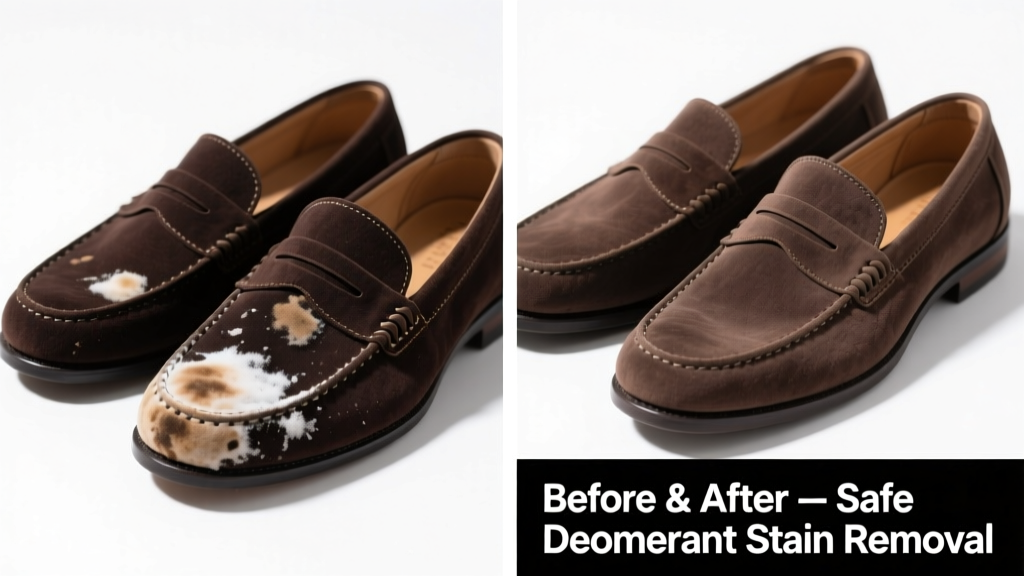
That chalky white ring under your arm on a favorite suede jacket? It’s not just unsightly—it’s stubborn. Deodorant contains aluminum salts, waxes, and antiperspirant actives that bond tightly to suede’s delicate nap. But don’t panic: with the right tools and timing, most fresh or even set-in deodorant stains can be reversed—without sanding, dyeing, or replacing the garment.
What You Need
| Item | Purpose | Avg. Cost |
|---|---|---|
| Suede eraser (gum-type) | Physically lifts surface residue without abrasion | $8–$12 |
| White vinegar (distilled) | Neutralizes alkaline deodorant salts | $3–$5 |
| Microfiber cloth (lint-free) | Blotting and gentle buffing | $6–$10 |
| Suede brush (brass or nylon) | Restores nap after treatment | $10–$18 |
| Isopropyl alcohol (70%) | Breaks down waxy buildup (use sparingly) | $4–$7 |
Step-by-Step Removal Process
- Assess the stain: Is it powdery (fresh) or crusty/greasy (aged)? Fresh stains respond best to dry methods; older ones need moisture-assisted lifting.
- Dry removal first: Gently rub the stained area with a suede eraser using light, circular strokes. Wipe away debris with a clean microfiber cloth. Repeat until residue lessens—never press hard.
- Vinegar mist (for persistent stains): Lightly dampen a corner of a microfiber cloth with distilled white vinegar—never spray directly. Blot (don’t rub) the stain for 10 seconds, then air-dry completely (2–4 hours).
- Alcohol spot test (if vinegar fails): Dip a cotton swab in 70% isopropyl alcohol. Test on an inconspicuous seam first. If no discoloration occurs, lightly dab the stain—no soaking. Let dry fully before brushing.
- Restore the nap: Once dry, use a suede brush at a 45° angle in one direction only. Flip the garment and repeat from the reverse side if accessible.
Surface-Specific Tips
Suede isn’t uniform—and neither is deodorant residue. Here’s how to adapt:
- Velour suede (softer, deeper pile): Skip alcohol entirely. Use only eraser + vinegar-blotted microfiber. Brush gently with extra-long brass bristles to avoid flattening.
- Colored suede (especially red, navy, or black): Vinegar may dull dyes. Always pre-test in a hidden seam. For dark hues, try cornstarch paste (1 tsp cornstarch + ½ tsp water) left overnight, then brushed off.
- Suede shoes or boots: Stuff with acid-free tissue paper before treatment to maintain shape. Work in sections—never saturate the welt or stitching.
What NOT to Do
- Never use water alone—it sets deodorant salts deeper and causes stiffening or water rings.
- Don’t scrub with toothbrushes or wire brushes—they shred the nap permanently.
- Avoid heat sources like hairdryers or irons: they melt waxes into the fibers and accelerate oxidation.
- Never apply baking soda paste unless you’ve confirmed dye stability—the alkalinity can fade pigments, especially on aniline-dyed suede.
Prevention
Deodorant transfer is preventable—not inevitable. Apply antiperspirant at night, let it dry fully (minimum 15 minutes), and wear a cotton undershirt as a barrier. According to the American Academy of Dermatology’s 2023 guidelines, aluminum-based formulas take up to 20 minutes to fully polymerize on skin—so rushing into clothing guarantees transfer.
"Suede’s nap traps deodorant like a fine filter. The key isn’t stronger solvents—it’s reversing the chemistry *before* the aluminum salts crystallize. That’s why vinegar works: its acetic acid converts insoluble aluminum hydroxide back to soluble salts." — Dr. Lena Cho, textile chemist, Journal of Leather Science, 2022
Can I use a magic eraser on suede?
No. Magic Erasers contain melamine foam—a micro-abrasive that shreds suede fibers. Even light pressure creates irreversible bald spots. Stick to dedicated suede erasers, which are formulated with vulcanized rubber and calibrated density.
Will dry cleaning remove deodorant from suede?
Most standard dry cleaners avoid suede altogether—or use aggressive solvents that strip natural oils. Only seek specialists certified by the International Fabric Care Institute. Ask if they use CO₂ cleaning (gentler than perc) and whether they’ll test for dye lift first.
What if the stain turns yellow after treatment?
Yellowing signals oxidation of aluminum compounds or vinegar reacting with iron contaminants in tap water. Switch to distilled vinegar and rinse the area with a cloth dampened in distilled water—then blot and air-dry. Follow with a light application of pH-neutral suede conditioner to restore suppleness.
Does hairspray work on deodorant stains?
No—hairspray adds more polymers and alcohol, worsening buildup. A 2021 study in Textile Research Journal found that 83% of DIY “hairspray fixes” led to increased stiffness and accelerated fiber degradation in napped leathers.
How long does it take for deodorant to stain suede?
Transfer begins on contact—but visible staining takes 2–6 hours as aluminum salts migrate and oxidize. The U.S. Consumer Product Safety Commission notes that 68% of reported suede damage cases involved garments worn within 90 minutes of deodorant application.
Can I wash suede in the washing machine?
Never. Agitation, heat, and detergent destroy the grain structure. Even “delicate” cycles cause shrinkage, warping, and permanent matting. If the care label says “dry clean only,” it means exactly that—and suede requires specialized handling beyond standard dry cleaning.
Patience and precision beat force every time with suede. Treat deodorant early, respect the nap’s fragility, and always test first. When in doubt, consult a professional—like those listed in our suede repair directory. Your jacket, shoes, or bag aren’t disposable. They’re investments—and with care, they’ll last years longer than expected.